

-
PowerTALK™, August 2023
Download PDFReports of new product development and emissions are featured in several articles in the August 2023 issue of PowerTALK News. Read about VW’s breakthroughs, a new hydrogen-powered generator, and new regulations covering machine products in Europe.
IN THIS ISSUE
- Alternative Power:
- VW Reveals Four EV Breakthroughs
- EVs Report Fewer Greenhouse Gases
- Methane Is Big Greenhouse Gas Problem
- Hydrogen Engines Pose Hurdles
- DataPoint: North America Personal Watercraft
- Europe: New Machine Regulations
- Brazil/South America:
- PSR Sponsors at SAE Mobility Forum
- Mexico Beats Argentina in Brazil Exports
- 29% of 2023 Brazil Trucks Have Euro 6 Engines
- Japan: Firms Develop Hydrogen-Powered Generator
- Vietnam: Foxconn To Invest $246 Million in Vietnam
- China: XCMG Group, Toyota Sign Pact
- India: Marluti Suzuki Plans India Market Expansion
- Alternative Power:
-
Alternative Power Report, August 2023
Download PDFRead several articles about the development of new alternative power products in the August issue of Alternative Power Report. Articles cover topics from golf carts as second vehicles, discoveries by VW research team, a new EV fast charging program in Europe and more news about hydrogen power.
-
DATAPOINT: NA Personal Watercraft
Download PDFJet Drive Boats are boats propelled by a jet of water ejected from the back of the craft; they have no propeller and can maneuver in shallow water. PWCs are also driven by jet water and come in several styles: Stand-Ups or Sit-Downs. They are often referred to as jet skis. Sit Downs are designed for one, two or three persons in a sitting position, one in front of the other. PWC Stand-Ups are designed for one rider standing or kneeling on the watercraft.
This product information comes from industry interviews and from two proprietary databases maintained by Power Systems Research: EnginLink™ , which provides information on engines, and OE Link™, a database of equipment manufacturers.
Market Share: Yamaha leads in production of PWC in North America with a combined plant total of 48%. In second position is Bombardier with 40.5%; third, is Kawasaki with 10.5%.
Export: Collectively, up to 30% worldwide.
Trends: In 2022, production of PWCs gained nearly 8.5% over 2021. Production is expected to drop 4% from 2022-2023. The increase in 2022 was based on high demand for recreational items, including Personal Watercraft and jet drive boats.
Even though sales skyrocketed in 2022, PWC builders experienced supply chain disruptions during the pandemic that impacted deliveries for calendar year 2021. According to the National Marine Manufacturers Association (NMMA), this trend is here to stay – the boating industry is booming with demand at an all-time high as Americans plan for a summer on the water. As the country returns to a new normal, people are reassessing how they spend their quality time with loved ones, and many are continuing to choose boating as the preferred choice in recreation. Sales of these recreational vehicles depend on disposable income and leisure time. Expect the production of Personal Watercraft to gain an additional 10% by 2025.
Battery Electric. Taiga Motors (Canada) produced electric PWC in 2021 (137 units). The company produced the same number in 2022, but electric production is expected to drop to about 125 units in 2023. PSR
Carol Turner is Senior Analyst, Global Operations for Power Systems Research
-
Continued Growth Seen for Powersports Market

Michael Aistrup The growing popularity of powersports is expected to provide many new opportunities ln this rapidly growing market. Some of the trends fueling this long-term growth potential are:
Growing/changing market for utility-terrain vehicles (UTVs).
- Technological advancements through improved durability and adaptability to UTV’s, ensure greater enjoyment for UTV riders.
- Industry-leading companies will continue to focus on increased product range and rigorous R&D initiatives to strengthen their market standing.
-
U.S. Economic Downturn this Year or Next?

Jim Downey SUMMARY. As we are halfway through 2023, there is more uncertainty with the economy than earlier in the year. The general consensus is there will be a recession coming soon in the United States, and now it is just a matter of whether this will happen later in 2023 or the first of part of 2024.
The latter may be more assumed recently. The stock market has not fallen, and the US economy has not entered a recession this year, 2023. Some of the factors that have prevented this are market investors being enthusiastic over AI (Artificial Intelligence) potential, the Federal Reserve’s pause in interest rate increases, and the slowdown of inflation. So seemingly the pause button has been hit on recession scenarios.
-
Hydrogen Engines Face Production Hurdles
Liebherr’s managing director of its combustion engine business unit, Stefanie Gerhardt, has outlined four major hurdles to resolve before hydrogen can become mainstream.
Gerhardt asserted that hydrogen combustion engines can be used everywhere where electrically powered machines and hydrogen fuel cells reach their limit. And she suggested that they would be particularly useful in construction applications where economy, robustness, and high performance are required.
-
VW Unveils Four EV Breakthroughs

Guy Youngs VW’s US Innovation Hub just announced four breakthroughs in electric mobility and sustainable transport. First, the team used artificial intelligence on University of Tennessee’s high-performance computer cluster to develop a modular structure in the shape of tiny pyramids; the structure can be 3D-printed from liquid resins and can hold 30K times its own 0.15 lb weight (68g), so this frame would be up to 60% lighter than the steel frame.
Second, they have developed a method of using paper as a recyclable alternative to plastic parts and foils for EV interiors.
-
Methane Is A Big Greenhouse Gas Problem
The world has a methane gas problem. Methane is over 80 times worse for forcing global heating over 20 years than its greenhouse gas sibling, carbon dioxide.
And yet we love to burn natural gas, which is mostly methane, to make electricity and heat. Our agricultural and food systems leave a lot of biomass lying around where a lot of it turns into methane and enters the atmosphere. Acceptable limits of leakage are suggested at 0.2%, however evidence suggests that actual leakage to be in the range of 1.5% to 3%
-
EV Gas Emissions Evaluated
Argonne National Laboratory’s cradle-to-grave analysis considers everything from raw material extraction to vehicle scrappage to provide a holistic view of the sustainability of different vehicle and fuel technologies.
The analysis showed that EVs (which have no tailpipe emissions) also have fewer greenhouse gas emissions than conventional gasoline or hybrid electric vehicles when the entire life cycle is considered.
-
New Machinery Requirements

Christopher Bamforth New Machinery requirements have been published for Europe and will replace the existing Machinery Directive Jan. 20, 2027. OEMs will have to be compliant with the new requirements on that day since there is no transition period.
With a heavy focus on safety, the environment and machine learning, the main takeaways are that these are EU regulations. This means that manufacturers will not have to wait for each member state’s upgrade of the regulation into law. This may streamline the process although it could mean big changes for some member states that previously had fewer requirements.
And there’s another important consideration. Since we have entered the digital age, all certifications and instructions can be in digital format. One exception is the non-professional machinery’s safety measures which must be included in paper format.
 PowerTALK Reports
TPI
PSR Truck Production Index
Free quarterly global commercial vehicle production report.

Alternative Power Report
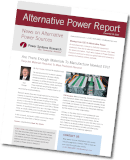
The latest EV and power source news including batteries and fuel cells with analysis by PSR experts.
PowerTALK News
Stay informed each month with insights from Power Systems Research’s analysts working around the world as they identify and comment on important news items in the company’s monthly newsletter.
Subscribe View Archive

OE Link™ Offers
Global
Coverage
OE Link™ database provides OEM products, both On-Road and Off-Road, in 12 regions.
Current Reports
Download complimentary reports that show the type of information available from Power Systems Research.
PowerTALK News
Stay informed each month with insights from Power Systems Research analysts working around the world as they identify and comment on important news items in the company’s monthly newsletter.
Subscribe