

-
New Machinery Requirements

Christopher Bamforth New Machinery requirements have been published for Europe and will replace the existing Machinery Directive Jan. 20, 2027. OEMs will have to be compliant with the new requirements on that day since there is no transition period.
With a heavy focus on safety, the environment and machine learning, the main takeaways are that these are EU regulations. This means that manufacturers will not have to wait for each member state’s upgrade of the regulation into law. This may streamline the process although it could mean big changes for some member states that previously had fewer requirements.
And there’s another important consideration. Since we have entered the digital age, all certifications and instructions can be in digital format. One exception is the non-professional machinery’s safety measures which must be included in paper format.
-
Plant-Based Bio-fuel May Not Replace Fossil Fuels
EUROPE REPORT

Christopher Bamforth Over the last decade we have worked to reduce fossil fuel consumption in Europe without cutting back the use of our cars, trucks, and motorbikes. It was thought that by mixing diesel and fuel with crop-based bio-fuel it would reduce fossil fuel usage.
However, over the last 30 years the emission of CO2 has increased, raising questions about the effectiveness of this measure. After extended analysis from the Environmental Action Germany (DUH), it has been concluded that this may not be a solution to the problem of reducing carbon emissions.
Consider that the production and consumption of immense areas of land across the globe dedicated to the cultivation of these fuels actually have a huge environmental cost. For example, to satisfy Germany’s appetite for these natural bio-fuels, 1.3 million hectares of land have been converted to its production. This equates to 9.2 million tons of CO2 saved each year. However, if we were to dedicate this land to natural restoration projects with a portion dedicated to solar energy production, we would be able to save 27.5 million tons of CO2 each year.
-
Volvo Builds Loader with Fossil-Free Steel
Christopher Bamforth Volvo Group and SSAB have unveiled an autonomous loader made of fossil-free steel, claimed to be the world’s first vehicle made from that material. Manufactured at Volvo Construction Equipment’s facility in Braås, Sweden, this is said to be “just the start” as a few more will be produced in 2022 with mass production set to follow.
This machine is a load carrier for use in mining and quarrying and is built using a new fossil-free steel from SSAB. Volvo’s CEO Martin Lundstedt has already said that this new machine is a first step in incorporating this new steel in all of their products and components to help reach their goal of being completely carbon neutral by 2040.
Along with the electrification of its vehicles and machines, Volvo adds that it is determined to reduce the carbon footprint of its entire supply chain and this latest innovation is one step forward on this path.
-
Q3 2021 European Economic Outlook
In this episode of PSR PowerTALK, Christopher Bamforth, European Market Analyst for Power Systems Research, comments on his Q3 2021 outlook for the European economy.
Transcript
Welcome to the PSR PowerTALK podcast produced by Power Systems Research.
00:00:06 Emiliano Marzoli
From Power Systems Research I am Emiliano Marzoli, editor of PSR PowerTalk, and today we’ll discuss an update on the economic outlook for Europe with Christopher Bamforth, our European Market Analyst.
-
Rapid Economic Recovery Puts Pressure on Supply Chain
Christopher Bamforth After continued positive market trends which started towards the end of 2020, as well as good progress in their initiatives for integration and sustainability, the Finnish quarrying and mining equipment group Metso Outote grew their order intake in the second quarter by 43%. Supported further by a robust recovery fuelled by infrastructure investments in Europe and the US, and the quarterly orders were higher than in the first quarter.
They believe that many of these new order intakes are a direct result from their “Positive planet portfolio”. This new initiative has been designed help customers improve the sustainability and productivity of their operations. This initiative performed even better than expected, they have already estimated a value of €105m end of June, out of the predicted €120m for 2021. This highlights the ecological trend that we are seeing across most industries.
-
European Economic Outlook, April 2021

Christopher Bamforth
European Market Analyst
In this episode of PSR PowerTALK, Christopher Bamforth, European Market Analyst for Power Systems Research, comments on his outlook for the European economy.
Transcript
Welcome to the PSR PowerTALK podcast, produced by Power Systems Research.
00:06 Emiliano Marzoli:
From Power Systems Research, hello, I am Emiliano Marzoli, editor of PSR PowerTALK. And today we’re going to discuss the economic outlook for Europe with Christopher Bamforth, our European Market Analyst.
-
Innovation Was the Name of the Game at Agritechnica 2019
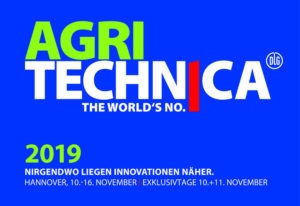
HANNOVER, Germany–For many years, Agritechnica has been growing and strengthening its role as the top European agricultural trade show. Despite the struggles that the industry is facing, with declining order books and a less than enthusiastic outlook for 2020, Agritechnica 2019 held here Nov. 11-16, 2019, reaffirmed its position as the most important ag tech event in Europe. The show reported 2,820 exhibitors and 450,000 visitors, more than 130,000 of them from outside Germany.
TPI
PSR Truck Production Index
Free quarterly global commercial vehicle production report.

Alternative Power Report
The latest EV and power source news including batteries and fuel cells with analysis by PSR experts.
PowerTALK News
Stay informed each month with insights from Power Systems Research’s analysts working around the world as they identify and comment on important news items in the company’s monthly newsletter.
Subscribe View Archive

OE Link™ Offers
Global
Coverage
OE Link™ database provides OEM products, both On-Road and Off-Road, in 12 regions.
Current Reports
Download complimentary reports that show the type of information available from Power Systems Research.
PowerTALK News
Stay informed each month with insights from Power Systems Research analysts working around the world as they identify and comment on important news items in the company’s monthly newsletter.
Subscribe