
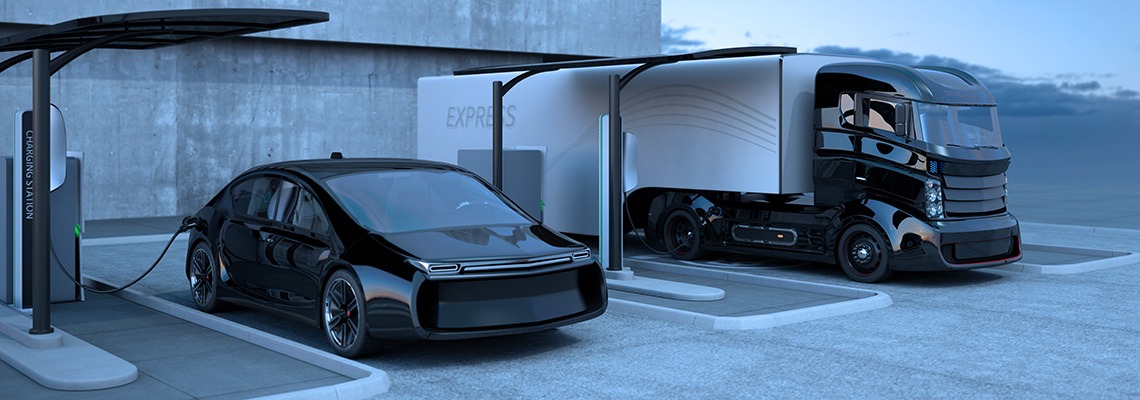
Electric Mobility Trends & Analysis
Follow PSR’s ongoing global coverage of eMobility across a wide range of segments, including electric cars, commercial vehicles, electric motorbikes and e-buses.
-
E-Motorcycle Product Report

Motorcycle purists either love them or hate them, but electric motorcycles are fast becoming a popular reality. From daily commuters to off-roading to track racing, we’ve seen all kinds of electric bikes hit the road over the past couple of years. There’s an increasing array of e-bikes catering to riders of all shapes, sizes, and kinds coming to market.
Here is a small sample of some of the leading OEMs and their electric motorcycle products.
Can-AM/BRP. The first Can‑Am motorcycles are expected to hit the road before the end of 2024. The Canadian Can-AM team is testing bikes in all possible usage conditions, and early feedback from test riders is that two new models deliver a powerful and smooth riding experience. The models include the Can-Am Origin dual-sport and Can-Am Pulse street bike, both slated to launch in mid-2024. Both models are still undergoing testing while construction is underway for a new plant in Querétaro, Mexico, which will produce the electric bikes.
-
Both Battery and Hydrogen Fuel Cars Needed
When discussions take place about Alternative power systems, (hydrogen fuel cells or battery electric engines), experts often fall into one camp or the other.
Proponents of each technology have been vocal in spotlighting the benefits they have to provide. Often, they will compare battery electric to hydrogen fuel cell performances, particularly when it comes to vehicles. However, experts are now coming to the conclusion that it’s not really a matter of deciding which technology will win out and which will disappear. Instead, each form of clean power will find its place, as each has strengths in specific areas. The main points of debate are Efficiency, Infrastructure and Environmental impact.
-
EU May Impose Tariffs on Chinese EVs
In her annual State of The EU address on Sept. 13, 2023, European Commission President Ursula von der Leyen suggested that Chinese manufacturers are dumping Chinese EVs on EU customers that are priced below what domestic manufacturers charge.
She suggested that the root cause of the problem is the heavy subsidies provided to Chinese automakers by the central government — subsidies that allow them to sell Chinese EVs at artificially low prices to the detriment of domestic companies. If so, she warned the EU would consider imposing new tariffs on Chinese cars to level the playing field.
-
Maruti Suzuki Plans India Market Expansion
INDIA REPORT

Aditya Kondejkar Under Maruti’s 3.0 Strategy, the company proposes to expand annual capacity by 2 million units within nine years, and it plans to feature 28 distinct models by 2031. The automaker aims to reach an annual production volume of more than 4 million vehicles by 2031. Of this total, approximately 15% (about 600,000 units) will be electric vehicles (EVs), and about 1 million will be hybrid units.
This represents a substantial 75% surge from the current production capacity of 2.25 million units.
Foreseeing a threefold increase in export volume to 750,000 units by FY31, Maruti intends to allocate 3.2 million units for the domestic market. The company envisions hybrids and EVs comprising approximately 40% of this portion, translating to over 1.2 million units.
-
Foxconn To Invest $246 Million in Vietnam Plant
SOUTHEAST ASIA: VIETNAM REPORT
Foxconn, Taiwan’s leading electronics contract manufacturer, has received regulatory approval for its plan to invest $246 million in two new projects in Quang Ninh Province in northern Vietnam. The projects, to be carried out by a subsidiary of Foxconn Singapore, will focus on the manufacturing and assembly of telecommunications equipment and electric vehicle components.
This will bring Foxconn’s total investment in Vietnam to approximately $3 billion. Of the new investment, $200 million will be invested in a factory to produce EV chargers and components, which is expected to begin production in January 2025 and employ an estimated 1,200 workers.
-
VW Unveils Four EV Breakthroughs

Guy Youngs VW’s US Innovation Hub just announced four breakthroughs in electric mobility and sustainable transport. First, the team used artificial intelligence on University of Tennessee’s high-performance computer cluster to develop a modular structure in the shape of tiny pyramids; the structure can be 3D-printed from liquid resins and can hold 30K times its own 0.15 lb weight (68g), so this frame would be up to 60% lighter than the steel frame.
Second, they have developed a method of using paper as a recyclable alternative to plastic parts and foils for EV interiors.
-
BYD Expands Production in Brazil
BRAZIL/SOUTH AMERICA REPORT

Fabio Ferraresi BYD announced the installation of an industrial complex in Camaçari, Bahia. The largest manufacturer of electric vehicles in the world, the Asian giant will invest, in five years, about US$ 600 Million (R $ 3 Billion) in the installation of three factories at the Bahia complex, generating about 5,000 direct and indirect jobs. In addition to passenger vehicles, electric bus and truck chassis will be made on site, as well as a battery split.
The company will take over Ford’s facilities. The deal, however, has not yet been officially announced. The Camaçari pole is the last factory that still belonged to the North American brand in Brazil. The automaker, which announced the end of its local production in 2021, has already sold its facilities in Taubaté (SP) and São Bernardo do Campo (SP).
-
Scania Launches HV Truck with 900km Range
The X-gas line, presented by Scania in June 26, in Piracicaba (SP) will have versions with powers of 280, 340 and 410 horsepower, and has a range of 900 kilometers, 400 km more than Scania’s debut version in the gas segment.
The longer range was made possible by increasing the number of cylinders that store fuel in the chassis of the vehicles. There are 16 tanks, eight on each side, with a capacity ranging between 118 and 95 liters. In the gas truck previously launched by Scania, there were eight tanks in total.
-
Indonesia Plans To Become Major Player in Car Industry
SOUTHEAST ASIA: INDONESIA REPORT
Amid the global shift to EVs, Indonesia is vying to become the new leader in this segment.
Indonesia has already surpassed Thailand in passenger car production and has begun full-scale EV production ahead of Thailand. Thailand has begun to defend its position as the auto manufacturing hub of Southeast Asia by offering preferential policies for EVs, including subsidies for both domestic production and sales.
Indonesia’s greatest strength is its abundance of nickel, which is used in car batteries. It is said to have the largest nickel reserves in the world, and investment in this resource is growing rapidly. In April, the Indonesian government announced that it was considering investing in a nickel production venture involving Ford of the United States and that VW of Germany was also considering participation.
Forecast Data
Looking for historical, current and forecast production volume data? Battery Electric Commercial Vehicle data can be found in our CV Link™ databases. OE Link™ is PSR’s database covering the production of original equipment.
Alternative Power Report

EV and power source news including batteries and fuel cells with analysis by PSR experts
TPI
PSR Truck Production Index
Free quarterly global commercial vehicle production report.

Alternative Power Report
The latest EV and power source news including batteries and fuel cells with analysis by PSR experts.

PowerTALK News
Stay informed each month with insights from Power Systems Research’s analysts working around the world as they identify and comment on important news items in the company’s monthly newsletter.
Subscribe View Archive

OE Link™ Offers
Global Coverage
OE Link™ database provides OEM products, both On-Road and Off-Road, in 12 regions.
Current Reports
Download complimentary reports that show the type of information available from Power Systems Research.
PowerTALK News
Stay informed each month with insights from Power Systems Research analysts working around the world as they identify and comment on important news items in the company’s monthly newsletter.
Subscribe