
Electric Mobility Trends & Analysis
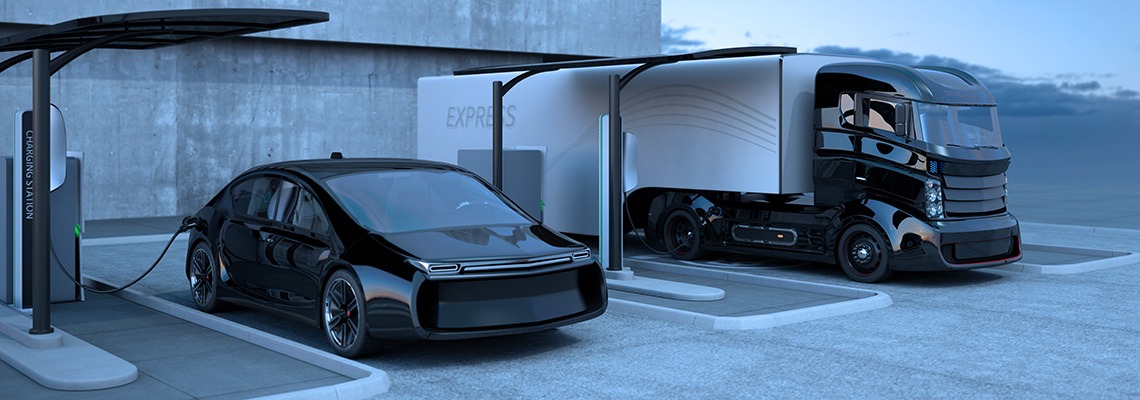
Follow PSR’s ongoing global coverage of eMobility across a wide range of segments, including electric cars, commercial vehicles, electric motorbikes and e-buses.
-
A Failed Experiment? Biofuels Under Spotlight

Guy Youngs On March 31, EU ministers met to discuss the global shortage of around 11million barrels of oil per day. At the meeting, European Commissioner Dan Jørgensen urged nations to outline measures to reduce the use of oil and gas, particularly in transportation. The effective closure of the Strait of Hormuz has caused panic within Europe. As a result, the EU has been advised to consider biofuels as an alternative to fossil fuels.
Unlike America, Europe is struggling to find sources of oil that are either not in Russia nor the Middle East. As a result the European Union has been advised to look again at Biofuels.
-
Ashok Leyland Takes Major Step Toward EV Leadership

Aditya Kondejkar Ashok Leyland’s move to develop and assemble its own battery packs marks one of its most strategically significant announcements in recent years. As India transitions toward a cleaner, multi-fuel commercial mobility ecosystem, this decision places the company at the center of the country’s electric commercial vehicle (ECV) transformation. The implications extend across technology, cost structure, competitive positioning, and long-term industry dominance.
At the core, battery packs account for 35–45% of an electric vehicle’s total cost, making them the single most influential factor in pricing and margins. By internalizing battery pack development, Ashok Leyland is aiming to break its dependence on third-party suppliers, reduce bill-of-materials cost, and secure tighter control over the EV value chain. This is crucial as global cell prices fluctuate and supply chains remain vulnerable to geopolitical shifts. In-house pack assembly gives the company cost stability, greater design flexibility, and freedom to optimize packs specifically for Indian duty cycles—ranging from stop-and-go urban e-buses to long-haul e-LCVs and future heavy-duty platforms.
-
Kawasaki Launches Hybrid Hydrogen Engine
JAPAN REPORT
Kawasaki Heavy Industries has launched a generator engine that runs on a mixture of natural gas and hydrogen. It can operate using a hydrogen blend of up to 30% by volume relative to natural gas. This is the world’s first product of its kind to be launched.
The newly launched 'Hydrogen-Blended Gas Engine' is based on existing natural gas-fueled power generation engines. Due to the explosion risk posed by hydrogen, it is equipped with safety devices and mechanisms to remove residual hydrogen…
-
Sodium Batteries: Another Sign EVs Here To Stay
Guy Youngs The rising demand for zero-emission mobility goes beyond the nice idea of preventing a catastrophic climate crisis. EVs are a better fit for the connected, electrified lifestyle of the 21st century; they offer more opportunities for convenience, they are more useful for weathering power outages and climate-connected emergencies, and they are more adaptable to the needs of fleet managers, among other advantages.
However, while some researchers note that “salt batteries” are not quite ready for prime time, other stakeholders — including industry leader CATL — are already laying plans for mass production. Last month, CATL also burned up the Internet when it announced a suite of two sodium-ion batteries ready for full volume production by the end of this year.
-
KG Motors To Mass-Produce Ultra-Compact EVs

Akihiro Komuro KG Motors, which manufactures and sells the ultra-compact “mibot” EV, is moving toward mass production of the units. It will start mass production in October 2025 at an assembly plant it has built near its headquarters. The company plans to produce 300 units in FY2025, 3,000 units in FY2026, and 10,000 units in FY2027.
The mibot is a one-person vehicle designed for short-distance travel, with a range of 100 kilometers per charge. The planned price at the time of mass production is 1.1 million yen ($7,700 USD), including consumption tax.
The assembly plant in Higashi Hiroshima City consists of a single production line with a main line of seven processes and a subline of four processes. Since there are only a few parts, the number of processes is less than that of a normal automobile production line.
Forecast Data
Looking for historical, current and forecast production volume data? Battery Electric Commercial Vehicle data can be found in our CV Link™ databases. OE Link™ is PSR’s database covering the production of original equipment.
Alternative Power Report

EV and power source news including batteries and fuel cells with analysis by PSR experts
TPI
PSR Truck Production Index
Free quarterly global commercial vehicle production report.

Alternative Power Report

The latest EV and power source news including batteries and fuel cells with analysis by PSR experts.

PowerTALK News
Stay informed each month with insights from Power Systems Research’s analysts working around the world as they identify and comment on important news items in the company’s monthly newsletter.
Subscribe View Archive

OE Link™ Offers
Global Coverage
OE Link™ database provides OEM products, both On-Road and Off-Road, in 12 regions.
Current Reports
Download complimentary reports that show the type of information available from Power Systems Research.
PowerTALK News
Stay informed each month with insights from Power Systems Research analysts working around the world as they identify and comment on important news items in the company’s monthly newsletter.
Subscribe