

-
Geely Poised to Acquire CAMC
According to a statement from CAMC, a.k.a Hualing Xingma, China automotive manufacturer Geely, will acquire a 15.4% position in the company.

Qin Fen Source: CV World Read The Article
PSR Analysis: A win-win situation for CAMC and Geely. There are still some legal proceedings to finish, but once it’s done, CAMC will save itself from financial trouble and Geely will add an asset to its commercial vehicle lineup. PSR
Qin Fen Is Business Development Manager for Power Systems Rese…
-
Pepsico Acquires 18 Scania Trucks Fueled by NG / Biomethane in Brazil
After the first sale of NG trucks at Fenatran in October 2019, Scania has sold 22 more, including 18 to Pepsico. The forecast of 100 NG Trucks to be sold this year has been reduced because of the pandemic effect.
Source: Estadao Read The Article
-
John Deere Starts Grader Production in Brazil

Fabio Ferraresi John Deere announced the start of production of G series of Graders in Brazil in the coming months. It had previously imported these units. With the movement, John Deere will attend the South American Market with 90% of products made in Brazil.
Source: AutoData Read The Article
PSR Analysis: The decision of nationalization started in 2018 and makes more sense with recent local currency depreciation. With this movement, Deere will be more competitive in delivery…
-
COVID19 Special Report – Brazil Market Update
Power Systems Research published in the June 13 issue of Automotive Business magazine a high level update on perspectives of MHV and Off-Highway segments. See the article at the link below and translated presentation.

Carlos Briganti Source: PSR at Automotive Business Read The Article
PSR Analysis: Although ANFAVEA published a decreased forecast, we believe that the decrease will be lower than the Light Vehicles decrease. Metrics we follow, such as Diesel consumption and…
-
DATAPOINT: US Lawn & Garden Tractors, 2020 Forecast: 681,500 Units
681,500 units is the estimate by Power Systems Research of the number of Lawn & Garden Tractors to be produced in the United States in 2020.
This information comes from industry interviews and from two proprietary databases maintained by Power Systems Research: EnginLink™ , which provides information on engines, and OE Link™, a database of equipment manufacturers.
-
The EV Story in Post-COVID Era
Roughly three months of countrywide lockdown, combined with zero sales and the post-pandemic uncertainty, has resulted in further degrading the health of the already struggling Indian automotive sector.

Aditya Kondejkar Though it has disrupted the entire value chain of the automobile industry, there is a silver lining to this Covid-19 pandemic: It has stimulated growth in renewable and eco-friendly transportation.
The Indian market has high potential for EVs since most commuters opt for two-wheelers, three-wheelers, and buses. There are numerous latent growth factors in place, and the pandemic might have set them in motion
While the pandemic has disrupted the transportation ecosystem, EV technology has the potential for rapid adoption, driven by an increased awareness towards a greener and cleaner transportation.
-
SOUTHEAST ASIA REPORT: Southeast Asia Auto Sales Drop 80% in April
The Southeast Asian auto industry continues to suffer from the effects of the new coronavirus. New car sales in April were down 80% year-on-year due to restrictions on activity in each country. New car sales in the six major countries were down 82% in April from a year earlier to 51,063 units.

Akihito Komuro The biggest declines were in Malaysia and the Philippines, where sales were down 99.7% and 99.5%. Both countries began restricting activity in March, with production and sales of cars almost completely halted in April. Indonesia, the largest market, was down 91%. Thailand sales slumped 65%, although car dealerships operated under a declared state of emergency.
-
Samuel Libaire Wins Power Systems Research $2,500 Eagan Scholarship
Samuel Libaire, a senior at Eagan High School, Eagan, Minnesota, has received the 2020 Power Systems Research $2,500 academic scholarship.
He will use the scholarship to study Computer Science at Vanderbilt University.
“My favorite subject is computer science,” says Samuel. “It is one of the only subjects that can have multiple solutions to a single problem while also proving instantly that some don’t work. In many sciences, theories are never 100% true, but in computer science, a program either works perfectly or it simply doesn’t.”
-
Pandemic Disruptions Hinder Auto Battery Adoption
My other article in this month’s issue of PowerTALK News describes how home battery systems, even though they are not themselves viable products for most consumers, still benefit from a virtuous cycle of product improvement and investment because of the relative success of battery-powered vehicles and other battery-powered products.

Tyler Wiegert But the COVID-19 pandemic has not missed those drivers. Venture Beat magazine reports that investors are largely avoiding lithium this year, preferring to safeguard cash until the economy starts to improve. The delay in funding could have several knock-on effects.
One is consolidation in the industry. Ganfeng Lithium is picking up a lithium project from Lithium Americas, a smaller operation. Fewer, larger players in the market later on might have price consequences for lithium adoption after the economy improves and demand for those goods increases.
-
The Lithium Revolution Has Yet To Come Home
This article is being written the week after SpaceX successfully brought two astronauts to the International Space Station, which has been celebrated across the country as a great achievement for the United States Space program.I certainly share the feeling that it is good to be back in space, but there is also this lingering feeling that 50 years after we landed on the moon, we might be somewhere further along than just getting back into space on American-piloted rockets.
Tyler Wiegert Combining that with a pandemic that has brought us to a public health and economic situation more appropriate for the early 20th century than the early 21st century, and protests over racial inequality issues that many hoped we’d be further along with 60 years after the Civil Rights movement, it feels appropriate to reflect on the phenomenon of future-hype.
The blog article Why Have Home Battery Forecasts Been Staggeringly Wrong for Years? examines the future-hype specifically around home battery systems. Specifically, why were predictions made only four years ago, not 50 or 60 or 100 years ago, so wrong about where home battery systems would be now?
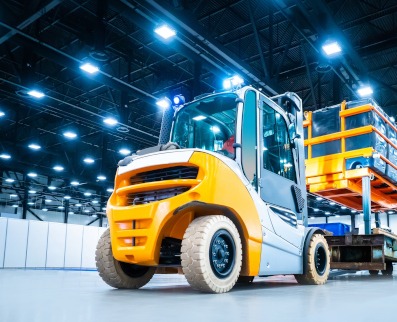

TPI
PSR Truck Production Index
Free quarterly global commercial vehicle production report.

Alternative Power Report
The latest EV and power source news including batteries and fuel cells with analysis by PSR experts.

PowerTALK News
Stay informed each month with insights from Power Systems Research’s analysts working around the world as they identify and comment on important news items in the company’s monthly newsletter.
Subscribe View Archive

OE Link™ Offers
Global Coverage
OE Link™ database provides OEM products, both On-Road and Off-Road, in 12 regions.
Current Reports
Download complimentary reports that show the type of information available from Power Systems Research.
PowerTALK News
Stay informed each month with insights from Power Systems Research analysts working around the world as they identify and comment on important news items in the company’s monthly newsletter.
Subscribe