

-
100,000th lithium-Ion Forklift for Jungheinrich
EUROPE REPORT

Emiliano Marzoli German OEM Jungheinrich has accomplished a remarkable goal, delivering its 100,000th lithium-Ion Forklift truck. An ETV 216i Reach truck was the star of this milestone, with 15 other identical models delivered to the Amazon warehouse in Leipzig.
In 2011, Jungheinrich was the world’s first industrial truck manufacturer to launch a series-produced truck with a lithium-ion battery. Since then, lithium-ion technology has become the fastest-growing battery technology for industrial trucks.
PSR Analysis: According to Jungheinrich, compared to a diesel truck of the same performance class, an electric truck with a lithium-ion battery emits less than half the CO2 during its entire lifetime, including its manufacture. By using electricity from renewable energy sources, the CO₂ emissions of the vehicles in operation can be reduced by up to 90%. It is not a surprise to see the increase of battery electric trucks in the European production mix.
-
DATAPOINT: NA Tillers, 2022 Production: 245,000 Units
245,000 units is the estimate by Power Systems Research of the number of Tillers to be produced in North America (United States and Mexico) in 2022.
This information comes from industry interviews and from two proprietary databases maintained by Power Systems Research: EnginLink™ , which provides information on engines, and OE Link™, a database of equipment manufacturers.
Exports: Mexico: up to 65% worldwide. United States: up to 25% worldwide
Market Share: With 39.5% of total units produced, Schiller Grounds Care leads in production of Tillers in North America. With combined plant totals of 37.5% (Mexico and US), MTD is in second place. Third, is Honda Power with 11.5%.
Trends: In 2021, production of Tillers in North America decreased 15%. Production is expected to increase 2.3% in 2022, compared to 2021. The decrease in 2021 was caused by Husqvarna discontinuing its line of tillers along with Cub Cadet, Columbia and Craftsman branded units being terminated in 2020 at the MTD Tupelo, MS plant. Husqvarna’s decision to cease tiller production was due to recall circumstances. The increase is driven by home owners using tillers to maintain their yards; there has been a constant demand for tillers in both the commercial and residential sectors Consumers are increasingly willing to spend their disposable incomes on durable goods, landscaping services, and recreational activities, boosting demand for both consumer and commercial outdoor power equipment. Expect production to increase 10% by 2025.
Carol Turner is Senior Analyst, Global Operations, at Power Systems Research
-
Personal Watercraft Production Grows

Michael Aistrup Summary.Technological advancements in the PWC (Personal Watercraft) market have led to the introduction of quieter and cleaner PWCs. PWC manufacturers have also focused their designs on today’s consumer base–families–by continuing to manufacture more of three person models which offer state-of-art features and functions.
The PWCmarket will continue to grow over the forecast period based on an increase in leisure spending and increasing demand of PWC for utilization in sports.
Personal watercraft, also known as a jet ski, is a watercraft having a hull that is driven by an internal water jet pump engine. The PWC is designed in such a way that it does not hold water if it capsizes. PWCs are fast and have the ability to rapidly change direction. PWCs are controlled by a driver who either stands or sits on the watercraft. It is a popular choice for sports and recreational activities.
Initially, PWCs were equipped with a two-stroke engine, but with changing technology, PWCs are now powered with state-of-the-art four stroke engines.
-
Daimler Beefs Up Western Star Brand
For a number of years, we have been hearing rumors that Daimler will likely put the Western Star truck brand out to pasture, primarily due to the brand’s low market share in the class 8 truck segment. However, this does not appear to be the case.
Chris Fisher During the past two years, Western Star has upgraded or is planning to upgrade their entire truck lineup based upon their current platforms.
Western Star typically focuses on the on-highway vocational side of the heavy truck segment along with other niche applications. DTNA has recently placed an emphasis on the on-highway vocational segment with both the Freightliner and Western Star brands.
The vocational truck segment represents approximately 25% of the class 8 truck market. This is somewhat low volume when compared to the class 8 freight segment, but the vocational trucks are highly profitable for the OEMs. Also having more diversification within the heavy truck market somewhat shields the OEMs from the volatility of the freight only segment.
-
BorgWarner Buys EV Charging Company

Guy Youngs Global auto supplier, BorgWarner has announced it is buying EV charging company Rhombus Energy Solutions. The deal will boost its EV charging presence in North America while adding to its European market and will accelerate its charging business by leveraging its existing capabilities. This is the latest in a round of EV related acquisitions the company has made. In August 2021 it took control of AKASOL,(a German EV battery company) and in March 2022, BorgWarner acquired 100% of Santroll…
-
Tesla Offers Lounges at Supercharger Stations
Tesla has linked up with bk World to provide its Supercharger stations to offer services to customers while their vehicles charge. Tesla has been trying to deploy its Supercharger stations at properties that include amenities that offer food, coffee, and restrooms, but that is not always easy. At a few locations, Tesla has deployed its own lounges to offer those amenities, including one test site in Germany which even has a swimming pool, and another has a restaurant.Source: Electrek…
-
Australian Solar Park Could Generate Hydrogen for Less Than $2/kg
Frontier Energy conducted a pre-feasibility study (PFS) at its Bristol Springs Solar project in Australia to show that it has the potential to be a low-cost green hydrogen producer, with power sourced from the company’s planned first stage 114 MW DC solar farm. The solar would power a 36.6 MW alkaline electrolyser, producing an estimated 4.4m kilograms of green hydrogen per year.Source: PV Magazine Read The Article
PSR Analysis: With green hydrogen costs being around $3/kg to $6.5/kg, production of…
-
BMW Focuses on Hydrogen Fuel-cell EVs
BMW remains primarily focused on electrified combustion engines and battery electric cars, but it is adamant that hydrogen FCEVs (Fuel Cell Electric Vehicles) will play a part of its transportation package. A limited batch of hydrogen-fueled BMW X5s soon will enter production, and the company says it is already planning for the next model with FCEVs making their way into its 2025 next-generation electric vehicle portfolioSource: H2 Energy News Read The Article
PSR Analysis: This moves BMW into the…
-
PowerTALK™, August 2022
Download PDFIn this issue of PowerTALK News we introduce a new feature, Alternative Power Report, written by Guy Youngs. The monthly feature will include news and analysis about EV and power sources such as batteries and fuel cells. Also in this issue are articles about Daimler’s new strategy regarding its Western Star Brand, and update on Personal Watercraft, and the implementation of China IV emissions regulations starting Dec. 1, 2022.
IN THIS ISSUE
- Alternative Power
- BMW keen on hydrogen fuel-cell EVs
- Australian solar park could generate hydrogen for less than $2/kg
- Tesla deploys lounges at Supercharger stations
- BorgWarner buying EV charging company to boost growth
- North America:
- Daimler Beefs Up Western Star Brand
- Personal Watercraft Production Grows
- DataPoint: NA Tillers
- Europe: Report:
- 100,000th lithium-Ion Forklift for Jungheinrich
- MAN Launches New Generation Engine
- Brazil/South America:
- Brazil Implement Registrations Remain Strong
- Volvo Plans EV Bus for Brazil in 2023
- Mercedes To Deliver 1000 EV Bus by 2023 to São Paulo
- Marcopolo To Deliver 30 EV Buses in 2022
- China: China IV Emissions Regulation Set for December
- Japan: Hino Motors’ Engine Fraud Covers 560,000 vehicles
- South Korea: Hyundai Doosan Infracore Plans Hydrogen Engine
- India: CV Industry Is Moving in Top Gear
PSR
- Alternative Power
-
Power Systems Research Activities in Russia Paused
March 2022- Power Systems Research has paused all research and business development activities in Russia. We have maintained a presence in Russia since 2013 to bring important updates to our clients about the powered equipment markets within Russia. We are monitoring the current situation on a daily basis and hope to again establish this presence at some point in the future when the conflict with Ukraine resolves. Please contact us at info@powersys.com if you have questions regarding…
 DataPoint Reports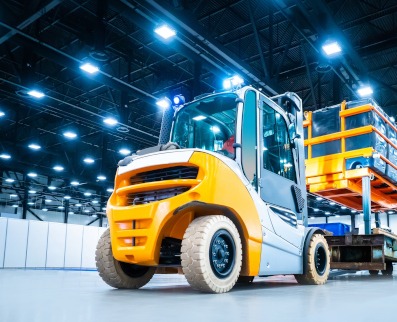
TPI
PSR Truck Production Index
Free quarterly global commercial vehicle production report.

Alternative Power Report

The latest EV and power source news including batteries and fuel cells with analysis by PSR experts.
PowerTALK News
Stay informed each month with insights from Power Systems Research’s analysts working around the world as they identify and comment on important news items in the company’s monthly newsletter.
Subscribe View Archive

OE Link™ Offers
Global
Coverage
OE Link™ database provides OEM products, both On-Road and Off-Road, in 12 regions.
Current Reports
Download complimentary reports that show the type of information available from Power Systems Research.
PowerTALK News
Stay informed each month with insights from Power Systems Research analysts working around the world as they identify and comment on important news items in the company’s monthly newsletter.
Subscribe