

-
MAN Marine Engines Certified To Operate Globally

Natasa Mulahalilovic MAN Energy Solutions, one of the leading marine engine manufacturers in the range between 730 and 2000 hp (5370 to 1397 kW), says that all of its engines now comply to the globally required major current emissions standards.
All engine models from i8-730 to V12-2000 are certified with the US EPA Tier III, the EU IMO Tier II and RCD 2013/53/EC. The current China Marine Recreational Stage I standard has been upgraded to the Stage II based on the US Tier III standard requirements.
-
NA Powersports EV Update
Read the complete report in April PowerTALK™ News
EDITOR’S NOTE. Power Systems Research tracks the global trend of electrification of industrial equipment. This is one of a series of reports on these trends.

Michael Aistrup Polaris INDUSTRIES, Minneapolis, is planning to debut a new electric Ranger utility side-by-side in December 2021. The Ranger will be the first electric vehicle Polaris has developed through their partnership with Zero Motorcycles.
The electric Ranger is the first product in Polaris’s long-term plan to accelerate its leadership in powersports electrification. Production will take place in Polaris’s Huntsville, AL facility.
Bombardier Recreational Products Inc. (BRP), which owns popular brands such as Can-Am, Rotax, Sea-Doo and Ski-Doo, plans to offer electric models in each of its product lines by the end of 2026. The company is investing $300 million in product development and production facilities.
-
Fastest NA Economic Growth Expected Since 1980s
Read the complete report in April PowerTALK™ News.

Yosyf Sheremeta (April 1, 2021)–After the GDP declined 3.5% last year, the worst performance in almost 75 years, the US economy is set for a strong comeback. In fact, we could see GDP growth exceeding 6% this year.
There are many reasons to be optimistic about 2021. Strong readings of macro-economic factors combined with the economic cycle reset backed by the government initiatives and policies support our estimates for the current year and beyond.
Our positive outlook is based on the reviews of the key economic indicators, including GDP, unemployment, and inflation. In our previous forecasts, we discussed recovery trends for the post-pandemic period, stating a return of demand for most markets in 2021, especially during H2 2021.
Based on our analysis of the expected growth trend and the economic reviews in major publications, we think US growth can surpass the growth level from 1984 – the highest one since 1950s.
-
Mining World Moscow 2021 Reopens Without Major Exhibitors
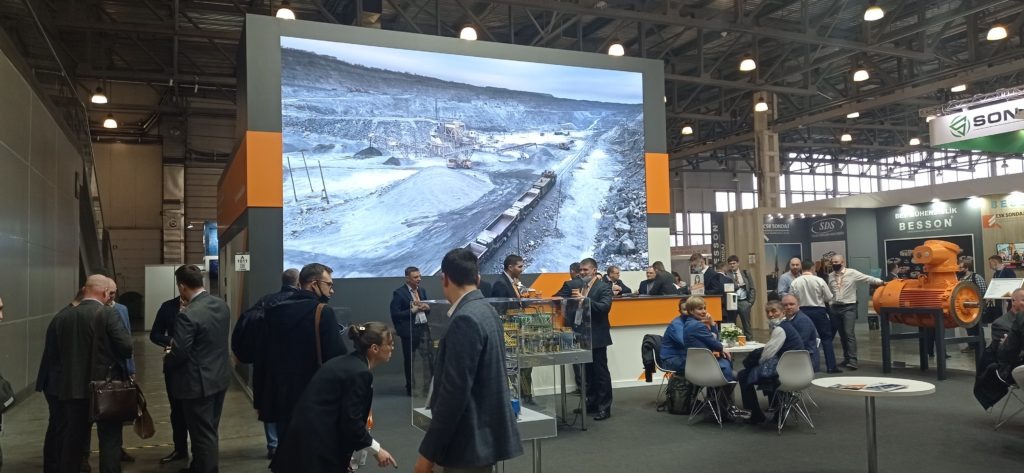
MOSCOW (April 21, 2021)–After only a seven-month break, the Mining World Russia trade show has started again, without many major exhibitors. The last Mining World event was conducted in October 2020.

Maxim Sakov This year’s fair started April 20 in the same place – the Crocus Expo Center Moscow. There were no significant changes since the last event. The amount of occupied space was similar, and the number of participants was about the same (167 companies versus 176 last time).
However, the number of countries has increased significantly – to 20. There were exhibitors from Australia, USA, Canada, U.K., India, China and so on. Large machine samples, including crawler drills, have been brought by Turkish companies. Germany is presenting a national exposition at the fair (in spite of pessimistic announcements made by German top officials regarding coal mining recently). Belorussian Belaz also presented at the show.
-
PowerTALK™ News, April 2021
Download PDFThe Power Systems Research Truck Production Index (PSR-TPI ) dropped 42.5% for the three-month period ended March 31, 2021, declining from 186 to 107, from Q4 2020. The year-over-year (Q1 2020 to Q1 2021) improvement for the PSR-TPI was 15%, in which it climbed from 93 to 107.
While the decline in commercial vehicle demand in China will lower global vehicle demand this year, improved demand is expected in all other regions, according to the April issue of PowerTALK™ News. The PSR-TPI measures truck production globally and across six regions: North America, China, Europe, South America, Japan & Korea and Emerging Markets.
Here are more articles in this issue of PowerTALK™ News:
- Power Systems Research Offers Truck Data
- Listen To New PSR PowerTALK Podcasts
- Global Truck Production Drops in Q1 2021 (PSR-TPI)
- North America
- Q1 2021 Economic Outlook
- Powersports EV Update
- DataPoint: Skid Steer Loaders
- Europe: MAN Marine Engines Certified
- South America
- MWM Launches NG Engines
- Argentina Forces Full Capacity
- CE 20% Growth Seen in 2021
- Japan: OEMs Agree on Battery Specs
- South Korea: Hyundai Seals Doosan Deal
- Malaysia: China-Led Proton Revitalized
- India: Scrappage Policy Announced
- Russia:
- KAMAZ Profit Exceeds US$20 Million
- GAZ Sells Trucks in Australia
- Uralmash Sets India Deal
- Rosatom Eyes Battery Production for Cars
-
DATAPOINT: 2021 US ATV Production, 301,000 Units
301,000 units is the estimate by Power Systems Research of the number of ATVs to be produced in Mexico and the U.S. in 2021.
This information comes from industry interviews and from two proprietary databases maintained by Power Systems Research: EnginLink™ , which provides information on engines, and OE Link™, a database of equipment manufacturers.
Market Share: With 28% of total units produced, Polaris Industries leads in production four-wheeled ATVs in North America. In second and third positions are Honda and Yamaha Motor with 22% and 19%, respectively.
Exports: Up to45% of Mexico’s ATV production is exported worldwide. That compares to about 30% of the US production that is exported.
Trends: Production of ATVs decreased 18% in 2020 from the 337,700 units produced in 2019. Even though production is expected to increase in 2021 by about 9% over the 2020 production of 275,700 units, it will still trail 2019 production by more than 36,000 units.
The decrease in 2020 was caused by COVID-19, excess inventories, uncertain economic conditions and the growing popularity of side x side units (UTVs). Manufacturers have discontinued less popular models and continue to shift production to UTVs.
The outlook for ATV sales is positive. According to investor relations representatives at Polaris, Yamaha and Arctic Cat, consumer discretionary spending is on the increase and gasoline prices are favorable.
Production is expected to increase by as much as 10% by 2025, driven by positive economic factors, pent-up demand caused by COVID, and the introduction of innovative products and technologies, including a shift to electric vehicles. PSR
Carol Turner is Senior Analyst, Global Operations at Power Systems Research
-
Q1 2021 Power Systems Research Truck Production Index (PSR-TPI) Falls 42.5%
Download PDF
St. Paul, MN (April 13, 2021)— The Power Systems Research Truck Production Index (PSR-TPI) dropped 42.5% for the three-month period ended March 31, 2021, declining from 186 to 107, from the fourth quarter of 2020. The year-over-year (Q1 2020 to Q1 2021) improvement for the PSR-TPI was 15%, in which it climbed from 93 to 107.
The PSR-TPI measures truck production globally and across six regions: North America, China, Europe, South America, Japan & Korea and Emerging Markets.
This data comes from OE Link™, the proprietary database maintained by Power Systems Research.
Global Index. While the decline in commercial vehicle demand in China will lower global vehicle demand this year, improved demand is expected in all other regions.
All Regions. Except for China, demand for medium and heavy commercial vehicles has bottomed out and is expected to increase this year and into 2022 as the various economies improve and Coronavirus vaccinations increase. The market will also experience periodic supply chain disruptions primarily due to the impact from the Coronavirus.
North America. Since the latter part of last year, heavy commercial truck orders have been extremely strong as freight rates remain very high. Both contract rates and spot rates are currently in record territory primarily driven by consumer spending, a strong housing market and an improving manufacturing sector. The anticipation of the stimulus spending and increasing vaccination rates for Covid-19 are also driving optimism in the economy. However, supply chain issues particularly regarding semiconductors will be the biggest obstacle for sustainable production this year.
Europe. Last year, medium and heavy commercial truck sales declined by 25.7% in the EU. Heavy truck sales declined by 27.3% and bus registrations dropped by 21% compared with 2019. However, order rates have shown significant strength during the past six months and sales are expected to improve significantly this year, primarily for the heavy truck segment. The biggest impediment to improved sales will likely be issues surrounding the supply chain for vehicle components and materials as a result of the impact from the Coronavirus.
South Asia. Commercial vehicle demand is expected to improve for much of this region this year. After a 53% decline in Indian MHCV production last year, an improvement of 35% is expected in 2021. While this is good news, it will still be a few years before Indian demand reaches more historic levels. The segment will continue to face headwinds due to excess capacity in the market, driver shortages, increased rail freight usage, relative constant freight rate, and booming fuel prices. The PLI scheme implemented by the government will provide some push to the Indian market from 2022.
South America. Medium and heavy commercial vehicle production declined by approximately 25% in 2020 with medium and heavy buses seeing the sharpest decline. While orders and production improved during the fourth quarter of 2020, concerns about supply chain disruption could hinder production levels this year. With increased vaccinations and a more stabilized regional economy, PSR expects production to return to pre-pandemic levels later this year.
Japan/Korea. After a significant decline in medium and heavy commercial vehicle demand last year, Japan and Korean production is expected to rebound this year and into 2022 for both the domestic and export markets. An improving global economy along with increased Coronavirus vaccines will help drive the improvement in demand. However, due to ongoing supply chain disruptions production levels are expected to be somewhat volatile this year.
Greater China. Demand for heavy trucks is expected to be down sharply this year as a result of the Chinese governmental requirement to replace all China III and lower emission vehicles with vehicles meeting China V or China VI emission standards by the end of last year. This along with stricter punishment of overloaded vehicles and the implementation of the Euro VI emission regulations in July will slow demand particularly in the last half of the year. The cost of the emission technology for Euro VI vehicles are not offset with any significant improvement in fuel economy which will likely lead to some level of truck pre-buy during the first half of this year. PSR
-
North American Economic Outlook – April 2021
In this episode of PSR PowerTALK, Yosyf Sheremeta, PhD, Dir. of Prod. Mgt. & Customer Experience, discusses why the North American economy could post record growth of more than 6% in 2021.
Transcript
Welcome to the PSR PowerTALK podcast, produced by Power Systems Research.
00:06 Joe Delmont:
From Power systems Research I’m Joe Delmont, editor of PSR PowerTALK.
Today, we’ll discuss the economic outlook for North America. This forecast has been developed by Yosyf Sheremeta, Director of Product Management and Customer Experience at Power Systems Research. Yosyf provides our clients with economic and production forecasts each quarter. Thanks for joining us today Yosyf.
-
PSR Partners With HDMA In Webinar
Current and Future Supply Chain Concerns For Medium and Heavy Vehicles Will Be Discussed

Erik Martin 
Chris Fisher Power Systems Research will produce a one-hour webinar with the Heavy Duty Manufacturers Association (HDMA) discussing current and future supply chain concerns, especially as they affect Medium and Heavy Commercial Vehicles.
When? Wednesday, April 21, 2021 from 1:00 – 2:00 pm ETWhat? Future areas of supply chain concerns, secondary effects of logistic and shipping issues, and current…
-
Q4 2020 North American Gen-Set Outlook
The Q4 2020 PSR PowerTracker survey provides information on North American gen-set sales from manufacturers, consumers and retailers. Joe Zirnhelt, Power Systems Research, President and CEO, provides the analysis.
Transcript
Welcome to the PSR PowerTALK podcast, produced by Power Systems Research.
00:06 Joe Zirnhelt:
From Power Systems Research, I am Joe Zirnhelt. In today’s PowerTALK podcast we will discuss results from the fourth quarter of 2020 based on our ongoing PowerTracker survey.
 PowerTALK Reports

TPI
PSR Truck Production Index
Free quarterly global commercial vehicle production report.

Alternative Power Report

The latest EV and power source news including batteries and fuel cells with analysis by PSR experts.

PowerTALK News
Stay informed each month with insights from Power Systems Research’s analysts working around the world as they identify and comment on important news items in the company’s monthly newsletter.
Subscribe View Archive

OE Link™ Offers
Global
Coverage
OE Link™ database provides OEM products, both On-Road and Off-Road, in 12 regions.
Current Reports
Download complimentary reports that show the type of information available from Power Systems Research.
PowerTALK News
Stay informed each month with insights from Power Systems Research analysts working around the world as they identify and comment on important news items in the company’s monthly newsletter.
Subscribe