
Electric Mobility Trends & Analysis
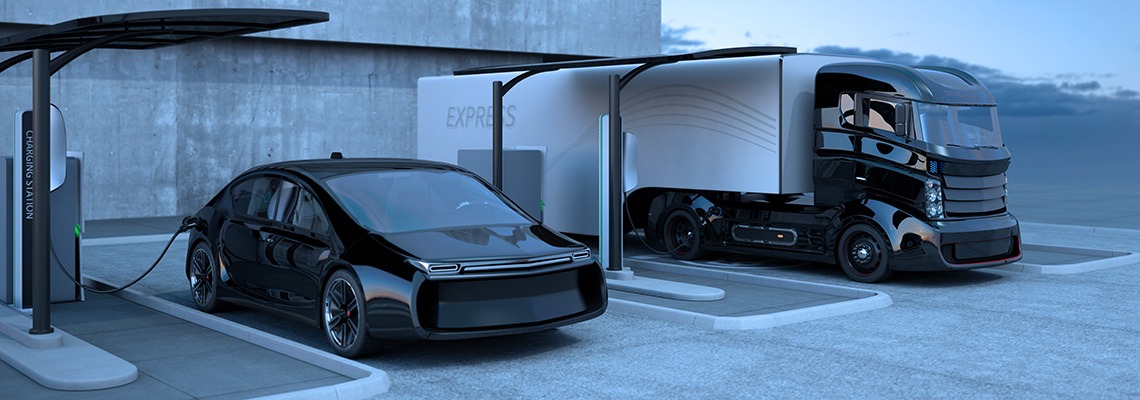
Follow PSR’s ongoing global coverage of eMobility across a wide range of segments, including electric cars, commercial vehicles, electric motorbikes and e-buses.
-
Volvo EV Bus Planned for Brazil in 2023
Volvo’s EV bus is now in the homologation phase in Brazil. Initially it will be produced in Sweden, with plans to be produced in Brazil for the South America market. The Curitiba plant engineering has participated significantly in the Bus Development.
Source: Automotive Business Read The Article
PSR Analysis: Volvo adapt its line-up to compete in the Brazil and South America market that will demand significant part of the volume for the EV models. It is slightly behind Mercedes…
-
BorgWarner Buys EV Charging Company

Guy Youngs Global auto supplier, BorgWarner has announced it is buying EV charging company Rhombus Energy Solutions. The deal will boost its EV charging presence in North America while adding to its European market and will accelerate its charging business by leveraging its existing capabilities. This is the latest in a round of EV related acquisitions the company has made. In August 2021 it took control of AKASOL,(a German EV battery company) and in March 2022, BorgWarner acquired 100% of Santroll…
-
Tesla Offers Lounges at Supercharger Stations
Tesla has linked up with bk World to provide its Supercharger stations to offer services to customers while their vehicles charge. Tesla has been trying to deploy its Supercharger stations at properties that include amenities that offer food, coffee, and restrooms, but that is not always easy. At a few locations, Tesla has deployed its own lounges to offer those amenities, including one test site in Germany which even has a swimming pool, and another has a restaurant.Source: Electrek…
-
Australian Solar Park Could Generate Hydrogen for Less Than $2/kg
Frontier Energy conducted a pre-feasibility study (PFS) at its Bristol Springs Solar project in Australia to show that it has the potential to be a low-cost green hydrogen producer, with power sourced from the company’s planned first stage 114 MW DC solar farm. The solar would power a 36.6 MW alkaline electrolyser, producing an estimated 4.4m kilograms of green hydrogen per year.Source: PV Magazine Read The Article
PSR Analysis: With green hydrogen costs being around $3/kg to $6.5/kg, production of…
-
BMW Focuses on Hydrogen Fuel-cell EVs
BMW remains primarily focused on electrified combustion engines and battery electric cars, but it is adamant that hydrogen FCEVs (Fuel Cell Electric Vehicles) will play a part of its transportation package. A limited batch of hydrogen-fueled BMW X5s soon will enter production, and the company says it is already planning for the next model with FCEVs making their way into its 2025 next-generation electric vehicle portfolioSource: H2 Energy News Read The Article
PSR Analysis: This moves BMW into the…
-
VinFast Ends Sales of Two Gasoline Vehicles
VIETNAM REPORT

Akihiro Komuro VinFast, an automotive subsidiary of Vingroup, the largest conglomerate in Vietnam, announced that it ended orders for two types of gasoline-powered vehicles in early July. The models covered are SUVs and sedans, and the company now will only sell the Fadil, a compact gasoline-powered vehicle. The company has announced its plan to withdraw from the production of gasoline-powered vehicles by the end of this year and is hastening its shift to EV production.
VinFast states that the reason for the suspension of orders for the two models is that “procurement of parts has become difficult and the number of units delivered to customers was not as large as expected.” The company did not mention the timing of the suspension of orders for Fadil. The company began selling EVs in Vietnam in December 2021.
-
Korean EVs Hyundai and Kia Doing Well in UK
FAR EAST: SOUTH KOREA REPORT
Akihiro Komuro The European EV market is expanding, and in the UK, Korean-made EVs are gaining popularity as vehicles that are more affordable than Tesla’s and that offer superior performance.
Last year in the UK, the Tesla Model 3 ranked second in sales of all passenger cars by model, marking the "first year of EVs" in earnest. However, the popular Tesla cars are not inexpensive, costing about three times as much as similarly sized gasoline-powered cars. On the other hand,…
-
Buffett-backed BYD Will Supply Batteries To Tesla
CHINA REPORT

Jack Hao BEIJING— Chinese electric vehicle (EV) and battery maker BYD is going to become Tesla’s battery supplier for the first time, a senior executive at the company backed by Warren Buffett’s Berkshire Hathaway said recently.
“Tesla is a very successful company. BYD has great respect for Tesla and raises our hat to it,” said BYD’s executive vice president Lian Yubo in an interview with the state-owned news channel China Global Television Network (CGTN), when he was asked his thoughts of China-made vehicles in comparison with Tesla. “(Tesla CEO) Musk and us are good friends now as we are preparing to supply batteries to it very soon. We learned a lot from Tesla,” Lian added, noting the U.S. rival’s positioning itself as a high-end EV brand.
Lian’s remark suggests BYD is set to be the second China-based battery supplier of Tesla next to CATL, the world’s largest EV battery company. LG Energy Solution, the South Korean battery maker second to CATL, and Tesla’s long-time partner Panasonic currently are another two battery makers in Tesla’s supplier list.
-
Market Intelligence: A Review of E-Motorcycle OEMs
NORTH AMERICAN REPORT

Michael Aistrup The global e-motorcycle market is changing almost daily as market share leaders develop new products and new companies continue to enter the market with competitive products. Here’s an update on several leading e-motorcycle OEMs.
Tork Motors has launched the Kratos electric motorcycle in the Indian market. The new Tork Kratos will be sold in two variants – Standard and R and will be available across India in a phased manner. In the first phase, this e-motorcycle will be available in Pune, Hyderabad, Bangalore, Chennai, Ahmedabad, and Delhi. The electric motor on the base model makes a peak power output of 7.5kW or 10.05bhp and a maximum torque of 28Nm. Tork has a manufacturing capacity to make about 500 units a month at its pilot plant and about 4,000 units a month at its new plant at Chakan near Pune.
-
PMI Electro To Set Up EV Manufacturing Plant in Maharashtra
INDIA REPORT

Aditya Kondejkar Electric bus maker PMI Electro announced the setting up of its largest EV manufacturing plant with annual production capacity of 2,500 vehicles at Chakan in Maharashtra.
Source: Economic Times Read The Article
PSR Analysis: PMI operates a manufacturing facility in Delhi, India’s capital region, which has an annual production capacity of about 1,500 electric buses. With the planned facility in Pune, the total annual…
Forecast Data
Looking for historical, current and forecast production volume data? Battery Electric Commercial Vehicle data can be found in our CV Link™ databases. OE Link™ is PSR’s database covering the production of original equipment.
Alternative Power Report

EV and power source news including batteries and fuel cells with analysis by PSR experts
TPI
PSR Truck Production Index
Free quarterly global commercial vehicle production report.

Alternative Power Report
The latest EV and power source news including batteries and fuel cells with analysis by PSR experts.

PowerTALK News
Stay informed each month with insights from Power Systems Research’s analysts working around the world as they identify and comment on important news items in the company’s monthly newsletter.
Subscribe View Archive

OE Link™ Offers
Global Coverage
OE Link™ database provides OEM products, both On-Road and Off-Road, in 12 regions.
Current Reports
Download complimentary reports that show the type of information available from Power Systems Research.
PowerTALK News
Stay informed each month with insights from Power Systems Research analysts working around the world as they identify and comment on important news items in the company’s monthly newsletter.
Subscribe