
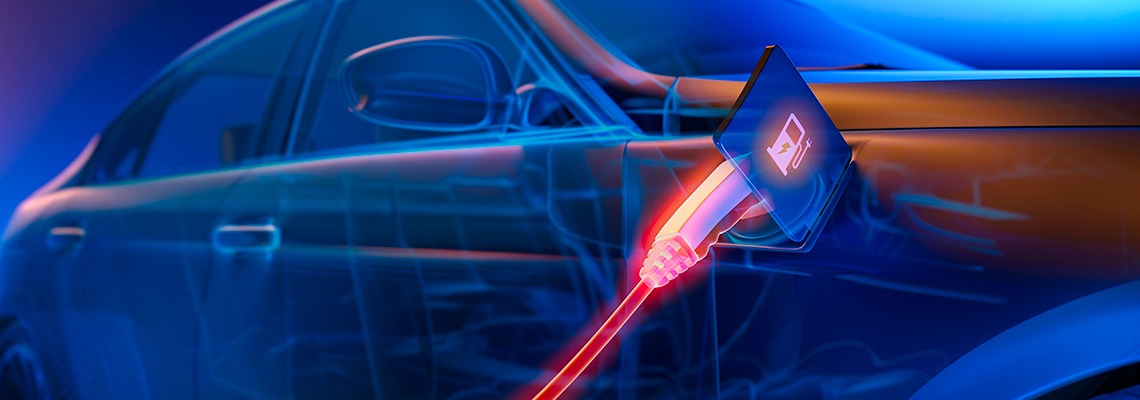
Battery Electric Trends & Analysis
Follow PSR’s team of analysts as they track the rapidly expanding global battery electric power market, including, battery technology, transportation, eMobility, mergers and acquisitions and more.
-
China’s Changan Auto To Build EV Plant in Thailand
SOUTHEAST ASIA: THAI REPORT
Changan Automobile Group, a major Chinese automobile manufacturer, will establish a new plant for electric vehicles such as EVs in Thailand, according to the Board of Investment of Thailand (BOI). The investment will be US$ 284 million (9.8 billion baht or about 38 billion yen), and construction is expected to be completed within a few years. The initial production capacity will be 100,000 vehicles a year, and on-board batteries will also be manufactured. The Thai government has established an incentive program to encourage local production of EVs, and Chinese EV giants have been actively investing in the country.
In addition to EVs, the new plant will produce electric vehicles such as HVs and PHVs. The company plans to supply vehicles to Southeast Asian countries, Australia, South Africa, and other markets.
-
Kia Plans Customer Specific EVs
FAR EAST: SOUTH KOREA REPORT
Kia is pursuing its own EV strategy centered on specific applications such as delivery vehicles and cabs. The company is jointly developing delivery vehicles with Korea’s largest online retailer, Coupang, and customer specific EVs will account for 1 million of the 1.6 million EV sales target for 2030. A dedicated plant will also be built in the suburbs of Seoul.
The company and Coupang will develop vehicles with increased cargo capacity and refrigerated and frozen interior equipment, with the assumption that only one driver will be on board. Coupang will have its own distribution center and delivery vehicles for high-speed delivery and will hire drivers directly. Coupang has indicated that it plans to operate 10,000 EV delivery vehicles in the future.
-
Rural India May Play Vital Role in EV Adoption
INDIA REPORT

Aditya Kondejkar Electric vehicles (EVs) witnessed strong growth in the Indian market in 2022, with a three-fold increase in sales as compared to the year before. Official data shows that Indians have bought 2,780,000 EVs since January 2023 at an average of more than 90,000 EVs per month. Significantly, the demand for EVs is not limited to metro cities such as Delhi, Mumbai, and Bengaluru, but is increasing in Tier-2 and Tier-3 markets as well.
Source: Financial Express Read The Article
PSR Analysis: While the growth of EVs has been primarily focused on urban areas of India, we are seeing a significantly improved adoption of EVs in rural parts of the country. The statistics from Vahan, the national vehicle registry, reveal that sales of electric cars and 3ws from the contribution of the top 10 districts in India has dropped significantly from 55%-60% in fiscal 2021 to 25%-30% in fiscal 2022. In the 2Ws segment, the percentage has dropped from 40%-45% to 15%-20%. The noticeable gaps here are being filled up by smaller towns and rural India.
-
Weichai, BYD To Jointly Produce Batteries
CHINA REPORT

Jack Hao Weichai Power and BYD have agreed to jointly produce power batteries in Shandong, and to cooperate in programs to develop EV commercial vehicles. On May 23, the companies signed an agreement to build a research and development and manufacturing base for power batteries, continuously strengthen the new energy industry chain, innovation chain, and value chain, and make positive contributions to promoting the industrialization development of China’s new energy commercial vehicles.
Weichai Power is the largest manufacturer of diesel engines in China. Since 2010, Weichai Power has set a strategic goal of leading the global industry development in the new energy business by 2030. Weichai Power has invested more than 4 billion yuan in this effort. It has strategically restructured the Canadian Ballard hydrogen fuel cell, the British Siris solid oxide fuel cell, and the Swiss rapid air compressor, developed the first hydrogen internal combustion engine heavy truck in China, comprehensively laid out the three technical routes of pure electric, hybrid power, and hydrogen fuel cell, and dispersed the risks brought by the uncertainty of industrial development with the investment strategy of coexistence of multiple technical routes.
-
VW To Build Its Largest Battery Factory In Canada
The battery division of Volkswagen Group, PowerCo SE, said it plans to construct its biggest battery gigafactory to date in St. Thomas, Ontario, Canada. A potential final expansion stage could produce up to 90 GWh of batteries annually.
This will be the company’s first overseas gigafactory for cell production, and it will provide the company’s BEVs in the North American region with their unified cells technology, a cell technology created for mass production. Construction is expected to start in 2024 and be completed in 2027.
-
Vale Increases Use of BE Locomotives in Brazil
As part of the strategy of accelerating the use of technologies that use renewable sources, Vale received at the end of March its second 100% electric locomotive, powered by battery. Manufactured in China by CRRC Zhuzhou Locomotive (CRRC ZELC), the equipment will initially operate in the maneuvering yard of the Ponta da Madeira Terminal in São Luís (MA). Its batteries, made of lithium, have a storage capacity of 1000 kWh, with autonomy to operate up to 10 hours without stops for recharging.
CRRC’s locomotive is part of Vale’s strategy to electrify its mine and rail equipment. The two areas account for 25% of the company’s direct carbon emissions, the so-called scope 1. In 2019, Vale announced the goal of zeroing its net emissions of scopes 1 and 2 (relative to electricity consumption) by 2050. To this end, it is investing between US$ 4 billion and US$ 6 billion.
-
Honda Plans Personal Electric Motorcycles
JAPAN REPORT
Honda said it plans to produce a motor-driven electric motorcycle for individuals in Japan by the end of 2023. This will be the first time Honda produces a product for the public in Japan.
Overall, Honda said it plans to launch more than 10 models of electric motorcycles worldwide by 2025. Their goal is to increase overall sales, including pedal-powered and electric bicycles, mainly in China and India. The company plans to increase its sales to 3.5 million units worldwide by 2030, more…
-
Vingroup To Enter EV Cab Market
VIETNAM REPORT

Akihiro Komuro Vingroup plans to launch a cab business using EVs in the country in April. The founder and chairman of the company has established a new company, owning a 95% stake. The company plans to start the service in Hanoi, the capital of the country, and expand it nationwide within the year. The company also hopes to increase awareness of its products.
The new company, Green and Smart Mobility (GSM), is capitalized at US$ 128 million (VND3 trillion, approximately 17 billion yen) and will develop a cab business using EVs as well as a business that rents EVs and electric bikes to other cab companies, etc. GSM plans to use 10,000 EVs and 100,000 electric bikes.
Source: The Nikkei
-
Global ICE Industry Cliff Is Here
This article includes an important graph showing vehicle production numbers between 2015 and 2026, (projected for 2023–2026) which are based on historic BEV growth data and trends. Hybrids are lumped in with ICE cars and are shown as a preference over full BEVs which is clear in the data.
The chart shows that the overall auto industry has declined from its peak in 2017–due to the pandemic and chip shortage–before it started to recover in 2021. This chart/model is conservative in predicting industry growth at 1.6% y/y going forward and BEV growth at 50% for 2023 (average BEV growth was 57% for the past 7 years)
-
Rolls Royce Power Systems Posts Record Year in 2022
EUROPEAN REPORT

Natasa Mulahalilovic Rolls Royce Holdings’ 2022 Annual Report shows significant performance improvement compared to 2021. Its four business units posted revenue of £12.691 m (£10.947 m in 2021), gross profit of £2.477 m (£1.996 m in 2021) and operating profit of £652 m (£441 m in 2021). Civil aerospace business unit made 49% of the revenue, Defense 29%, and Power Systems 26%.
The Power Systems business unit is the home for the mtu brand developing and manufacturing power systems and solutions for commercial marine, industrial, defense and yachts as well as power generation. Headquartered in Germany, it closed the year with a record revenue of £3.347 m, a gain of 23 % comparing to the prior year. Orders for 2022 were £4.3 billion, 29% higher than the orders placed in 2021.
Looking For Forecast Data?
Access battery electric data for on-highway and off-highway vehicles, as well as stationary and mobile applications in several industry segments.Battery Electric Commercial Vehicle data can be found in our CV Link™ databases. OE Link™ is PSR’s database covering the production of original equipment.
Alternative Power Report

EV and power source news including batteries and fuel cells with analysis by PSR experts
TPI
PSR Truck Production Index
Free quarterly global commercial vehicle production report.

Alternative Power Report

The latest EV and power source news including batteries and fuel cells with analysis by PSR experts.

PowerTALK News
Stay informed each month with insights from Power Systems Research’s analysts working around the world as they identify and comment on important news items in the company’s monthly newsletter.
Subscribe View Archive

OE Link™ Offers
Global Coverage
OE Link™ database provides OEM products, both On-Road and Off-Road, in 12 regions.
Current Reports
Download complimentary reports that show the type of information available from Power Systems Research.
PowerTALK News
Stay informed each month with insights from Power Systems Research analysts working around the world as they identify and comment on important news items in the company’s monthly newsletter.
Subscribe