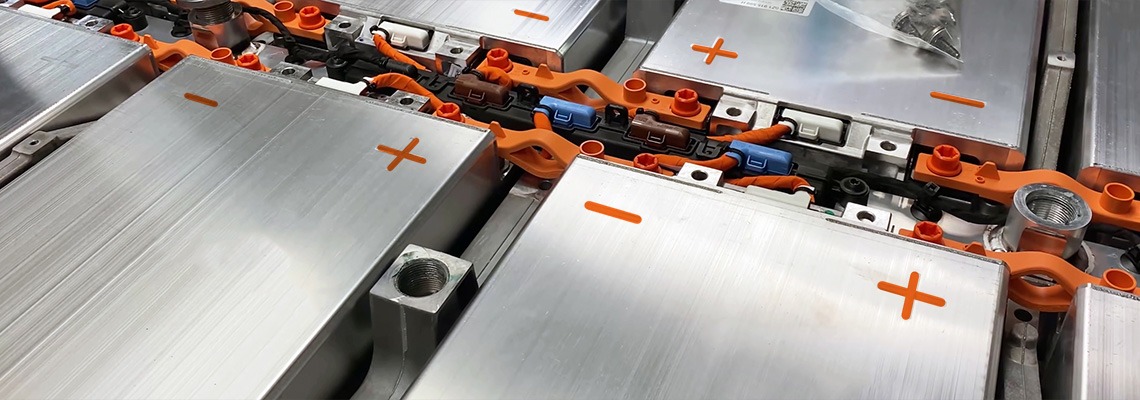
Learn more about the latest in new battery technology and discover the next generation in battery and energy storage with expert analysis by Power Systems Research analysts.
A few years ago, the idea of manufacturing EV batteries in the US was fraught with hurdles, the key issue being the absence of a domestic lithium pipeline. The US had earned a reputation as the biggest producer of lithium in the world, as well as the biggest user of lithium in the world (it was even used in the drink 7Up), but this growth stopped over health concerns and the US dwindled down to just one operation by the time the EV market took off.
The lithium supply chain is still problematic to the extent that it involves digging new surface mines, but an alternative solution has been emerging in the form of geothermal brine, and the US Department of Energy is pulling out all the stops to promote it. In 2020, the US Geological Survey identified five states with major deposits: Arkansas, California, Nevada, North Carolina, and Utah.
Thanks to a variety of factors (mostly base economics), lithium-ion battery packs are at record low prices. After dropping 14%, they are down to $139/kWh vs 2022. Prices for key battery metals, especially lithium, have fallen sharply since January, due to significant growth in production capacity in all parts of the battery value chain, from raw materials and components to cells and battery packs.
The steep price drop and record low average price come on the heels of price increases in 2022 that had brought battery prices back to 2020 levels. 10 Years ago, battery packs (including cells) cost $780 per kwh. These figures represent an average across multiple battery end-uses.
CATL, the worlds largest battery manufacturer, is not waiting for customers to come knocking on its door to buy batteries for their electric models. It has created what it calls its CATL Integrated Intelligent Chassis, a skateboard design that incorporates all the bits and pieces needed to make a fully functional electric car
Today’s electric vehicles are predominantly powered by nickel-manganese-cobalt (NMC) lithium-ion batteries. However, the inclusion of cobalt in this type of batteries has been considered problematic due to its anticipated scarcity as well as the associated supply chain risks related to its single source, human rights and mining practices.
Japanese scientists have developed a high energy density, cobalt-free lithium-ion battery that yields about 60% greater energy density than conventional lithium-ion batteries for an equivalent weight and volume and sustains unprecedented 1,000 cycles.
Read about new high energy density, cobalt-free lithium-ion batteries, CATL’s fast charging electric skateboard, a new lithium bonanza in the US and more in this month’s Alternative Power Report produced by Guy Youngs of Power Systems Research. PSR
A newly discovered ore containing vast quantities of an element widely used in semiconductors has been found in China. The discovery could propel new advances in battery technology.
Geologists have found the rare earth metal niobium inside the new ore named niobobaotite from north China’s Inner Mongolia. The rare earth metal is widely used in alloys for jet engines and rockets and has also been shown to have exceptional current conducting properties in low temperatures.
Researchers have said batteries made from niobium have several advantages over traditional lithium-ion batteries. The Brazilian Metallurgy and Mining Company (CBMM) has been working on new projects towards the use of niobium to make advanced lithium-ion batteries.
Toyota Motor Company is the latest automaker delving into solid-state battery technology, vowing to mass produce the safer and more energy dense cells in four years.
The Japanese automaker has recently changed its tune about building BEVs and is now claiming solid state batteries will be in vehicles starting in 2027.
The joint venture between Weichai Power and BYD has started construction on its factory, which has attracted widespread attention and has quickly become a hot topic in the industry. On Nov. 3, 2023, in Shandong Province, the Weichai (Yantai) New Energy Power Industrial Park project, a joint venture between Weichai Power and BYD, officially began construction.
Project plans call for the creation of a research and development and manufacturing base for batteries, motors, electronic controls, and electric drive assemblies that run through new energy commercial vehicles.
After the project is put into operation, the direct beneficiaries will include Weichai New Energy Commercial Vehicles under the Weichai Group and located in Yantai.
May 12, 2023, Weichai Power and BYD signed a strategic cooperation agreement in Shenzhen to jointly produce power batteries in Shandong.
FAW Jiefang and CATL have set up a joint venture company, Jiefang (Jilin) New Energy Technology Co., Ltd., to do business in the new energy segment. The company is wholly-owned by Jiefang shidai New Energy Technology Co., Ltd., which is a joint venture between FAW and CATL with each party holding 50% of the JV’s shares.
The JV was established to sell new energy vehicles, batteries, battery parts, and electric vehicle charging equipment charging stations; Information system integration services; and Intelligent control system integration. It also will manufacture power transmission and distribution and control equipment.
In August 2022, CATL reached a strategic cooperation agreement with FAW Jiefang, proposing to invest 500 million yuan to establish a subsidiary for cooperation. CATL’s battery business mainly focuses on the passenger car market, and the cooperation between the two sides marks the beginning of CATL’s in-depth launch into the new energy commercial vehicle market.
Mercedes is exhibiting its electric bus chassis eO500U at Busworld in Brussels targeting other markets where the body is assembled over the bus chassis. Traditionally, the exports of Mercedes from Brazil are over 50% of the total production and it targets to expand this percentage with the new BEV, that has WEG drives, BorgWarner batteries assembled in Brazil with imported battery supplies.
PSR Analysis: While the push from São Paulo city to buy only BEV buses in the near future jeopardizes current chassis manufacturers business, it boos the development of BEV chassis and allow exports to other countries. Mercedes runs against the clock to compete with players like BYD and Higher with BEV chassis already developed. PSR
Fabio Ferraresi is Director-Business Development South Americafor Power Systems Research