

-
PowerTALK, March 2019
Download PDFForklift Production Climbs in 2019
Production of Rough Terrain Forklifts in the U.S. this year is expected to be about 14,400 units, according to Carol Turner, PSR Senior Analyst, Global Operations. Her report is one of the Top Stories in the March 2019 issue of the PSR PowerTALK newsletter.
Other stories include a report on the 2019 Moscow Boat Show, a report on Q4 2018 gen-set sales in North America as part of PSR’s quarterly PowerTRACKER proprietary survey, plus stories from Asia, India, South America and Europe.
TOP STORIES
- Rough Terrain Forklifts
- EGSA Conference Report
- NA Gen-Set Sales
- Argentina LV Production Drops
- Columbia LV Sales Forecast
- China Boosts Methanol Use
- Deutz Posts Strong Earnings
- Kawasaki Completes India Plant
- Doosan Wins Contracts
- Indonesia Backs EVs
- India Plans Tariffs
- India Car Sales Decline
- Moscow Boat Show Report
- Russia Electric Car Market
- Japanese Trucks in Moscow
-
PowerTALK February 2019
Download PDFFord Plans To Shut Down Brazil Truck Operations
The February 2019 issue of PowerTALK includes information on Ford’s plans to shut down its truck business in Brazil, a report on global Snowmobile production, and a 2019 economic forecast for North America.
Here are other Top Stories in this issue of PowerTALK:
- Brazil Off-Hwy. Sales Up 13%
- Michelin Expands in Brazil
- Brazil Investment Growth
- Beijing To Implement NS6b Rule
- Kia Expands in India
- SE Asia Auto Sales Soar
- India Expands EV Measures
- Chetra Builds Deere Components
- VW Ups Russia Investment
-
PowerTALK January 2019
Download PDFVietnam Auto Industry Develops
The January 2019 issue of PowerTALK includes a report on Vietnam’s auto industry. This is the first in a series of occasional reports on Vietnam business conditions that will be available in PowerTALK.
Here are other Top Stories in this issue of PowerTALK:
• Locomotive Production
• Truck Production Climbs
• Beijing To Add 5G for Vehicles
• GM May Leave SA
• Boot Show Sees Strong 2019
• Vietnam Pushes Auto Industry
• Ford May Close Russia Plants
• Hyundai To Open EV Plant -
Q4 2018 PSR Truck Production Index (TPI) Up 3.5%
Download PDFST. PAUL, MN — The Power Systems Research Truck Production Index (PSR-TPI) increased from 115 to 118, or 2.6%, for the three-month period ended Dec. 31, 2018, from Q3 2018. The year-over-year (Q4 2017 to Q4 2018) gain for the PSR-TPI was 3.5%, climbing 4 points from 114 to 118.
The PSR-TPI measures truck production globally and across six regions: North America, China, Europe, South America, Japan & Korea and Emerging Markets.
This data comes from CV Link™, the proprietary database maintained by Power Systems Research..
Except for North America, most of the other key regions are beginning to see an economic slowdown. Regarding the commercial truck market, a slowing global economy along with generally strong truck sales during the past few years is placing downward pressure on commercial vehicle adoption rates.
Detailed comments are contained for each region with a corresponding regional graph in the attached downloadable PDF. PSR
Jim Downey is vice president -global data products at Power Systems Research
Chris Fisher is the senior commercial vehicle analyst at Power Systems Research
-
PowerTALK December 2018
Download PDFCeres Power and Weichai Finalize JV in China
Ceres Power, a world-leading, low cost solid oxide fuel cell company, and Weichai Power, one of the leading automobile and equipment manufacturing companies in China, have completed their long-term strategic collaboration announced last May. This includes a Joint Venture agreement with the commitment to create a fuel cell manufacturing JV in China, a license agreement to transfer key technology to the JV and a new £9 million joint development agreement. It also triggers a further £28m equity injection into Ceres Power.
Top stories in this issue of PowerTALK include
- Light Tower Production
- Weichai Completes Hydrogen JV
- 2018 India Auto Report
- Russia Autonomous Vehicle Tests
- Honda Launches EV Scooter
- Rising Demand for Electric Lifts
- Brazil Truck Sales Climb
- Power Gen Show Report
-
PowerTALK November 2018
Download PDFGlobal Truck Production Drops in Q3 2018
Global truck production dropped in Q3 2018, according to the Power Systems Research(PSR) Truck Production Index (PSR-TPI).
You’ll find the details in the November issue of PowerTALK, the monthly world news and analysis report from PSR. You’ll find lots of other news as well, including detailed reports from the show floors of EICMA (the international motorcycle show in Milan) and GIE+Expo, the lawn and garden show held in Louisville, KY.
Top Stories
- US Snowblower Production
- Global Truck Production
- Batteries Power GIE+Expo
- Positive Signs in Brazil
- Electrics Popular at EICMA
- China Launches CN-6
- Isuzu Autonomous Partnership
- Korea Invests Abroad
- TATA Posts Sales Increase
- Ford Russia JV Supplies Europe
-
PowerTALK October 2018
Download PDFElectrification: What’s The Future for Off-Highway?
Construction equipment OEMs are evaluating various electrification options, including hybrid configurations where electric auxiliary drives are being adapted to replace traditional mechanical systems, including hydraulics, in some cases. But relatively few pure battery-electric machine designs have appeared, at this point, writes Dennis Huibregtse, CEO of Power Systems Research.
Top Stories in this issue of PowerTALK:
- Data Point: NA Combines: 7600
- Electrification Goes Off-Road
- NA Economic Forecast
- Automated Mining Trucks
- Weichai Shows 6b Diesel
- VW Group Performs
- Piaggio Banks on Alternative Fuels
- Russia Plans China JV
-
Q3 2018 Power Systems Truck Production Index (PSR-TPI) Slips 9.7%
Download PDFSt. Paul, MN— The Power Systems Research Truck Production Index (PSR-TPI) dropped from 124 to 112, or 9.7%, for the three-month period ended Sept. 30, 2018, from Q2 2018. The year-over-year (Q3 2017 to Q3 2018) gain for the PSR-TPI was, 110 to 112, or 1.8%.
Commercial vehicle demand in 2018, has been particularly strong in North America, Brazil, Russia and India while demand is expected to decline sharply in China after very strong sales in 2017. Demand in Japan/Korea is also in decline. Outside of China and Japan/Korea, medium and heavy commercial vehicle demand in the other regions is trending higher this year.
The PSR-TPI measures truck production globally and across six regions: North America, China, Europe, South America, Japan & Korea and Emerging Markets.
This data comes from CV Link™, the proprietary database maintained by Power Systems Research.
Commercial vehicle demand globally in 2018, has been particularly strong in North America, Brazil, Russia and India while demand is expected to decline sharply in China after very strong sales in 2017. Demand in Japan/Korea is also in decline. Outside of China and Japan/Korea, medium and heavy commercial vehicle demand in the other regions is trending higher this year.
In North America, production levels for class 8 trucks continue to be strong, driven by record order levels that are expected to continue well into 2019. Order boards basically are filled through H1 2019. The strong economy is driving the need to replace or expand the fleets. While not as strong as the heavy truck segment, the medium truck segment is having another good year, driven largely by strong consumer and vocational demand.Medium and heavy truck production is expected to increase by 4.8% in Greater Europe this year over 2017. Production in Western Europe should increase by 1.8%, while production in Eastern Europe could increase by 15.7% as the fleets continue to replace their aging trucks.
After weak demand in Eastern Europe over the past few years a recovery in demand is in full swing. While demand in Western Europe has slowed somewhat this year, it continues to be historically strong.
Strong demand in South Asia, led by demand in India, should boost production for medium and heavy trucks in South Asia this year by 10% over 2017. Production in India is expected to increase by 11.1% this year after a soft 2017, primarily due to the implementation of the BS-IV emission regulations which increased the cost of the trucks. Additional infrastructure spending is expected to boost demand in India during the next few years.
After several years with very low medium and heavy truck demand, domestic and export sales in South America started to improve last year and South American production is expected to increase by 12.9% in 2018, led by Brazil. While truck exports are a main reason for this increase, domestic demand also has improved significantly during the past year. Demand in Argentina is expected to soften as the country struggles with its economy.
Medium and heavy truck demand in Japan/Korea is expected to continue its decline by falling 9.7% this year as softness in domestic demand continues to impede the manufacturers. Japanese production should decline by 9.7% while production in South Korea should fall by 7.1%, compared with last year. Production continues to be transferred from Japan and Korea closer to their traditional export markets.
Because of China’s GB1589 regulations to control overloading of trucks last year, commercial truck demand in that country was very strong in 2017 and into the first eight months of 2018. However, truck capacity is now relatively high and with higher truck prices partly due to the cost of emission technology and lower freight rates, demand is expected to decline in Q4 2018 and during the next few years. PSRDetailed comments are contained for each region with a corresponding regional graph in the attached downloadable PDF.
The PSR Truck Production Index is produced by Chris Fisher, PSR Senior Commercial Vehicle Analyst and Jim Downey, PSR Vice President- Global Data Products.
-
PowerTALK September 2018
Download PDFWhat Is the Real Cost of Diesel?
Dennis Huibregtse, CEO of Power Systems Research, examines the trade-offs faced by fleet managers as they consider switching from diesel to alternative fuels.
As fleets evaluate powertrain alternatives in their search for potential
operating cost reductions and improvements in efficiency, it quickly becomes apparent that not all attributes of the current range of alternatives are perceived favorably or equally.Top Stories in this issue of PowerTALK
- A Grader Production
- Effect of Trade Wars?
- Report: Cannes Yachting Show
- Mercedes Expands Exports from Brazil
- Major Consolidation at Weichai Power, CNHTC
- Impact of Axle Norms on Trucks in India
- Mahindra Pickup To Be Assembled in Russia
-
PowerTALK August 2018
Download PDFStrong Economy Indicates Another Year of Solid Growth
Second of Two Parts
SUMMARY. During Q2 2018, the economy remained stable and economic conditions in the region still are favorable, most industries are doing well, and the short-term outlook remains positive to flat for most market segments. We expect such strong conditions to last at least another 12 months. At the same time, there will be some minor differences among
market segments, especially those that are consumer oriented.Top stories in this issue of PowerTALK
- NA Tiller Growth
- Battery Show Notes
- NA Economy Forecast
- Brazil Eyes EV, New Trucks
- China Replaces Diesel Buses
- EU M/C Market Recovers
- EU Priority: Stimulate Investment
- Hydrogen Conversion Package
- Korea Cuts Auto Tax
- Harley Targets Asia
- India Promotes EVs
- Tractor Plant Takeover
- Moscow Oks Driverless Vehicles
 PowerTALK Reports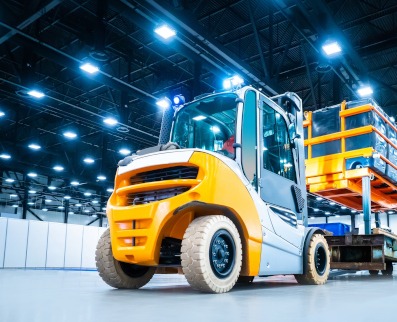

TPI
PSR Truck Production Index
Free quarterly global commercial vehicle production report.

Alternative Power Report

The latest EV and power source news including batteries and fuel cells with analysis by PSR experts.

PowerTALK News
Stay informed each month with insights from Power Systems Research’s analysts working around the world as they identify and comment on important news items in the company’s monthly newsletter.
Subscribe View Archive

OE Link™ Offers
Global
Coverage
OE Link™ database provides OEM products, both On-Road and Off-Road, in 12 regions.
Current Reports
Download complimentary reports that show the type of information available from Power Systems Research.
PowerTALK News
Stay informed each month with insights from Power Systems Research analysts working around the world as they identify and comment on important news items in the company’s monthly newsletter.
Subscribe