

-
Hyundai Doosan Infracore Plans Hydrogen Engine
FAR EAST: SOUTH KOREA REPORT
Hyundai Doosan Infracore announced that it has been selected as the lead company for the national project “Development of Hydrogen Engine System and Storage and Supply System for Construction Machinery and Commercial Vehicles” by the Industrial Technology Evaluation and Management Agency.
Through this project, the company plans to develop a 300kW, 11-liter class hydrogen engine and hydrogen tank system with zero carbon emissions, which will be installed in commercial vehicles…
-
Hino Motors’ Engine Fraud Covers 560,000 vehicles
FAR EAST: JAPAN REPORT

Akihiro Komuro Hino Motors has announced that the falsification of diesel engine emission values, which was previously announced in March, had been taking place since at least 2003 or earlier. The company had previously stated that the fraud began in the fall of 2016. In 2016, the company also revealed that it had falsely reported to the MLIT (Ministry of Land, Infrastructure, Transport, and Tourism) in response to its request for a fact-finding survey on exhaust gas and fuel efficiency tests.
Source: The Nikkei
PSR Analysis: Although I do not wish to make such negativity a theme, I cannot overlook this issue. The impact on the industry of the fraud at Hino, which has the top share of the medium- and heavy-duty truck sector in Japan, is significant. Isuzu has suspended shipments of four bus models that use Hino engines. Not limited to the automotive field, Tadano cranes, Kobelco hydraulic excavators, Hitachi Construction Machinery wheel loaders, and Kato rough terrain cranes have also been forced to suspend shipments after the problem came to light.
-
Hyundai Launches Flagship EV, the IONIQ6
SOUTH KOREA REPORT
Akihiro Komuro Hyundai Motor Company unveiled in July its flagship EV model, the IONIQ 6, that has a driving range of 6.2 kilometers per kilowatt-hour, a 20% increase over the current 5 model. The cruising range was also increased by 22% to 524 kilometers or 326 miles, (based on Korean government certification standards). Hyundai Motor claims that its EVs have the world’s highest level of electricity consumption efficiency.
The company called the IONIQ 6 “a ‘mobile personal studio,’ a space where you can rest and relax on your own. It offers a new experience that is different from existing EVs.”
In Korea, pre-orders will begin in late July, with shipments starting in September. Pricing will start at 55 million won (approximately 5.8 million yen), and sales are expected to reach 12,000 units by the end of the year. It will be released in Europe by the end of the year and in the US in the first half of 2023. Sales in Japan have not yet been decided. The newly announced “6” has a lighter body, and the cruising range has been extended by improving the energy-saving performance of the drive components and semiconductors.
-
Venture Firm Raises 4.2 Billion Yen for Electrification Projects
FAR EAST: JAPAN REPORT
Akihiro Komuro PowerX, Inc. says it has raised 4.15 billion yen in funding for two electrification projects: one is to develop its own “Power ARK,” a ship that carries electricity, and the other is to build a large-scale storage battery factory in Japan.
The idea behind the Power Transfer Vessel is to store electricity in container-shaped storage batteries and transmit it by ship, with an eye toward the expansion of offshore wind farms. Conventionally, power is transmitted from offshore wind farms to land via submarine cables, but the aim is to develop the Power Transfer Vessel that can replace submarine cables. This will make it easier to construct power plants offshore in windy distant seas. The construction of submarine cables that pass high-voltage electricity is environmentally hazardous, but the Power Transfer Vessels are cheaper than cables and will enable power transmission to be realized sooner.
Power Ark 100. The first vessel, the “Power ARK 100,” will have a length of approximately 100 meters and will be equipped with 100 storage batteries in the form of shipping containers, enabling it to store 220 MWh of electricity. This is roughly equivalent to one day’s worth of electricity for one city (22,000 households). In the event of a large-scale power outage or other disaster, the ship will serve as a contingency power source. Larger vessels are also planned, and a 220-meter-long vessel capable of carrying 3,000 containers would be able to transport 5,660 MWh of electricity.
-
Hyundai Sells More Than 800 EVs at Indonesia Auto Show
FAR EAST: SOUTH KOREA REPORT
Hyundai Motor Indonesia (HMID) said it has signed contracts for more than 800 units of the Ioniq 5 EV announced at the Indonesia International Motor Show (IIMS) Hybrid 2022 in Jakarta.
The company announced that it has started mass production of the Ioniq 5 and that it will begin shipping to dealers in April. The Creta SUV was the second most sold model after the Ioniq 5, with approximately 600 units sold, bringing the total number of vehicles sold to over 1,500, including EVs and gasoline-powered vehicles.
-
MEGURI2040: The Fully Autonomous Ship Program
FAR EAST: JAPAN REPORT
Akihiro Komuro The Nippon Foundation, Mitsubishi Heavy Industries Group company Mitsubishi Shipbuilding Co., Ltd., and Shin Nihonkai Ferry Co., Ltd. have successfully completed a demonstration test of the world’s first fully autonomous ship navigation systems on a large ferry, conducted on the Iyonada Sea from Shinmoji, Kitakyushuu City, in January.
This demonstration was part of MEGURI2040, a fully autonomous ship navigation project launched by The Nippon Foundation in February 2020.
Japan’s declining birthrate, aging population, and shrinking population have resulted in labor shortages in many fields. Seafarers in coastal shipping, which requires hard work on board, are no exception. More than half of the seafarers in coastal shipping are over 50 years old, which poses a major challenge.
-
Korea To Increase EV Battery Material Production
FAR EAST: SOUTH KOREA REPORT
Akihiro Komuro Korean materials giants are rushing to increase production of battery materials for EVs. Lotte Chemical plans to invest 160 billion yen to build plants for electrolytes and other materials in Korea and the U.S. LG Chem and POSCO have also announced plans to increase production. The three major Korean battery manufacturers, including LG, have active investment plans, but they are lagging their Chinese counterparts in the upstream area of battery materials. Materials companies are also increasing their supply capacity to compete with the Chinese.
Lotte Chemical, a major petrochemical company, will build a new plant for organic solvents for electrolytes in its own plant. The company will build a new factory with a total investment of 602 billion won, aiming for production by the end of 2023. The company is also considering building a plant related to electrolyte and cathode materials in Louisiana, U.S. It has begun coordination with local governments and other related parties in anticipation of starting production in 2025. The investment is expected to be in the order of 100 billion yen.
-
Yanmar Makes Major Battery Buy
FAR EAST: JAPAN REPORT
Yanmar Holdings Co. Ltd. announced it has acquired a majority share in ELEO Technologies B.V., a battery technology company based in Helmond, the Netherlands. By integrating ELEO’s advanced, scalable, and modular battery technology, Yanmar said it will further its electrified powertrain capabilities with customized solutions for off-road applications.
After joining the Yanmar Group as part of Yanmar Power Technology Co., Ltd., ELEO will continue to operate as a stand-alone entity under its own brand at its current location in Helmond, the Netherlands.
Founded in 2017, ELEO Technologies develops and produces advanced modular battery packs which are differentiated by their proprietary battery management system (BMS) and thermal management technologies. The company is near completion with a new advanced production facility that will increase its annual battery production capacity to 500 MWh, equivalent to approximately 10,000 battery packs.
-
Yanmar Acquires Fast Growing Battery Technology Firm
EUROPE REPORT

Natasa Mulahalilovic Yanmar Holdings Co. Ltd, the multi-billion dollar multinational company headquartered in Osaka, Japan, has acquired a majority of shares of a young and fast-growing ELEO Technologies B.V. from theNetherlands, this month. The acquisition has been completed through European’s subsidy, Yanmar B.V. An earlier investor, Lumipol Group, has entirely exited the company.
As a part of Yanmar Power Technology Co, Ltd, Eleo will continue operating as an independent entity under its existing brand and with production located in their current site in Helmond, the Netherlands.
ELEO Technologies B.V. was founded in 2017 to design and produce innovative modular electric batteries systems for use in marine, industrial machine, e-mobility, commercial vehicles or specialized recreational product applications.
-
Yamaha Motor To Launch Electric Motorcycles in Europe
JAPAN REPORT
Akihiro Komuro Yamaha plans to launch a series of electric motorcycles in Japan and overseas this spring. Electric motorcycles with an engine displacement equivalent to 125cc will be leased and sold on a trial basis in Europe, Japan and other countries. In response to the global trend of decarbonization, Yamaha has set a goal of reducing CO2 emissions to virtually zero by 2050. The 125cc equivalent electric motorcycle has been on the market in Taiwan, but this is the first time it has been offered in Europe and Japan.
The motorcycle has been developed based on the E01 concept vehicle, which was unveiled at the 2019 Tokyo Motor Show. The company avoided mentioning specifics about the range and other specifications but said that the E01 would be equipped with a high-powered fixed battery that can run at high speed while meeting the range requirements for daily use, and that it would support quick charging as well as normal charging.
TPI
PSR Truck Production Index
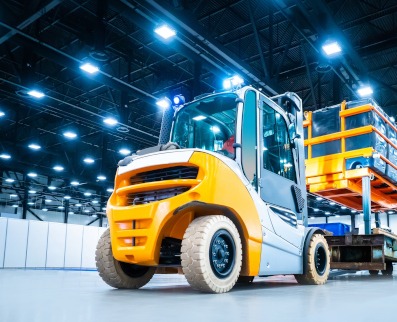
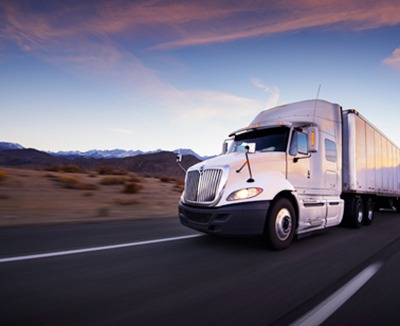
Free quarterly global commercial vehicle production report.

Alternative Power Report
The latest EV and power source news including batteries and fuel cells with analysis by PSR experts.

PowerTALK News
Stay informed each month with insights from Power Systems Research’s analysts working around the world as they identify and comment on important news items in the company’s monthly newsletter.
Subscribe View Archive

OE Link™ Offers
Global
Coverage
OE Link™ database provides OEM products, both On-Road and Off-Road, in 12 regions.
Current Reports
Download complimentary reports that show the type of information available from Power Systems Research.
PowerTALK News
Stay informed each month with insights from Power Systems Research analysts working around the world as they identify and comment on important news items in the company’s monthly newsletter.
Subscribe