

Power Systems Research (PSR) is an international research company based in St. Paul, Minnesota, USA. It operates a second North America office in Detroit, Mich., and has offices in five other countries. PSR analysts have been collecting and analyzing global engine and powertrain data and information since 1976, and we use this data to develop targeted forecasts by industry segment and region.
Our team of experienced analysts works with OEMs, engine and component manufacturers, dealers, fleet managers and industry experts to compile detailed and focused data that has become an industry standard. It’s the leading source of global information on engines and power equipment powered by IC and alternate sources. Whether you need detailed global data, forecasts or customized local market studies, we can provide you with Data, Forecasting and Solutions. Let’s start today.
-
JCB Reaches Hydrogen Milestone
JCB’S £100 million investment in a project to produce super-efficient hydrogen engines is going full steam ahead. A team of 100 engineers has been working on the exciting development for more than a year and the 50th JCB hydrogen combustion engine has now come off the production line as part of the development process.
JCB’s hydrogen-fueled backhoe loader is one of three hydrogen vehicles the OEM is developing. JCB hydrogen engines are powering prototype backhoe loaders and Loadall telescopic handlers and the company has recently unveiled its very own designed and built mobile refueling bowser to take fuel to the machines. The bowser has enough hydrogen to fill 16 hydrogen backhoe loaders and can be transported either on the back of a modified Fastrac tractor or on a trailer.
-
Hyster Begins Pilot of Hydrogen Fuel Cell Powered Container Handler
Hyster Company is testing a top-pick container handler powered by hydrogen fuel cells (HFC) at Fenix Marine Services in the Port of Los Angeles.
Based on the standard Hyster H1050-1150XD-CH top-pick container handler design, the truck is powered by two 45kw hydrogen fuel cells from Nuvera, a wholly owned subsidiary of Hyster parent company Hyster-Yale Group. The HFC-powered top pick is designed to provide the zero emissions benefits of a battery electric option, with enough capacity to keep operators moving and avoid the need to stop in the middle of a shift to refuel or recharge.
-
U.S. Economy Faces Multiple Problems
NORTH AMERICA REPORT

SUMMARY. Many of the biggest challenges facing the U.S. economy in 2022 are continuing into 2023. These problems include supply chain disruptions, the migration of production and use of internal combustion engines to alternative drive types, uncertainty of inflation and rising interest rates, and the war in Ukraine.
There were also positives which came out of 2022, including a return to more face-to-face business transactions and meetings. Trade shows made a big comeback in 2022, and this trend will continue in 2023 as the huge CONEXPO-CON/AGG will be held in March in Las Vegas.
The push towards electrification is not all negative either. Innovation and action around alternative drive types will continue to grow.
-
Redwood To Supply Cathode Materials To Panasonic

Guy Youngs Panasonic Energy said it has agreed to purchase cathode active materials and copper foil for lithium-ion batteries from Redwood Materials. The recycled cathode active materials will be used to manufacture batteries in the company’s new $4 billion factory located in De Soto, Kansas, starting in 2025, and the recycled copper foil will be used to make batteries at Panasonic’s facility in Sparks, Nevada, starting in 2024.
“Recycling and a localizing supply chain are both essential to make the best use of limited natural resources,” said Kazuo Tadanobu, President and CEO of Panasonic Energy, in a press release.
This may amount to 50% of the cost of the battery and add around 900 new workers to Redwood Materials workforce once in full scale production
-
U.S. Powersports Industry Grows in 2021

Michael Aistrup The U.S. Department of Commerce’s Bureau of Economic Analysis (BEA) has released economic data for 2021 showing the outdoor recreation industry’s impact on the U.S. economy. Key highlights from the 2021 data on the U.S. outdoor recreation economy include: 1. $862 billion in economic output; 2. 1.9% of GDP, and 3. 4.5 million jobs.
Trips and travel have come back, record sales in many outdoor segments, manufacturing increasing, as well as the drive to continue to recreate for quality of life has allowed the outdoor industry to bounce back from the effects of COVID-19.
“The continued strength of the outdoor economy is no surprise to the marine industry, where we continue to see incredible growth with new and younger customers taking to our brands each year,” said Chris Drees, President of Mercury Marine, the world’s leading manufacturer of recreational marine propulsion engines.
-
Acquisitions in Light/Medium EV Segment
NORTH AMERICA REPORT

Chris Fisher 2022 has been an interesting year on many commercial vehicle fronts including the medium and light electric commercial truck and van segment. While large established OEMs such as Ford, who is expected to produce approximately 6,500 E-Transits at the Kansas City plant in 2022, there has been some shakeup within the electric commercial vehicle start-ups.
During the past six months, Mullen Automotive, based in Brea, CA, has acquired the assets of the now bankrupt Electric Last Mile (ELMS) company and has acquired 60% of Bollinger Motors, which has yet to start vehicle production.
In September 2022, Mullen Automotive invested $148 million into Bollinger Motors, giving Mullen a 60% share of the company. Bollinger plans on introducing their electric class 3 – 6 lineup of cargo vehicles starting in 2023 and it is likely that Bollinger will also manufacture the Mullen electric light commercial vans also starting production in 2023.
-
Container Ships Could Look Like this by 2050
Here’s What Container Ships Could Look Like by 2050
With pressure from regulators to decarbonize international shipping, companies big and small are racing to identify green alternatives to the gas-guzzling container ships that account for an estimated 3% of global greenhouse emissions.
Many of the ideas floating around today leverage some form of high-tech sail, a futuristic take on the wind-powered voyages that have transported goods for as long as global trade has existed.
Many factors need to be…
-
Tesla Refinery Project Advances in Texas
Tesla is currently working on a lithium refinery project that would be coming to Corpus Christi, Texas, and it sounds like the automaker is in the final stretch of its negotiations with the authorities.
In September, we learned that Tesla has a plan to build a lithium refining facility on the Gulf Coast of Texas. At the time, all we knew was that Tesla was planning on moving fast with hope to start building in Q4 2022.
-
Are There Enough Materials To Produce Needed EVs?
The transition from ICE to electric vehicles (EVs) is necessary to decrease climate-changing emissions. As deployment increases, so will the demand for EV battery materials such as lithium, cobalt, and nickel. These materials are primarily supplied through two sources: 1) newly mined or 2) recovered by recycling batteries.
Research shows there are enough explored or prospective reserves to electrify the global transportation sector using current technology if a high amount of battery recycling occurs. In this scenario, global demand for EVs in 2100 will amount to about 55% of cobalt reserves and 50% of lithium reserves. If recycling doesn’t ramp up, a shortage of lithium, nickel, or cobalt is likely, and it is estimated that demand would exceed what is economically accessible to extract.
-
JCB Unveils Mobile Hydrogen Refueler
Guy Youngs JCB has unveiled a mobile hydrogen refueler which it says will allow on-site refueling of hydrogen powered machines in the same way that fuel bowsers are used for diesel powered equipment.
The mobile hydrogen refueller is designed to provide an easy way to refuel machines, the vast majority of which have fuel delivered to them while working on site, said the company. JCB said customers are already used to a transportable fuel system.
Power Systems Research – Headquarters
1365 Corporate Center Curve
Eagan, MN 55121
United States
Tel: +1.651.905.8400
Fax: +1.651.905.8487
info@powersys.com

Power Systems Research – Detroit
Tel: +1.248.444.0545
Tel: +1.651.905.8400
infode@powersys.com

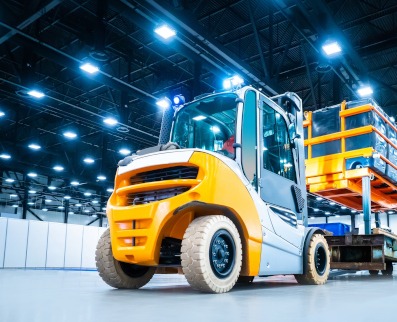
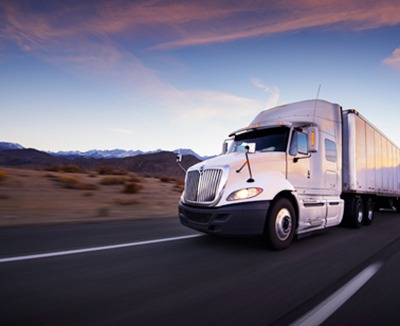
TPI
PSR Truck Production Index
Free quarterly global commercial vehicle production report.

Alternative Power Report
The latest EV and power source news including batteries and fuel cells with analysis by PSR experts.

PowerTALK News
Stay informed each month with insights from Power Systems Research’s analysts working around the world as they identify and comment on important news items in the company’s monthly newsletter.
Subscribe View Archive

OE Link™ Offers
Global
Coverage
OE Link™ database provides OEM products, both On-Road and Off-Road, in 12 regions.
Current Reports
Download complimentary reports that show the type of information available from Power Systems Research.
PowerTALK News
Stay informed each month with insights from Power Systems Research analysts working around the world as they identify and comment on important news items in the company’s monthly newsletter.
Subscribe