

-
HanseYachts Group Reports ‘Exceptional Year’

Natasa Mulahalilovic German boat manufacturer HanseYachts AG has announced preliminary financial results for 2020-2021 that it has described as “exceptional for the company in all respects.”
The group, established in 1990, manufactures sailing, motor yachts and luxury sailing, and motor catamarans under the brands Hanse, Dehler, Moody, Privilege, Fjord and Sealine. Boats are produced in Germany and France, and are equipped with Volvo, Yanmar and Mercury engines.
Despite the production problems caused by delays in parts supply, the group achieved record results in 2020/2021, with the order book counting more than 1,000 boats. Previously, the group’s best year was 2007/2008 when 940 boats were ordered. The revenue this year is expected to be more than € 230 million.
-
Mercedes Grows in EV Bus Market

Emiliano Marzoli While smaller players are struggling to remain competitive in the EV bus space, Mercedes-Benz is targeting more clients and more volumes.
Mercedes-Benz has handed over one eCitaro G electric articulated bus with solid-state batteries each to Hamburger Hochbahn and Verkehrsbetriebe Hamburg-Holstein. The two new electric articulated buses each have seven battery packs with solid electrolyte and an energy content of 441 kWh, allowing up to 200km range, depending on operational conditions.
-
Hydrogen Fuel Cell Truck Happenings in Europe

Chris Fisher We have heard during the past few years that battery electric commercial trucks will ultimately replace the diesel-powered internal combustion engine for commercial trucks. At some point in the future this might be true for short and regional haul freight carriers, but what about the long-haul heavy truck segment?
Currently, the lack of charging infrastructure, range anxiety and the extreme weights associated with the batteries will be a significant deterrent to mass adoption of long-haul battery electric trucks.
-
Continental Wins First Order for CV High-Performance Computer
Frankfurt, Germany–For the first time, Continental has won an order to supply the commercial vehicle sector with telematics units that include high-performance computers. This means that the technology company now also offers a solution that can master the increasing requirements for connectivity, complexity and functional scope in trucks.
Continental will use its telematics know-how – already proven in the passenger car sector – to complete this order from Volkswagen. Last year, Continental was…
-
European EV Buses Under Pressure
Emiliano Marzoli After three years, Alstom is halting their EV bus production. By the end of 2021, the production lines will be stopped, and unless a buyer will take over, most of the operations will be shut down. Twenty employees will remain active to assure maintenance for the existing vehicles in operations with RATP.
Just two years ago, Alstom was one of the winners of a contract to supply electric buses to the French operator. However, this was not enough to maintain profitability.
PSR Analysis: We believe that electric buses have a great future, particularly in Europe. According to our database CV Link™, alternative drive buses, including Hybrid, Fuel Cells and Battery Electric, will grow at a 22% CAGR between 2020 and 2030.
-
MAN Marine Engines Certified To Operate Globally
Natasa Mulahalilovic MAN Energy Solutions, one of the leading marine engine manufacturers in the range between 730 and 2000 hp (5370 to 1397 kW), says that all of its engines now comply to the globally required major current emissions standards.
All engine models from i8-730 to V12-2000 are certified with the US EPA Tier III, the EU IMO Tier II and RCD 2013/53/EC. The current China Marine Recreational Stage I standard has been upgraded to the Stage II based on the US Tier III standard requirements.
-
DATAPOINT: Global Snowmobiles, 2021 Production, 107,250 Units
107,250 units is the estimate by Power Systems Research of the number of Snowmobiles to be produced in Canada, Finland, Italy, Japan, and the U.S. in 2021.
This information comes from industry interviews and from two proprietary databases maintained by Power Systems Research: EnginLink™ , which provides information on engines, and OE Link™, a database of equipment manufacturers.
-
100% Green Hydrogen Powered Ferry Planned by 2027
Natasa Mulahalilovic The European Union’s private and public sectors are working hard on developing projects that could accelerate the transition from the fossil fuel powered to the zero-emission shipping.
One of the leading joint efforts is the project created by Danish ferry operator DFDS, Swiss-Sweden giant ABB, Danish fuel cell manufacturer Ballard Power Systems Europe, the global leader in zero-emission e-mobility Hexagon Purus, wind power generator Orsted, Lloyds Register and Danish Ship Finance.
The project is designed to build a 100% green hydrogen powered ferry by 2027.
-
Volvo Penta: Sustainability First , Zero-Emissions by 2050
Sources: Volvo Penta Press Releases, IBI News, Boating, Trade Only Today
Natasa Mulahalilovic Volvo Group announced that the company will focus on sustainable solutions in all business areas, from trucks and buses through construction to its marine division. The group objective is to become a zero-emission company by 2050, at the latest.
As part of this changeover, the Volvo Penta division, the world leader in marine engine and propulsion systems, is cutting its outboard engines production and sales. This reverses a major acquisition the company made in 2017.
-
Komatsu to Sell Electric Construction Equipment in Europe

Akihiro Komuro Komatsu plans to release a battery-powered compact excavator that emits no exhaust gas in Europe in 2022. The company will also promote the quietness of the product and expects to use it in residential areas. Hitachi Construction Machinery will also double orders for electric excavators in fiscal 2021 compared to the previous year. Following the trend in the automobile industry, competition in the field of electric construction machinery is now in full swing.
The compact excavator to be launched by Komatsu will use lithium-ion batteries that are lightweight and can operate for a long time. It uses a motor instead of an engine, making less noise and emitting no exhaust gas. The company will first market the product in Europe, where environmental regulations are strict, and then consider launching it in Japan. Komatsu began renting several small excavators powered by lead-acid batteries on a trial basis in Japan in April 2020.
TPI
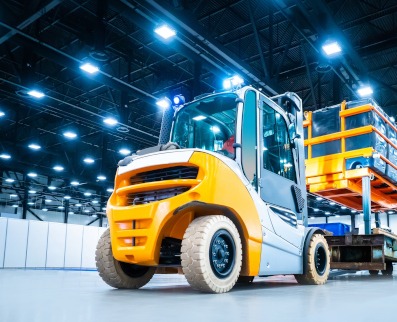
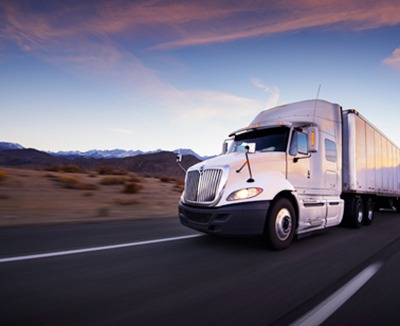
PSR Truck Production Index
Free quarterly global commercial vehicle production report.

Alternative Power Report
The latest EV and power source news including batteries and fuel cells with analysis by PSR experts.

PowerTALK News
Stay informed each month with insights from Power Systems Research’s analysts working around the world as they identify and comment on important news items in the company’s monthly newsletter.
Subscribe View Archive

OE Link™ Offers
Global Coverage
OE Link™ database provides OEM products, both On-Road and Off-Road, in 12 regions.
Current Reports
Download complimentary reports that show the type of information available from Power Systems Research.
PowerTALK News
Stay informed each month with insights from Power Systems Research analysts working around the world as they identify and comment on important news items in the company’s monthly newsletter.
Subscribe