

-
Eletra Converts Trucks and Buses to Electric in Brazil
Eletra started converting Trucks and Buses from 3.5 to 54 Tons for the range of 50km to 150km by replacing the actual Powertrain (ICE, Transmission, Axels,) and suspension with batteries, electric drive and new suspension. The main benefits for the approach is to provide 30% less cost than a new Electric Truck and shorten the timing to meet sustainability targets, since the retrofit is done quickly. Companies like Ambev (AB-Inbev) announced 102 trucks retrofitted with Eletra.
Source: M&T Read The Article
-
Hyundai Motor To Convert Heavy-Duty Trucks and Buses To Hydrogen and Electric Vehicles
FAR EAST: SOUTH KOREA REPORT
The Hyundai Motor Group has announced its “Hydrogen Vision 2040,” which states that 2040 will be the first year of the popularization of hydrogen energy. The company plans to launch new models of all commercial vehicles, including heavy-duty trucks and buses, with hydrogen-electric and electric vehicles. The goal is to reduce the price of hydrogen-electric vehicles to the level of general electric vehicles by 2030 by developing a next-generation hydrogen fuel cell system that is inexpensive and has good performance.
The Hyundai Motor Group will not launch any new commercial vehicles powered by internal combustion engines in the future. It plans to mass-produce hydrogen-electric trucks in the country in the first half of next year and plans to apply hydrogen fuel cells to all of its commercial vehicle lineup by 2028.
-
New Russia Electric Transport Plan To Cost US$ 8 Billion

Maxim Sakov The Russian government has approved a new plan for electric transport development into 2030 that will be implemented in two stages. At the end of the first stage, the plan calls for production of at least 25,000 electric vehicles and the launching of 9,400 charging stations.
By 2030, 10% of all new vehicles should be electrical, and the number of charging stations should increase to 72,000. In Russia, by 2030 it’s planned to launch production of accumulator battery cells, and to build 1,000 hydrogen fuel stations for vehicles.
-
Volvo To Produce Trucks in China in 2022

Jack Hao Volvo Trucks expects to start production of the new heavy-duty Volvo FH, Volvo FM and Volvo FMX trucks in Taiyuan for local customers in China late next year. Volvo Trucks has agreed to acquire a subsidiary of China’s Jiangling Motors Co to produce trucks for the local market starting late next year. JMC Heavy Duty Vehicle Co, which includes a manufacturing site in Taiyuan, capital of North China’s Shanxi province, will be purchased for $120.4 million (780 million yuan), said the Swedish truck maker.
Source: China Daily Read The Article
-
Most Regions Will Post 20%+ Growth in Truck Production

Chris Fisher Editor’s Note: This is an updated report from the Q2 2021 Truck Production Index report produced by Chris Fisher and Jim Downey, Vice President-Global Data Products, in July 2021.
Question: What is the global truck production picture? What is the outlook?
PSR Opinion: Overall, medium and heavy truck demand will finish the year on a strong note, and continued strength is expected into 2022. On-going supply chain disruptions will continue to impact production throughout the rest of the year and likely into 2022.
Question: What kind of global production volume do you expect for this year?
-
KAMAZ Introduces Hercules Articulated Truck
The first pictures of the new KAMAZ articulated mining truck have been published, showing a configuration of the truck with a 6×6 chassis. It will compete with the Caterpillar 740 and Volvo A40F.
The articulated frame will increase maneuverability and off-road characteristics of the truck. Hercules will be equipped with a hybrid powertrain. The new truck will use a KAMAZ R6 engine of 450 hp, and the nominal output of every electric motor will be 517 hp. The load capacity of Hercules is 40 tons, and the full weight is 75 tons. A light option with 4×4 format and 25-ton capacity are also in the plans.
-
Tupy Developing Efficient Hydrogen Powered Engine

Fabio Ferraresi Brazilian Tupy is working with AVL and Westport Fuel Systems to develop a high efficiency ICE powered by Hydrogen, targeting long haul Trucks. Tupy supplies superior materials casting and high precision machining for high pressure injection engines designed and tested by AVL and Westport. First outcomes of the work are expected at the beginning of 2022.
Source: Automotive Business Read The Article
PSR Analysis: With the Zero Emissions target and the need for efficient…
-
Tonar Shows First Articulated Dump Truck
The development of this truck was conducted with support of the Ministry of Industry and Trade. Ministry subsidized R&D expenses of US$ 800,000 (60 million Rubles).
The model, called “Tonar-35” reflects the number of tons of cargo it can lift. It has an Cummins QSZ13 engine of 450hp/2100N.m. As an option, it’s possible to install a YAMZ-6585 of 420hp. It has an automatic transmission Allison 4500. Besides engines and some reductors, the T-35 is all assembled of Russian components.
-
Goods Transported in Brazil Increases in 2021
From January to April, the amount of total of goods transported in Brazil was R$ 2.9 trillion, while in the same period of 2020 it was R$ 2.1 trillion, an increase of 39%. This metric is used as a baromometer for the Brazilian economy.
Source: M&T Read The Article
PSR Analysis: This result is aligned with what we see in the sales of new trucks and trailers and confirms our increase in FY 2021 sales and production. Part of the increase is due to inflation in local currency, but part is due to…
-
Hydrogen Fuel Cell Truck Happenings in Europe

Chris Fisher We have heard during the past few years that battery electric commercial trucks will ultimately replace the diesel-powered internal combustion engine for commercial trucks. At some point in the future this might be true for short and regional haul freight carriers, but what about the long-haul heavy truck segment?
Currently, the lack of charging infrastructure, range anxiety and the extreme weights associated with the batteries will be a significant deterrent to mass adoption of long-haul battery electric trucks.
TPI
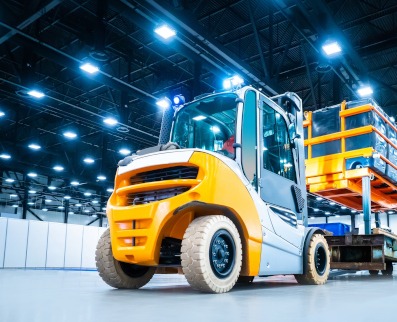
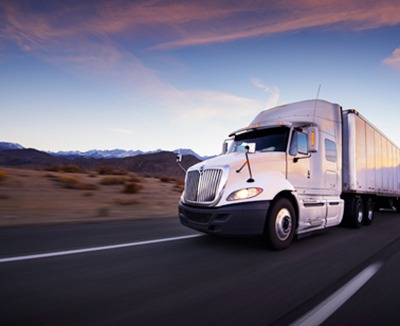
PSR Truck Production Index
Free quarterly global commercial vehicle production report.

Alternative Power Report
The latest EV and power source news including batteries and fuel cells with analysis by PSR experts.

PowerTALK News
Stay informed each month with insights from Power Systems Research’s analysts working around the world as they identify and comment on important news items in the company’s monthly newsletter.
Subscribe View Archive

OE Link™ Offers
Global
Coverage
OE Link™ database provides OEM products, both On-Road and Off-Road, in 12 regions.
Current Reports
Download complimentary reports that show the type of information available from Power Systems Research.
PowerTALK News
Stay informed each month with insights from Power Systems Research analysts working around the world as they identify and comment on important news items in the company’s monthly newsletter.
Subscribe