

-
Sanlorenzo, Volvo Penta Collaborate

The Italian superyachts manufacturer Sanlorenzo and Volvo Penta are working to enhance yachting efficiency and sustainability by integrating the Volvo Penta’s IPS Professional Platform into the new SX120 and SX132 superyachts.
As part of its “Road to 2030” strategy, Sanlorenzo, a leading superyacht manufacturer, continues to drive innovation following the 2024 launch of the 50 Steel, the first superyacht powered by a green methanol-to-hydrogen fuel cell.
The IPS Professional Platform is an integrated, modular propulsion system developed by Volvo Penta and has been successfully tested on the 37 meters passenger ferry called Penta 40 in Sweden in 2024. It is designed for commercial vessels and superyachts between 25 and 55+ meters to improve efficiency, sustainability, reliability and comfort on the sea.
-
Maersk Continues Investments in Fleet Decarbonization

Natasa Mulahalilovic The Danish A.P. Moller & Maersk, the second largest container shipping company in the world, has set a goal to reach zero-emission container shipping by 2040. The Maersk ambitious objective is much advanced compared to the global shipping industry objective to meet net-zero carbon emissions by 2050 to fight against 3% of the global greenhouse emission that they are responsible for.
The program initiated in 2021 aims to renew the fleet of 707 container ships, 304 owned and 403 long-time-chartered, with dual-fuel vessels and propulsion systems. Contracts with different partners and suppliers are in the process of being signed. The giant has chosen to combine methanol and liquified gas bio-LNG for the propulsion systems of its renewed green fleet. The exact split of propulsion technologies will be determined over time considering the latest regulatory requirements and green fuels supply.
-
Electric Hydro Foiling Popular in Maritime Industry
EUROPE REPORT
Natasa Mulahalilovic The electric hydro foiling propulsion system is a fast-growing technology taking an important place in the future of the maritime industry. The revolutionary concept provides cost-effectiveness, zero-emissions, zero-noise and excellent performance values (very fast) in different types of boats for pleasure and commercial use.
Tne technology is innovative and is, for most vessels, based on a specific aerodynamic design of a boat, retractable foils, electric motors, and batteries. Hydro foiling and electric systems work together to cut through waves causing less drag and resulting in higher speed.
The use of energy is much less than for any other vessel with a traditional propulsion system. E-foiling boats give an impression of flying over water silently with no CO2 emission or any other air or water pollution. The experience is comfortable, safe, clean and speedy.
-
Ammonia-Powered Fuel Cell Developed for Deep Sea Shipping
ShipFC is the project financed by the Union European program Horizon 2020 and Hydrogen Europe aiming to prove that fuel cells powered by green ammonia can meet the strict IMO standards of zero-emission Deep Sea shipping.
Currently, a 100% zero-emission solution is not available in this segment. Batteries do not last longue enough with a size that can fit a ship onboard, and Hydrogen technology has some other challenging issues to resolve. Alternative fuel solutions are promising but still need to be tested, confirmed, and approved by DNA.
-
Rolls Royce Power Systems Posts Record Year in 2022
EUROPEAN REPORT
Natasa Mulahalilovic Rolls Royce Holdings’ 2022 Annual Report shows significant performance improvement compared to 2021. Its four business units posted revenue of £12.691 m (£10.947 m in 2021), gross profit of £2.477 m (£1.996 m in 2021) and operating profit of £652 m (£441 m in 2021). Civil aerospace business unit made 49% of the revenue, Defense 29%, and Power Systems 26%.
The Power Systems business unit is the home for the mtu brand developing and manufacturing power systems and solutions for commercial marine, industrial, defense and yachts as well as power generation. Headquartered in Germany, it closed the year with a record revenue of £3.347 m, a gain of 23 % comparing to the prior year. Orders for 2022 were £4.3 billion, 29% higher than the orders placed in 2021.
-
Electric Boat Market Forecast To Grow by 12%

Michael Aistrup Gas-powered engines have been the backbone of boating since the advent of the internal combustion engine, but electric-powered boats could soon be claiming a significant share of the market.
Most of the fuel used in transportation is petroleum-based, but initiatives by many governments to reduce carbon emissions and to encourage consumers to adopt eco-friendly boats and ships is expected to boost growth of the electric boat market. The electric boat industry is still in early stages of development and there is a potential for growth.
Electric boats are defined as marine vessels with electric drive as propulsion. Electric boats can be only electric, hydrogen fuel cell electric, or hybrid electric.
-
Report from Cannes Yachting Festival 2022
EUROPE REPORT
Natasa Mulahalilovic The Cannes Yachting Festival is one of the largest in-water shows in the world, and this year it celebrated its 45th birthday. Founded in 1977, the show normally takes place every September. However, it missed out in 2020 because of Covid-19 restrictions, but it was back in 2021, posting the best performance results ever.
This year, the show was held Sept 6-11, and featured a fleet of about 700 boats, ranging in length from 3 to 50 meters. It included motor and sailing vessels, monohulls and multihulls, inboards, sterndrives and outboards, diesel, petrol, waterjet, hybrid and electric, tenders, RIBs and others displayed in the two main city ports of Le Vieux Port and Port Pierre Canto. This year, more than 56,000 visitors attended the show.
The new Polish Sunreef 80 Eco was the star of the festival. The all-electric, fully autonomous luxury catamaran of 23.87 m in length, 164 m2 covered with solar panels, is a unique boat in the industry. This luxury catamaran is equipped with ultra-light batteries with a density of 5.2 kg/kWh. The innovative system is entirely created and produced by the company itself offering the best efficiency in the marine world.
-
Venture Firm Raises 4.2 Billion Yen for Electrification Projects
FAR EAST: JAPAN REPORT

Akihiro Komuro PowerX, Inc. says it has raised 4.15 billion yen in funding for two electrification projects: one is to develop its own “Power ARK,” a ship that carries electricity, and the other is to build a large-scale storage battery factory in Japan.
The idea behind the Power Transfer Vessel is to store electricity in container-shaped storage batteries and transmit it by ship, with an eye toward the expansion of offshore wind farms. Conventionally, power is transmitted from offshore wind farms to land via submarine cables, but the aim is to develop the Power Transfer Vessel that can replace submarine cables. This will make it easier to construct power plants offshore in windy distant seas. The construction of submarine cables that pass high-voltage electricity is environmentally hazardous, but the Power Transfer Vessels are cheaper than cables and will enable power transmission to be realized sooner.
Power Ark 100. The first vessel, the “Power ARK 100,” will have a length of approximately 100 meters and will be equipped with 100 storage batteries in the form of shipping containers, enabling it to store 220 MWh of electricity. This is roughly equivalent to one day’s worth of electricity for one city (22,000 households). In the event of a large-scale power outage or other disaster, the ship will serve as a contingency power source. Larger vessels are also planned, and a 220-meter-long vessel capable of carrying 3,000 containers would be able to transport 5,660 MWh of electricity.
-
MEGURI2040: The Fully Autonomous Ship Program
FAR EAST: JAPAN REPORT
Akihiro Komuro The Nippon Foundation, Mitsubishi Heavy Industries Group company Mitsubishi Shipbuilding Co., Ltd., and Shin Nihonkai Ferry Co., Ltd. have successfully completed a demonstration test of the world’s first fully autonomous ship navigation systems on a large ferry, conducted on the Iyonada Sea from Shinmoji, Kitakyushuu City, in January.
This demonstration was part of MEGURI2040, a fully autonomous ship navigation project launched by The Nippon Foundation in February 2020.
Japan’s declining birthrate, aging population, and shrinking population have resulted in labor shortages in many fields. Seafarers in coastal shipping, which requires hard work on board, are no exception. More than half of the seafarers in coastal shipping are over 50 years old, which poses a major challenge.
TPI
PSR Truck Production Index
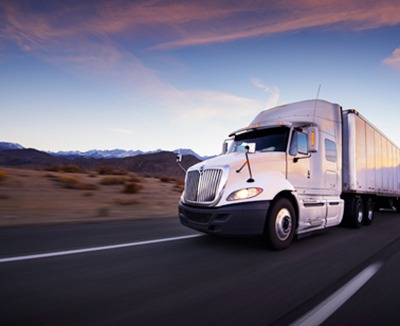
Free quarterly global commercial vehicle production report.

Alternative Power Report
The latest EV and power source news including batteries and fuel cells with analysis by PSR experts.

PowerTALK News
Stay informed each month with insights from Power Systems Research’s analysts working around the world as they identify and comment on important news items in the company’s monthly newsletter.
Subscribe View Archive

OE Link™ Offers
Global
Coverage
OE Link™ database provides OEM products, both On-Road and Off-Road, in 12 regions.
Current Reports
Download complimentary reports that show the type of information available from Power Systems Research.
PowerTALK News
Stay informed each month with insights from Power Systems Research analysts working around the world as they identify and comment on important news items in the company’s monthly newsletter.
Subscribe