

-
Charging Infrastructure Blocks BEV Growth
NORTH AMERICA REPORT

Chris Fisher According to John O’Leary President and CEO of DTNA, charging infrastructure is the greatest barrier to adoption for battery electric heavy trucks. Speaking to journalists in Las Vegas, he said customers are happy with the electric vehicles they have received but they are unable to expand their fleets with additional electric vehicles primarily due to the lack of charging infrastructure.
“Overwhelmingly, infrastructure is slowing us down in terms of EV deployment,” said Daimler Truck North America President and CEO John O’Leary. “Site prep, permitting, and construction delays all contribute to deployment times being measured in years, not weeks or months.”
“There’s a lot of will in the regulatory and political arenas to make that happen, but when you start talking about moving large megawatt lines of electricity around and building new substations, it just takes time,” he said.
-
DATAPOINT: NA Dumpers/Tenders, 2023 Production
A Dumper/Tender is a vehicle designed for carrying bulk material, often on building sites. Dumpers are distinguished from dump trucks by configuration: a dumper is usually an open 4-wheeled vehicle with the load skip in front of the driver, while a dump truck has its cab in front of the load.
This information comes from industry interviews and from two proprietary databases maintained by Power Systems Research: EnginLink™ , which provides information on engines, and OE Link™, a database of equipment manufacturers.
-
Hyundai Keeps Gamma Engine in Units for Colombia
The new HB20 auto landed in Colombia with new body but is powered by an old engine. Hyundai Motor Brazil started exporting the new face lifted compact with an engine that the hatchback no longer fits versions running in Brazil.
The Colombian version is exported with the 1.6 16V aspirated Gamma engine.
-
Hitech Electric To Produce 100% EV LCVs
Hitech Electric to produce 100% electric LCVs by March, with sales plans of 1,000 vehicles per year. In partnership with Positivo Tecnologia, (and its corporate venture capital (CVC) program) the assembly line will start with 50 units per month and possibly expand to 100 in the short term. The plant will be located in Campo Largo, Parana.
The vehicles will have a powertrain and battery produced by WEG, the Brazilian Electric equipment manufacturer. The batteries will feature non-flammable lithium iron phosphate. Product lineup includes a last mile utility vehicle and a 1.2-ton light truck.
-
Brazilian Law for AG Tractor Cabins Changes
The law requiring the use of cabin tractors for spraying includes changes in applications and timing. Under the new wording, cultivation methods in which the use of the original or adapted closed cabin is unfeasible depending on the spacing between lines, a sprayer trailer pulled in a machine without closed cabin may be used, provided that it meets certain conditions.
New deadlines vary from 120 months for small properties and 60 months for large properties.
PSR Analysis: Given…
-
January Brazil Truck Production Drops 72%

Fabio Ferraresi Truck production in Brazil in January was 4,049 units vs. 14,614 units in December per Anfavea (the association that represents the automakers installed in the Brazil) monthly
PSR Analysis: This decline was expected due to the introduction of PROCONVE P8, the regulation in line with Euro VI, that reduces the toxic gas emission limits and therefore increases the complexity and the price of new trucks.
Under that regulation, OEMs have the right to sell Trucks at PROCONVE…
-
Deutz and Daimler Form Strategic Alliance
EUROPEAN REPORT

Emiliano Marzoli Daimler Truck and Deutz have entered a strategic partnership to manufacture engines. Under the plan, Daimler Truck acquires 4.19% of the shares in Deutz AG, in return for which Deutz pays for access to Daimler Truck internal combustion engines.
The move is a consequence of Daimler’s decision to stop investing in the development of their medium duty engines (MDEG Series) from 5.1 to 7.7 Litres. At the same time, Deutz will be able to access Daimler technology and further develop it for off-road applications, such as construction and agriculture machinery. The heavy-duty engines will continue to be manufactured by Daimler Truck at the Mercedes-Benz plant in Mannheim and be delivered to Deutz to complete the engine system. Production of the medium-duty engines is expected to take place at Deutz in 2028.
-
China To Push Adoption of New Energy CVs
CHINA REPORT

Jack Hao Pilot cities must embrace EVs in official vehicles, public transport, taxis, sanitation, postal express, urban logistics, airport vehicles, aiming to achieve 80% NEV proportion by 2025. A balanced and efficient charging infrastructure must be established, with public charging piles proportional to NEV promotion, and 10% charging facilities in expressway service areas.
Innovation in tech, green energy supply, and new information/communication networks must be applied to efficiently integrate NEVs with power grids and other fields. Innovations such as intelligent charging, high-power charging, rapid power change have been expanded, and vehicle-network integration verified.
Source: The QQ Read The Article
-
Japanese Auto OEMs Seek Battery Production in NA
FAR EAST: JAPAN REPORT

Akihiro Komuro Major automobile manufacturers are actively investing in automotive lithium-ion batteries. Nissan is leading among the Japanese automakers, followed by Honda and Toyota. Along with the motor and inverter, the vehicle-mounted lithium-ion battery is considered one of the “Three Sacred Treasures” of EVs.
In particular, the on-board battery is the most important as it is the source of power. In many cases, EV production will not be possible without securing a large supply of batteries through partnerships with major battery manufacturers. However, the number of battery makers with which the major automotive companies have partnered is limited: CATL ranked first in the global automotive battery market in 2021, with 39% of the market. It was followed by LG Energy Solutions (18%) and Panasonic Holdings (12%), with the top three companies accounting for 70% of the market.
-
Hyundai To Start Operations at Plant in Vietnam
FAR EAST: SOUTH KOREA REPORT
Akihiro Komuro A joint venture between South Korea’s Hyundai Motor and Vietnamese conglomerate Thanh Cong Group has started operations of an automobile plant in the northern Vietnamese province of Ninh Binh.
With an annual production capacity of 100,000 vehicles, the combined annual production capacity with the existing plant will reach 180,000 by 2025. The company will ship domestically as well as to neighboring countries. The new plant, operated by the joint venture Hyundai Thanh Cong, will have an investment of 3.2 trillion dong (about 18 billion yen). The plant will cover an area of approximately 50 hectares and include a test driving course.
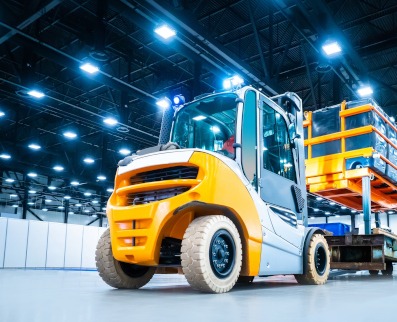
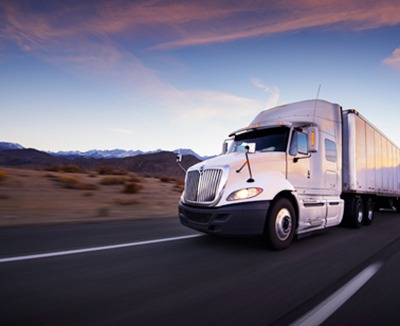
TPI
PSR Truck Production Index
Free quarterly global commercial vehicle production report.

Alternative Power Report
The latest EV and power source news including batteries and fuel cells with analysis by PSR experts.

PowerTALK News
Stay informed each month with insights from Power Systems Research’s analysts working around the world as they identify and comment on important news items in the company’s monthly newsletter.
Subscribe View Archive

OE Link™ Offers
Global Coverage
OE Link™ database provides OEM products, both On-Road and Off-Road, in 12 regions.
Current Reports
Download complimentary reports that show the type of information available from Power Systems Research.
PowerTALK News
Stay informed each month with insights from Power Systems Research analysts working around the world as they identify and comment on important news items in the company’s monthly newsletter.
Subscribe