

-
Global Snowmobile Market Forecast for $2.42 Billion

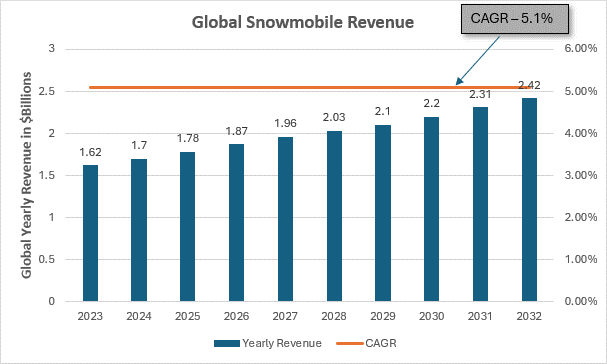
Michael Aistrup The Global Snowmobile Market size was valued at $1.62 billion in 2023, according to Power System Research, and is estimated to register a CAGR of 5.1% between 2023 and 2031 with a projected market value of $2.42 billion in 2032.
Source: Power Systems Research
North America Is Major Snowmobile Market
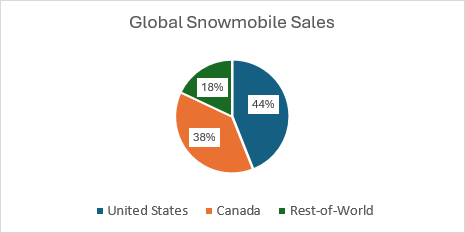
According to the International Snowmobile Manufacturers Association (ISMA), 82% of snowmobile sales are in North America.
Source: Power Systems Research
-
Global Powersports Market Forecast To Exceed $35 Billion in 2025
Michael Aistrup According to Power Systems Research intelligence, the global powersports market size was valued at $31.41 billion in 2023, and is projected to reach $53.64 billion by 2032, growing at a CAGR of 6.1% from 2023 to 2032.
Power Systems Research is a Minnesota-based research firm that has been tracking global production of power equipment since 1976.
The recreational powersports segment represents activities ranging from off-roading, motocross, and all-terrain and side-by-side vehicle riding to on-road motorcycling and enjoying water equipment such as pontoon boats and jet skis.
-
Powersports Market Expected To Exceed US$ 50 Billion
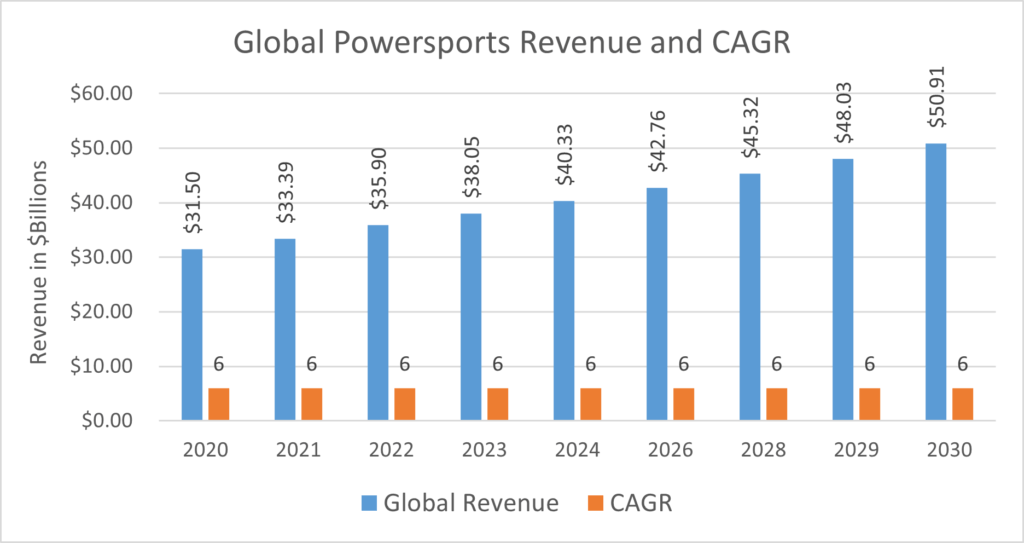
Power Systems Research is forecasting global revenue for the Powersports industry to grow from $31.5 billion in 2020 to US$ 50.91 billion in 2030, a CAGR of 6% over the forecasted period.
Global Powersports Market
All-Terrain Vehicles, Side-by-Side, Powerboats, Snowmobiles and Heavyweight MotorcyclesDrivers-of-Demand. There are many factors driving the global powersports market growth:
- Increased all-terrain vehicle popularity.
- These include the rising participation in recreational activities, like surfing, off-road driving, and snowmobiling.
- According to the International Snowmobile Manufacturers Association around $36 Billion is spent directly and indirectly on snowmobiling in the US and Canada each year.
- ATVs have lesser age restrictions, lower maintenance costs, are easier to maneuver due to low vehicle weight and are more affordable
- Rise in use of powersports to boost adventure tourism traveling to new locations for gaining new experiences, with controlled risk components and personal challenges in wild & exotic environments.
- People are raising the bar for racing by introducing new terrains and challenges.
- The market in Europe is expected to showcase exponential growth backed by government policies that promote recreational and off-road leisure activities.
- Global governmental initiatives to boost the tourism industry by assisting recreational clubs in enhancing their service offerings are creating a favorable environment for the market participating in the construction of dedicated infrastructure for recreational and amusement purposes.
- Technological innovations have played a major role in developing vehicles.
- New products have increased comfort, power, engineering, and safety.
- Utility-terrain vehicles (UTVs) have improved durability and adaptability for off-road riding.
- Growth in investments and rapid innovations in the automotive sector have resulted in improved performance of powersports vehicles. This has resulted in improved vehicle efficiency, reduced noise and higher power of vehicles. Companies are also focusing on developing electric products for quieter more powerful riding.
- Growing consumer disposable incomes make it easier for customers to purchase leisure and recreational power equipment.
- Data prepared by the U.S. Bureau of Economic Analysis (BEA) show that outdoor recreational activities accounted for US$ 374.3 billion in 2020, which is 1.8% of the overall U.S. GPD in 2020.
Powersports Recreational Equipment Update
EDITOR’S NOTE. Power Systems Research tracks the global trends powersports recreational equipment, especially the electrification of these units. This is one of a series of reports on these trends.

Michael Aistrup The first LiveWire branded motorcycle is scheduled to launch on July…
PowerTALK™ News, February 2021
Chris Fisher, senior commercial vehicle analyst at Power Systems Research, provides a forecast in the February 2021 issue of PowerTALK™ News for MHV.
Here are more articles in this issue:
North America: Electric MotorcyclesDataPoint: Global SnowmobilesEurope: Volvo Penta Plans Zero EmissionsSouth America: Brazil Vehicle Exports Up 22%Taiwan: Innovation Powers Gorgoro NetworkJapan: Honda Launches Electric BikeSouth Korea: Hyundai Offers Custom EVsIndonesia: New Tesla Investment?India:…
Market Updates: PowerSports, Lawn & Garden and Marine
New Powerboat Retail Sales Up 8%
Michael Aistrup Data from the National Marine Manufacturers Association shows August was another strong month for new powerboat retail sales, which were up 8% year to date on a seasonally adjusted basis compared to a year ago.
New power boat retail sales did slowed in August following increases in the early summer months. Total sales were down 13 percent compared to July, while sales are still strong with increases across all major categories, year to date. Sales of saltwater fishing boats, tow boats, cruisers and yachts each had double-digit growth ranging from 11 percent to 15 percent, compared to 2019. PSR
Powersports Industry Leading Economic Comeback
The Powersports industry–featuring ATVs, motorcycles and watercraft–appears to be leading the way on the road to economic recovery. According to Motorcycle & Powersports News magazine, this increased demand for powersports is helping values bounce back from historic lows.
Michael Aistrup According to Scott Yarbrough, senior analyst for motorcycle and powersports at Black Book: “After the first month of the COVID-19, shutdowns put a freeze on powersports values during the beginning of the spring selling season, and the second month saw dramatic declines.
This month values are up across the board, some by the largest amounts we have ever seen in a monthly update. A combination of surprisingly strong demand, coupled with drops in availability of units, has led to this resurgence in values,”
COVID-19 Cuts Results at Harley-Davidson, Polaris
Harley-Davidson Q1 2020 Sales Plunge 15.5%
Harley-Davidson said US sales were up 6.6% in the quarter before the pandemic ground the economy to a halt in mid-March. But sales wound up plunging 15.5% in America compared to a year ago and 20.7% internationally. Overall revenue slipped 8% from last year’s first quarter.
For the quarter, Harley-Davidson posted earnings of $69.7 million compared with $127.9 million in the same period a year ago.
Michael Aistrup Harley-Davidson’s share in the U.S. heavyweight motorcycle market share was down 2.2 percentage points, to 48.9% and the company’s share of the heavyweight motorcycle market in Europe was 7.6% in the first quarter.
In response to the COVID-19 crisis, Harley has reduced planned capital spending, frozen hiring, temporarily reduced salaries, eliminated merit increases for employees in 2020 and changed the timing of new product launches in order to preserve $250 million in 2020.
- Increased all-terrain vehicle popularity.


TPI
PSR Truck Production Index
Free quarterly global commercial vehicle production report.

Alternative Power Report

The latest EV and power source news including batteries and fuel cells with analysis by PSR experts.

PowerTALK News
Stay informed each month with insights from Power Systems Research’s analysts working around the world as they identify and comment on important news items in the company’s monthly newsletter.
Subscribe View Archive

OE Link™ Offers
Global
Coverage
OE Link™ database provides OEM products, both On-Road and Off-Road, in 12 regions.
Current Reports
Download complimentary reports that show the type of information available from Power Systems Research.
PowerTALK News
Stay informed each month with insights from Power Systems Research analysts working around the world as they identify and comment on important news items in the company’s monthly newsletter.
Subscribe