
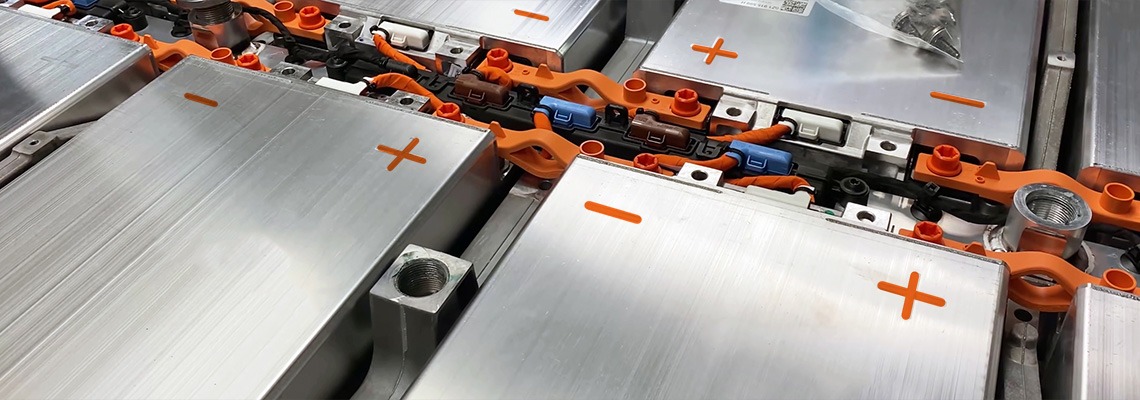
New Battery and Energy Storage Technology
Learn more about the latest in new battery technology and discover the next generation in battery and energy storage with expert analysis by Power Systems Research analysts.
-
US Increases EV Battery Recycling Capacity
A new EV battery recycling plant in Alabama from Li-Cycle has just come online. It can process up to 10,000 tons of battery waste per year, enough for about 20,000 EVs per year, and helps the US move toward a zero-emission economy.
Li-Cycle’s processing method is specifically designed as a two-part system recycling battery manufacturing scrap and turns end-of-life batteries into a black mass. The black mass is then processed and used to generate battery minerals such as nickel sulfate, lithium carbonate, and cobalt sulfate, three of the most critical factors for EV batteries. According to the battery recycling company, Li-Cycle believes its new method will enable up to a 95% efficiency rate compared to the industry average of 50%.
-
Penn State Offers Smaller, Faster Charging Batteries
Researchers at Penn State say they have found a way to make batteries for electric cars that can be smaller and faster charging.
“The need for smaller, faster-charging batteries is greater than ever,” said Chao-Yang Wang, the lead author of the research study that was published in the October 12 issue of the journal Nature. “Our fast-charging technology works for most energy dense batteries and will open a new possibility to downsize electric vehicle batteries from 150 to 50 kWh without causing drivers to feel range anxiety,” said Wang.
Batteries operate most efficiently when they are hot, but not too hot. Keeping batteries consistently at just the right temperature has been a major challenge for battery engineers. Historically, they have relied on external, bulky heating and cooling systems to regulate battery temperature, but they respond slowly and waste a lot of energy. The team decided to regulate the temperature from inside the battery. The researchers developed a new battery structure that adds an ultrathin nickel foil as the fourth component besides the anode, electrolyte, and cathode. The nickel foil self-regulates the battery’s temperature and reactivity which allows for 10 minute fast charging on just about any EV battery.
-
Miners Cut CO2 Emissions Using EVs for Extracting Minerals
A new contract to supply battery electric vehicles to the Jansen potash project (potentially the world’s largest potash mine) expects to cut carbon emissions in half compared to its peers. BHP’s Jansen potash project is expected to be the largest of its kind, with initial capacity forecasts of 4.3 to 4.5 Mtpa. Potash is the most commonly used potassium fertilizer, but over 70% is based on conventional underground mining that uses heavy-duty equipment to extract it. Although underground mining releases half the CO2 emissions of open-pit mining, the company is reducing emissions further by introducing several battery electric vehicles.
Source: Electrek: Read The Article
-
Alternative Power Report, October 2022
In the October issue of PSR’s Alternative Power Report, read about Ideanomics’ new quick charger, a new super fast rechargeable battery and a cost analysis of diesel vs. hydrogen power.
-
Super-Fast, Long-Life Rechargeable Battery
An international group of researchers has demonstrated an aqueous zinc battery with excellent performance in terms of capacity, rate capability, specific energy, and output voltage. The battery is a hybrid supercapacitor-battery hybrid device which has demonstrated an unprecedented cycling stability of 99.2% capacity retention after 17,000 cycles at 100% depth of discharge.
This battery technology has been explored as a promising alternative due to its low cost, safety, environmental friendliness, and intrinsic non-flammable nature. However, their widespread adoption has been held back by their low Coulombic efficiency (The Coulomb efficiency is usually used to describe the released battery capacity. It refers to the ratio of the discharge capacity after the full charge and the charging capacity of the same cycle) and the notorious dendritic growth (dendrites are basically whiskers of minerals that grow inside batteries and can cause the devices they’re powering to lose power more quickly, short out, or in some instances, catch fire ) at the zinc-based anodes, along with the fast capacity fading of the cathodes.
-
Alternative Power Report, September 2022
The September 2022 issue of the Alternative Power Report from PSR discusses Cummins new energy storage system, battery electric forecasts and EV shipping applications. PSR
-
Battery Electric Power Forecasts

Guy Youngs With the exception of 2022 (+7.6%), Battery Electric as a power source is expected to grow between 10% and 17% throughout the forecast period, while ICE growth rates start the period at -2.3% and then grow at less than 1% for 2023 to 2025.
Battery Electric is expected to grow from 12.8% of the market in 2022 to 21.2% by 2027, while during the same period ICEs are expected to decline from 85% of the market to 75%. PSR
Guy Youngs is Forecast & Adoption Lead Analyst at Power…
-
Cummins Jumps On New Energy Storage Iron Salt Formula
Cummins $24 million stake in the startup VoltStorage gives them a foot in the door with new iron redox flow technology. There is nothing wrong with lithium-ion energy storage but global demand for energy storage has nowhere to go but up, and so are lithium prices. While lithium is relatively abundant in the ground, but current supply is falling behind demand. At the same time, lithium extraction is messy and has significant environmental impact, causing local opposition to new mines and other facilities…
-
Marcopolo To Deliver 30 EV Buses in 2022

Fabio Ferraresi Formerly using chassis built by other companies, mainly BYD, Marcopolo has announced plans to build its own EV chassis. It plans to produce and offer a complete set of bus chassis and bus body. It plans to deliver of 30 units in different setups for Brazilian cities in 2023.
Source: Automotive Business Read The Article
PSR Analysis: Marcopolo is betting that its own chassis is more competitive for the market from an engineering and product standpoint. While preparing…
-
100,000th lithium-Ion Forklift for Jungheinrich
EUROPE REPORT

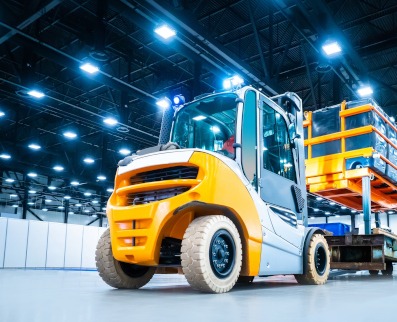
Emiliano Marzoli German OEM Jungheinrich has accomplished a remarkable goal, delivering its 100,000th lithium-Ion Forklift truck. An ETV 216i Reach truck was the star of this milestone, with 15 other identical models delivered to the Amazon warehouse in Leipzig.
In 2011, Jungheinrich was the world’s first industrial truck manufacturer to launch a series-produced truck with a lithium-ion battery. Since then, lithium-ion technology has become the fastest-growing battery technology for industrial trucks.
PSR Analysis: According to Jungheinrich, compared to a diesel truck of the same performance class, an electric truck with a lithium-ion battery emits less than half the CO2 during its entire lifetime, including its manufacture. By using electricity from renewable energy sources, the CO₂ emissions of the vehicles in operation can be reduced by up to 90%. It is not a surprise to see the increase of battery electric trucks in the European production mix.
Alternative Power Report

EV and power source news including batteries and fuel cells with analysis by PSR experts

TPI
PSR Truck Production Index
Free quarterly global commercial vehicle production report.

Alternative Power Report
The latest EV and power source news including batteries and fuel cells with analysis by PSR experts.

PowerTALK News
Stay informed each month with insights from Power Systems Research’s analysts working around the world as they identify and comment on important news items in the company’s monthly newsletter.
Subscribe View Archive

OE Link™ Offers
Global Coverage
OE Link™ database provides OEM products, both On-Road and Off-Road, in 12 regions.
Current Reports
Download complimentary reports that show the type of information available from Power Systems Research.
PowerTALK News
Stay informed each month with insights from Power Systems Research analysts working around the world as they identify and comment on important news items in the company’s monthly newsletter.
Subscribe