

-
Russia To Suspend Support of Domestic Auto Industry
The Russian auto market’s increased demand for new passenger cars has caused inventory shortages, and these shortages have caused Russian authorities to suspend State programs of industry support.
In May, for example, the number of the cars sold increased by 2.3 times, compared to same period in 2020. This growth is partly the result of pandemic restrictions last year. A total of 663,000 new cars have been delivered to the customers this year, up 39% from a year ago.
Another reason for the shortage of cars in Russia is a shortage of semiconductor chips.
-
Second FAME II Incentives May Spur EV Demand

Aditya Kondejkar The amendments to the FAME-II electric vehicle policy were rolled out in the last month and manufacturers have lauded the efforts in adopting EV mobility in the country.
Source: Financial Express. Read The Article
The government partially modified the Faster Adoption and Manufacturing of Electric Vehicles in India Phase II. Further, it has included an additional demand incentive for electric two-wheelers to ₹15,000 per KWh from an earlier uniform subsidy of ₹10,000 per KWh for all EVs, including plug-in hybrids and strong hybrids except buses.
This decision will increase subsidies for such vehicles by 50% under the FAME II scheme and be a game-changer in adopting EVs.
-
Sany Challenges Komatsu’s Grip on Indonesian Construction Machinery Market

Akihiro Komuro The battle between major Japanese and Chinese construction machinery companies is intensifying in Indonesia. As the growth of the Chinese market slows, China’s Sanichi Heavy Industries is accelerating its overseas expansion in search of new sources of revenue.
Komatsu, which has a stronghold in Southeast Asia, is responding by introducing mid-priced machines and expanding its maintenance bases. Who will dominate the growing market following China will also affect the power structure of the construction equipment market in Asia.
-
South Korea’s SK and LG to Build EV Battery Plant in the U.S. Joint Venture in the Gap between U.S.-China Conflict
South Korean automotive battery giants are moving into the U.S. market, with SK Innovation teaming up with Ford and LG Chemical with GM to promote the construction of an automotive battery plant. SK plans to invest about 300 billion yen in the plant to produce 22 gigawatt-hours of automotive batteries, enough to power 220,000 EVs a year, and in a joint venture with Ford, the two companies will invest 600 billion yen to build a giant 60-gigawatt plant.
SK’s annual production capacity as of 2019 is only 5 gigabytes at its Korean plant. The capacity is expected to increase to 30 gigawatts in 2020 with the launch of plants in China and Hungary, to 85 gigawatts in 2023 with the addition of the US plant, and to exceed 185 gigawatts in 2025 with the addition of the joint venture with Ford. SK, a late entrant to the market, ranks sixth with a 5% share of the global market in 2020.
-
Sony Joins Komatsu’s DX Alliance
On July 1, Komatsu launched EARTHBRAIN, a new company for the digital transformation (DX) of construction sites. The new company will provide services that will lead to significant cost improvements by digitizing and analyzing data from construction sites.
The parent company of the new company is LandLog, an IoT (Internet of Things) open platform company established by Komatsu in 2017. The investors will be substantially replaced, and some members of Komatsu’s digital unit will be transferred to the new company.
After approval by overseas authorities, Komatsu will provide 54.5%, NTT DoCoMo 35.5%, and Sony Semiconductor Solutions and Nomura Research Institute (NRI) 5% each. The company is well capitalized with more than 15 billion yen. Newly added to the list are Sony and NRI. Sony has an advantage in image sensors. NRI will provide its expertise in developing digitalization solutions.
-
ENGIE EPS Acquisition May Create Euro-Asian Powerhouse

Erik Martin TAIPEI–The acquisition of a 60.5% stake in ENGIE EPS by Taiwan Cement Corporation (TCC) was finalized and completed in July.
The deal, which was announced in April, saw the Italy-headquartered stationary storage and e-mobility solutions subsidiary of French multinational Engie taken over by TCC subsidiary Taiwan Cement Europe Holdings.
What both parties get out of the deal
In a press release, TCC said it has now become a “major player” in electric vehicle charging infrastructure as well as its newly acquired capabilities in building large-scale battery storage systems and microgrids.
-
Tupy Developing Efficient Hydrogen Powered Engine

Fabio Ferraresi Brazilian Tupy is working with AVL and Westport Fuel Systems to develop a high efficiency ICE powered by Hydrogen, targeting long haul Trucks. Tupy supplies superior materials casting and high precision machining for high pressure injection engines designed and tested by AVL and Westport. First outcomes of the work are expected at the beginning of 2022.
Source: Automotive Business Read The Article
PSR Analysis: With the Zero Emissions target and the need for efficient…
-
US$ 22 Billion in Green Hydrogen Projects Planned in Brazil
From January to June, six Intention Letters to install H2V facilities have been signed by companies and the total of investment involved is around US$ 22 billion. One of the players is the Australian Fortescue, one of the six biggest producers of iron ore in the world. Companies of renewable energy such as the also Australian Energix Energy and petrochemical as British Petrol are also behind the investment plans.
Source: Valor Read The Article
PSR Analysis: The investment is…
-
Chinese Great Wall Acquires Mercedes-Benz Facility in São Paulo
Although the acquisition has not been confirmed by the companies, the Journal “O Globo” published a report that an internal communication to Mercedes employees about the deal was released June 25 with technical details of the facility confirming it meets the requirements of the Chinese company.
Source: Autoespoerte / O Globo Read The Article
PSR Analysis: It looks like the perfect match as it is a good opportunity for the German car maker to sell the assets of the plant stopped in…
-
HanseYachts Group Reports ‘Exceptional Year’

Natasa Mulahalilovic German boat manufacturer HanseYachts AG has announced preliminary financial results for 2020-2021 that it has described as “exceptional for the company in all respects.”
The group, established in 1990, manufactures sailing, motor yachts and luxury sailing, and motor catamarans under the brands Hanse, Dehler, Moody, Privilege, Fjord and Sealine. Boats are produced in Germany and France, and are equipped with Volvo, Yanmar and Mercury engines.
Despite the production problems caused by delays in parts supply, the group achieved record results in 2020/2021, with the order book counting more than 1,000 boats. Previously, the group’s best year was 2007/2008 when 940 boats were ordered. The revenue this year is expected to be more than € 230 million.
TPI
PSR Truck Production Index
Free quarterly global commercial vehicle production report.

Alternative Power Report
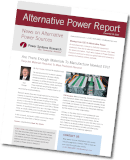
The latest EV and power source news including batteries and fuel cells with analysis by PSR experts.
PowerTALK News
Stay informed each month with insights from Power Systems Research’s analysts working around the world as they identify and comment on important news items in the company’s monthly newsletter.
Subscribe View Archive

OE Link™ Offers
Global Coverage
OE Link™ database provides OEM products, both On-Road and Off-Road, in 12 regions.
Current Reports
Download complimentary reports that show the type of information available from Power Systems Research.
PowerTALK News
Stay informed each month with insights from Power Systems Research analysts working around the world as they identify and comment on important news items in the company’s monthly newsletter.
Subscribe