Volkswagen confirmed that the upcoming Tukan compact SUV will be its first flex fuel hybrid vehicle developed for Brazil. The model will combine a hybrid powertrain with a flex fuel ICE capable of running on gasoline and ethanol, aligned with local decarbonization strategies and Brazil’s biofuel infrastructure.
The vehicle is expected to be produced locally and positioned in the compact SUV segment, supporting Volkswagen’s regional electrification roadmap. The launch reinforces the company’s focus on hybridization technologies adapted to Brazilian market conditions and regulatory trends.
Schwing Stetter has started automated production of concrete mixer trucks in Brazil, implementing new manufacturing technologies to increase productivity, quality consistency and operational efficiency.
The initiative includes automation systems across assembly processes and aims to strengthen the company’s local manufacturing footprint in response to demand in the construction sector. The move supports domestic supply capability and aligns with broader industry trends toward digitalization and advanced manufacturing in heavy equipment production.
PSR Analysis. The investment in automation reflects the Chinese-German company’s belief in South America Construction Equipment, as it gains productivity and brings cost optimization. Benefits include improved scalability and quality control, though returns depend on sustained construction activity and fleet renewal cycles.
The project is in an expansion stage, with competitiveness linked to localization levels and supply chain resilience. With the investment, capacity should reach 480 units per year. PSR
Exported from Brazil, Mercedes-Benz Axor Debuts in Argentina Mercedes-Benz has introduced the Axor heavy duty truck in Argentina, supplied from its Brazilian manufacturing base. The model targets long haul and regional freight applications and expands the brand’s portfolio in the Argentine market, leveraging Mercosur trade integration.
The launch occurs amid a challenging macroeconomic environment in Argentina, with demand shaped by currency volatility and restricted financing conditions. The Axor strengthens Mercedes-Benz’s regional product strategy by aligning Brazilian production with export demand across South America.
PSR Analysis. The Axor launch highlights continued reliance on Brazil as a regional manufacturing hub for heavy duty trucks within Mercosur. Market penetration will depend on Argentina’s macro stabilization and freight sector recovery, while currency risks remain a structural constraint. The move supports capacity utilization in Brazil and reinforces cross border supply chain integration. Competitive pressure will center on pricing, financing availability and operating cost efficiency in a constrained transportation market. PSR
EcoFlow Technology Japan has announced that it launched its new “DELTA 3 2000 Air” portable power station. Positioned in the 2kWh class, the new unit combines 1,920Wh of storage capacity with a lightweight design aimed at improving portability for household backup power, vehicle use and outdoor applications. The company simultaneously released a 220W lightweight bifacial solar panel using TOPCon cells, presenting the products as a combined solution for improving energy self-sufficiency during outages and off-grid use.
Despite its relatively compact dimensions of 220 × 223 × 426 mm, the DELTA 3 2000 Air offers rated output of 1,000W with 1,500W surge capacity and dual AC outlets. EcoFlow says the unit can support essential appliances such as refrigerators, lighting, notebook PCs and communications equipment during blackouts. The product uses lithium iron phosphate batteries and is rated for about 3,000 charge-discharge cycles while retaining 70% capacity, underscoring its positioning as a long-life backup power device rather than a short-term consumer gadget.
The company also highlighted disaster-preparedness and business continuity planning (BCP) applications, noting that the system can be used for communications backup, temporary server protection and auxiliary power for medical devices in homes and small offices. Its flat handle and compact form factor are intended to make storage easier in limited spaces such as under car seats or in narrow household gaps. The newly launched 220W bifacial solar panel, weighing approximately 5.1 kg, is designed to complement the power station by enabling more autonomous power supply in disaster or outdoor settings.
Chinese electric vehicle manufacturer BYD is moving closer to launching local production in Indonesia as construction of its EV assembly plant in Subang, West Java, progresses toward operational readiness. The facility is designed with an annual production capacity of approximately 150,000 vehicles and is currently entering the final preparation stage ahead of full-scale production.
According to reports, the plant has begun trial production and manufacturing line verification as the company prepares for commercial operations. The project represents one of the largest EV manufacturing investments in Indonesia and reflects the country’s efforts to attract electric vehicle production.
The Power Systems Research Truck Production Index (PSR-TPI) increased from 107 to 111, or 3.7%, for the three-month period ended Dec. 31, 2025, from Q3 2025. The year over-year (Q4 2024 to Q4 2025) loss for the PSR-TPI was, 113 to 111, or -1.8%.
The PSR-TPI measures truck production globally and across six regions: North America, China, Europe, South America, Japan & Korea and Emerging Markets. This data comes from OE Link,™, the proprietary database maintained by Power Systems Research.
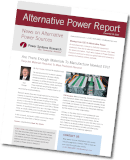
In the February 2026 issue of the Alternative Power Report produced by Power Systems Research and authored by Guy Youngs, you’ll find articles on Tesla committing suicide by shifting away from auto productions, Germany’s new stance on hydrogen, new 4X power sodium-ion batteries, Europe’s hydrogen bus experiment, and Mercedes introducing a new solution to cut pollution. Read these articles and more in the February Alternative Power Report today. PSR
Guy Youngs is Forecast and Technology Adoption Lead at Power Systems Research
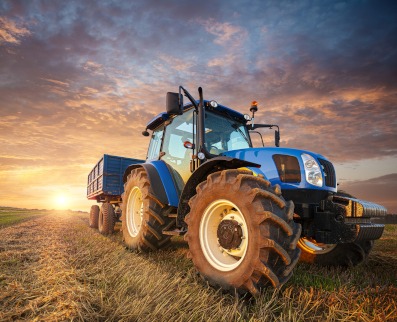
80,800 units is the estimate by Power Systems Research of the number of Ag Tractors expected to be produced in North America (United States, Canada, and Mexico) during 2026.
This product information comes from industry interviews and from two proprietary databases maintained by Power Systems Research: EnginLink™ , which provides information on engines, and OE Link™, a database of equipment manufacturers.
2-Wheel Drive Tractors are farm tractors that have a drive train that allows two wheels to receive power from the engine simultaneously. Normally, the rear axle is powered by the engine.
4WD Articulated Ag Tractors are farm tractors built with an articulated chassis very similar to the design used for articulated wheel loaders. Each element of the articulated chassis has a rigid drive axle, and the front and rear elements are connected by a pivoting/ articulating joint. This design uses rigid (i.e. non-steering) drive axles and is typically used for large, high-HP tractors.
MFWD Tractors (Mechanical Front Wheel Drive) are farm tractors which feature a rigid chassis with steerable front-drive axles. This designation applies to both full-time 4WD and front-assist-drive configuration tractors across a broad HP range. Both configurations are produced in significantly greater volume than the 4WD Articulated type tractors.
Tracked Ag Tractors are steerable multitrack tractors with powered rubber tracks instead of wheels to move the vehicle. The crawler-type tracks are flexible and reinforced with steel. They are usually powered by hydrostatic or completely hydraulic driving mechanisms. They can be articulated or nonarticulated.
Trends. In 2025, production of Ag Tractors in North America decreased 6.2%. Production is expected to drop by nearly 6% in 2026.
Prior declines in 2020 were attributed to COVID-19 related issues which included unusually high orders for materials and parts. Inventory levels are at the lowest level in decades and have left the supply chain a mess, according to leading tractor manufacturers and AEM.
Production of machinery and components needed to build equipment has been halted. This negatively affected demand for farm machinery and contributed to overall lower sales and profits for agricultural equipment operations.
New tractors have become very expensive and have weakened demand. Reduced demand also has been linked to lower commodity prices.
The peak of Ag Tractor production was in 2013. Expect production to remain flat with a potential 10% decline by 2035. PSR
Carol Turner is Senior Analyst, Global Operations, for Power Systems Research
Following its Q4 2025 financial update, Tesla appears to be pivotally shifting away from its identity as a traditional automaker. By phasing out the Model S and X to focus on ‘Transportation as a Service,’ leadership is betting heavily on an autonomous-first business model.
And instead of building on that success, expanding into new segments, addressing affordability, and competing with the flood of new EVs from legacy automakers and Chinese competitors, the company that revolutionized the auto industry is walking away from it.
“The October 2025 special report from Germany’s Federal Audit Court, Implementation of the Federal Government’s Hydrogen Strategy, lands with unusual weight because it is not a policy critique or an academic intervention, but a statutory budgetary assessment delivered to Parliament,” reports Clean Technica.
It evaluates the hydrogen strategy against the legal requirements of the Energy Industry Act, namely security of supply, affordability, environmental sustainability, climate neutrality, and fiscal prudence, according to the article.
“Its conclusion,” notes the Clean Technica article, “is that the hydrogen strategy is not meeting these tests, despite US$ 5.1 billion (€4.3 billion) allocated in 2024, more than US$ 3.56 billion (€3 billion) in 2025, and multi-billion-euro commitments extending through the end of the decade.”
PSR Analysis: The audit report also refers to the current plan as implausible rather than ambitious and this makes one question how countries can invest tens of billions into infrastructure of an effectively unproven technology ecosystem, at least at this scale. One might think funding a decent but “very small scale trial” might be more prudent. PSR
Guy Youngs is Forecast & Adoption Leadat Power Systems Research
The sodium-ion battery formula has some advantages over conventional lithium-ion batteries, including the use of non-flammable, abundant materials and the potential for cutting costs.
One of the areas for improvement is the anode materials. The graphite used in lithium-ion batteries is not a candidate because it can’t store sodium. The consensus alternative has been hard carbon, a form of carbon that doesn’t devolve into graphite under high heat. However, hard carbon can inhibit capacity during the anode formation stage, when the battery is being manufactured
A team of researchers at BAM (the Federal Institute for Materials Research and Testing) in Germany, noted that the loss of capacity during the manufacturing process is the result of a chemical reaction between the electrolyte and the anode. The BAM solution involves a customized form of activated carbon, applied over a core of sponge-like hard carbon in a thin layer. “Activated carbon is commonly used as a filter, and that’s what it does here, allowing sodium ions to reach the hard carbon core while keeping the electrolyte out,” reports Clean Technica.
PSR Analysis: Sodium-ion batteries have been lingering around the fringes of the vehicle electrification movement for years. A breakthrough moment may have finally arrived as the hurdles to commercial application have fallen. If indeed this activated-carbon trick holds up in large-scale production, it might become the biggest news in battery tech in recent years. PSR
Guy Youngs is Forecast & Adoption Leadat Power Systems Research