

-
Argentina Car Sales Drop 24%, But Production Grows

Fabio Ferraresi Sales in October 2021 are 24.1% lower than the same period of 2020 in Argentina, at about 25,000 units. This is also 1.6% lower than September 2021. On the other hand, production has grown 42.8% in October 2021 over October 2020 with 41,000 units produced, driven by strong exports.
Source: Automotive Business Read The Article
PSR Analysis: Brazil's shortage of cars is due to a shortage of semiconductors and supply chain issues caused by the demand increase for…
-
Auto Production Down Sharply in Asia
SOUTHEAST ASIA REPORT: VIETNAM, THAILAND, MALAYSIA

Akihiro Komuro At the end of September, an auto parts manufacturer operating a plant near the southern Vietnamese city of Ho Chi Minh is struggling with a sharp drop in orders. The parts produced at this plant are delivered to Toyota group companies.
On Sept. 10, Toyota revised downward its production plan for the same month and October, adding about 70,000 units to the originally planned production cut of about 360,000 units in September, and cutting production by about 330,000 units in October.
The company also announced that it would revise its full-year production plan from 9.3 million units to 9 million units. Parts suppliers in Vietnam were affected by this. It was around the same time that Toyota announced its production cutbacks that the manufacturer mentioned above was told by its business partner that it wanted to significantly reduce orders for October.
-
Subsidy Program for Scrapping Diesel Vehicles Ineffective
FAR EAST: SOUTH KOREA REPORT
About half of those who received South Korean government aid to scrap their old diesel vehicles early have purchased diesel vehicles again, according to a new study. The government spent 845.4 billion won (about 79.6 billion yen) in the last five years (2016-2020) to scrap 959,000 aging diesel vehicles, but the number of all diesel vehicles increased by 9% during the same period. The government has pointed out that diesel vehicles are the main culprit of particulate matter…
-
Almaz-Antey Group To Develop Car Powered by Hydrogen Cells

Maxim Sakov This OEM is developing a passenger car dubbed E-NEVA which will use hydrogen as a fuel.
Almaz-Antey is a group of 60 enterprises, specializing in air defense weapons. With this current effort, OEM is making civilian products based on the developments from the military industry. In August, the concern introduced a self-propelled electric chassis that could be used to create passenger cars on the basic chassis. The chassis includes two electric motors and a set of batteries of 90 kWt/hrs, providing up to 400 km on a single charge.
-
Russian Car Sales in September Drop 22.6%
Sales on new passenger cars and LCVs in September 2021 declined 22.6%, according to the Association of European Businesses (AEB). In total, automotive salons and dealers have sold 119,4 000 cars, which is 34,9 vehicles less than in 2020 September.
According to AEB head Tomas Schterzel, “negative trend is going on” (in August the sales dropped 17%), although the totals for the first nine months of 2021 are showing 15.1% growth versus the same period in 2020. The shortage of vehicles on the market is…
-
KAMAZ Increases Nine-Month Production 21%
KAMAZ has significantly increased production for the first nine months of 2021 versus the same period last year. Through September, the OEM produced 30,979 vehicles, up 21% from the same period in 2020, reports the company.
In September, KAMAZ made 4,067 vehicles (versus 3,676 vehicles in September 2020.
PSR Analysis: KAMAZ has found ways to resolve the problem with components (mostly by offering simpler models), working with pent-up demand and increasing its market share.
Maxim…
-
Personal Mobility Segment Lacks Sparkle, Stocks, Demand Drop

Aditya Kondejkar Passenger vehicles sales dropped 41% to around 160k units in September as the shortage of semi-conductors disrupted production at most of the OEMs. OEMs are facing supply shortages rather than demand problems. We are seeing robust customer demand as increasing preferences towards personal mobility increase.
2-wheel sales declined 17% to 1.5 million units in September. The Motorcycle segment is heavily impacted as sales is dropped 23% in September. Owing to high vehicle acquisition…
-
Toyota To Invest 1.5 trillion Yen in Auto Batteries
FAR EAST: JAPAN REPORT
Akihiro Komuro Toyota Motor Corporation has announced that it will invest 1.5 trillion yen in automotive batteries by 2030. Of this amount, 1 trillion yen will be used to increase the production capacity to 200 GWh, 33 times the current level. This is an increase of more than 10% over the previous target.
The company also announced that it will invest 500 billion yen in research and development, with the goal of reducing the cost of batteries per electric vehicle by more than half. As demand for electric vehicles is sure to grow, the battle for leadership among manufacturers will intensify.
Toyota’s investment in batteries was 80 billion yen in the fiscal year ended March 31, 2021, and it is calculated to continue to exceed 100 billion yen per year until 2030. The total amount of capital investment is expected to be 1.35 trillion yen in the fiscal year ending March 2022, of which more than 10% will be allocated to batteries.
Source: The Nikkei
-
VinFast Partners with Chinese Company To Make EV Batteries
SOUTHEAST ASIA: VIETNAM REPORT
Automaker VinFast is partnering with China’s Gotion High-Tech to research and produce batteries for electric vehicles as part of its vision to become a global brand.
According to a statement released by Vingroup, VinFast’s parent company, the two companies are planning to build Vietnam’s first lithium iron phosphate (LFP) battery plant. LFP is an iron-based battery that does not rely on rare raw materials such as cobalt or nickel. That makes LFP batteries much cheaper, although they have lower energy density than nickel-based chemistries.
According to Vingroup, Gotion is the leading manufacturer of LFP batteries in China, with eight research and development centers worldwide and 10 manufacturing facilities in China. Thai Thi Thanh Hai, vice chairman of Vingroup, said the partnership is key to VinFast’s ability to achieve supply chain autonomy.
-
New Russia Electric Transport Plan To Cost US$ 8 Billion
Maxim Sakov The Russian government has approved a new plan for electric transport development into 2030 that will be implemented in two stages. At the end of the first stage, the plan calls for production of at least 25,000 electric vehicles and the launching of 9,400 charging stations.
By 2030, 10% of all new vehicles should be electrical, and the number of charging stations should increase to 72,000. In Russia, by 2030 it’s planned to launch production of accumulator battery cells, and to build 1,000 hydrogen fuel stations for vehicles.
Global Automobile, Minivan and SUV Production Data
Drive growth and reduce risk in the passenger car and SUV market.
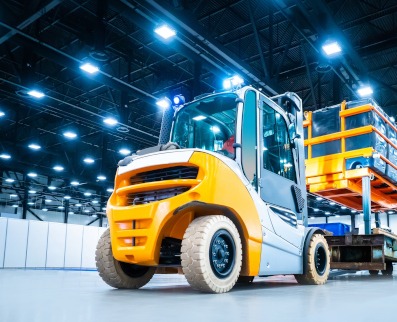
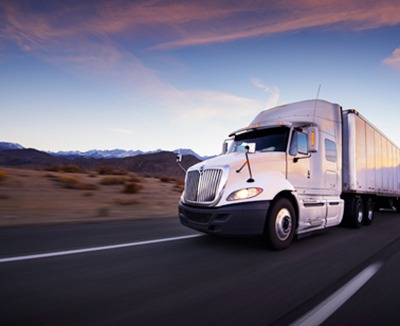
TPI
PSR Truck Production Index
Free quarterly global commercial vehicle production report.

Alternative Power Report
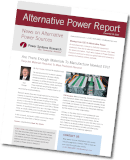
The latest EV and power source news including batteries and fuel cells with analysis by PSR experts.

PowerTALK News
Stay informed each month with insights from Power Systems Research’s analysts working around the world as they identify and comment on important news items in the company’s monthly newsletter.
Subscribe View Archive

OE Link™ Offers
Global Coverage
OE Link™ database provides OEM products, both On-Road and Off-Road, in 12 regions.
Current Reports
Download complimentary reports that show the type of information available from Power Systems Research.
PowerTALK News
Stay informed each month with insights from Power Systems Research analysts working around the world as they identify and comment on important news items in the company’s monthly newsletter.
Subscribe