Held every three years in Las Vegas, CONEXPO-CON/AGG is a massive international event features the latest equipment advances and newest technology applications in every aspect of construction. Power Systems Research sends a substantial team of analysts to these shows to gather information from exhibitors and attendees on the newest products and industry trends. The next CONEXPO trade show will be held in Las Vegas March 14-18, 2023.
PSR’s coverage includes in-depth analysis on graders, off-highway trucks and tractors, pavers, scrapers, mining equipment, and other equipment from the world’s leading manufacturers, including Caterpillar, John Deere, Komatsu, Case and more.
Global Construction Equipment Production Forecasts
For over 40 years PSR has been helping companies worldwide identify new growth opportunities to help them capitalize on the construction market and segment trends. Our extensive coverage includes exclusive five-year forecasts by region and industry segment each quarter. Our Update Bulletins allow our clients changes made in our databases during the quarter.
See our Product Definitions Guide for a list of products in the 13 industry segments that are tracked by Power Systems Research.
LAS VEGAS—Power Systems Research (PSR) sent a team of analysts to the CONEXPO-CON/AGG 2026 Show to talk with exhibitors and about the state of the industry and to learn more about new products.
You can read their impressions of the show, their takeaways from talking withexhibitors and attendees about the state of the industry, and the information they gathered about innovative new products.
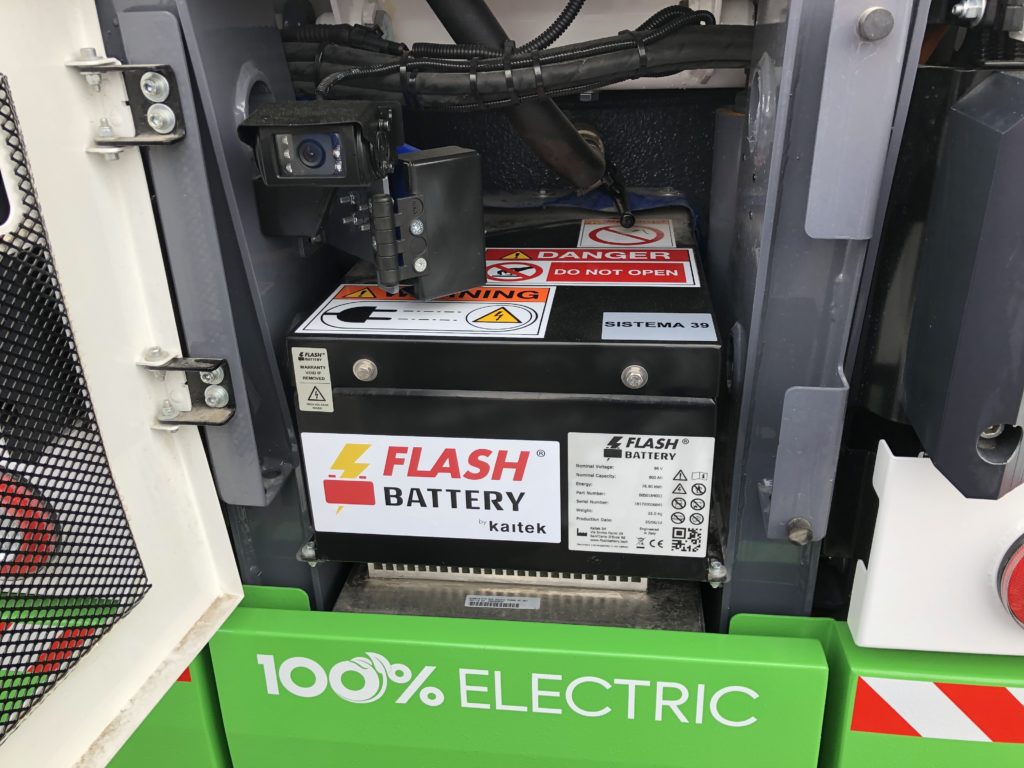
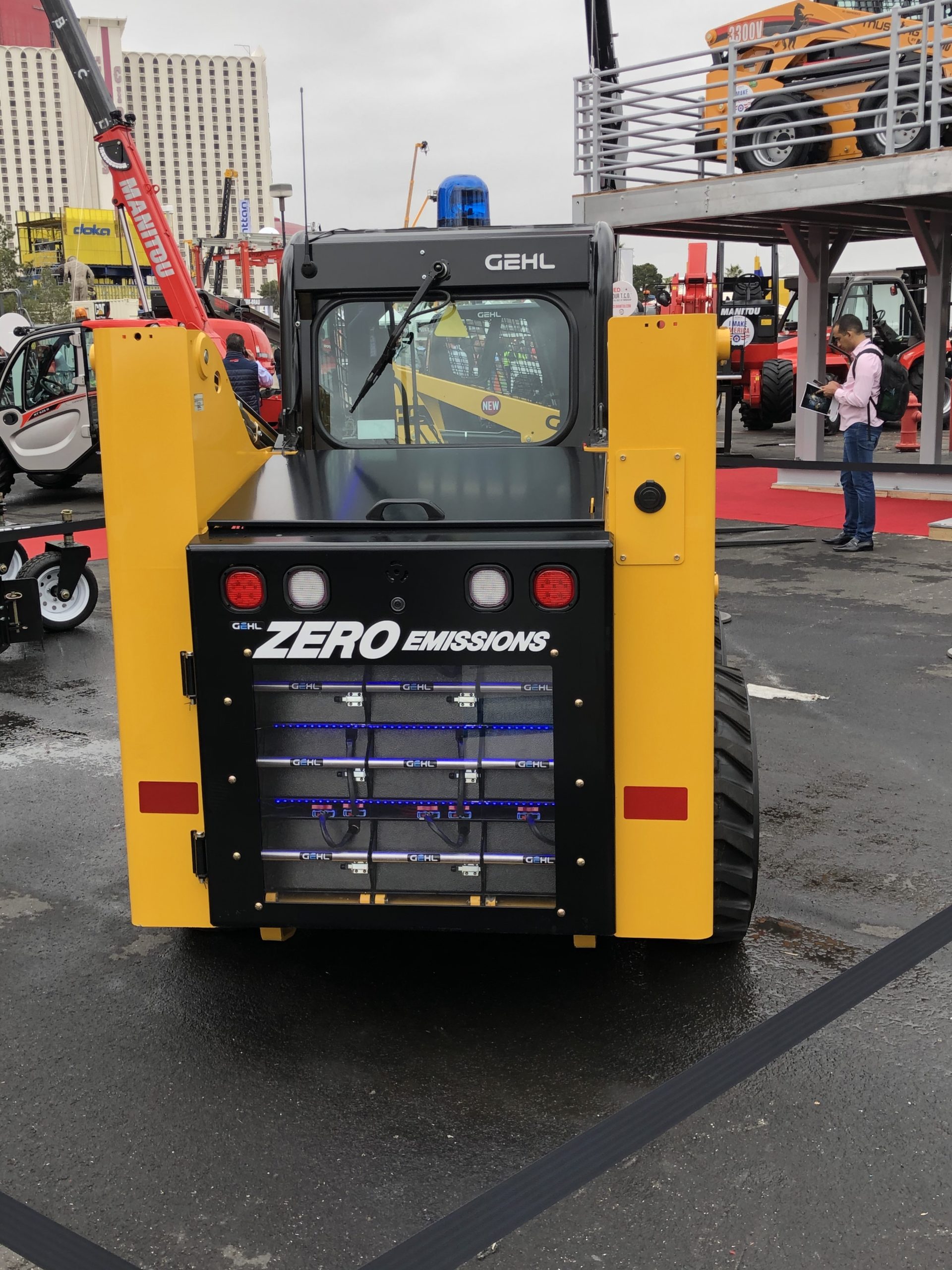
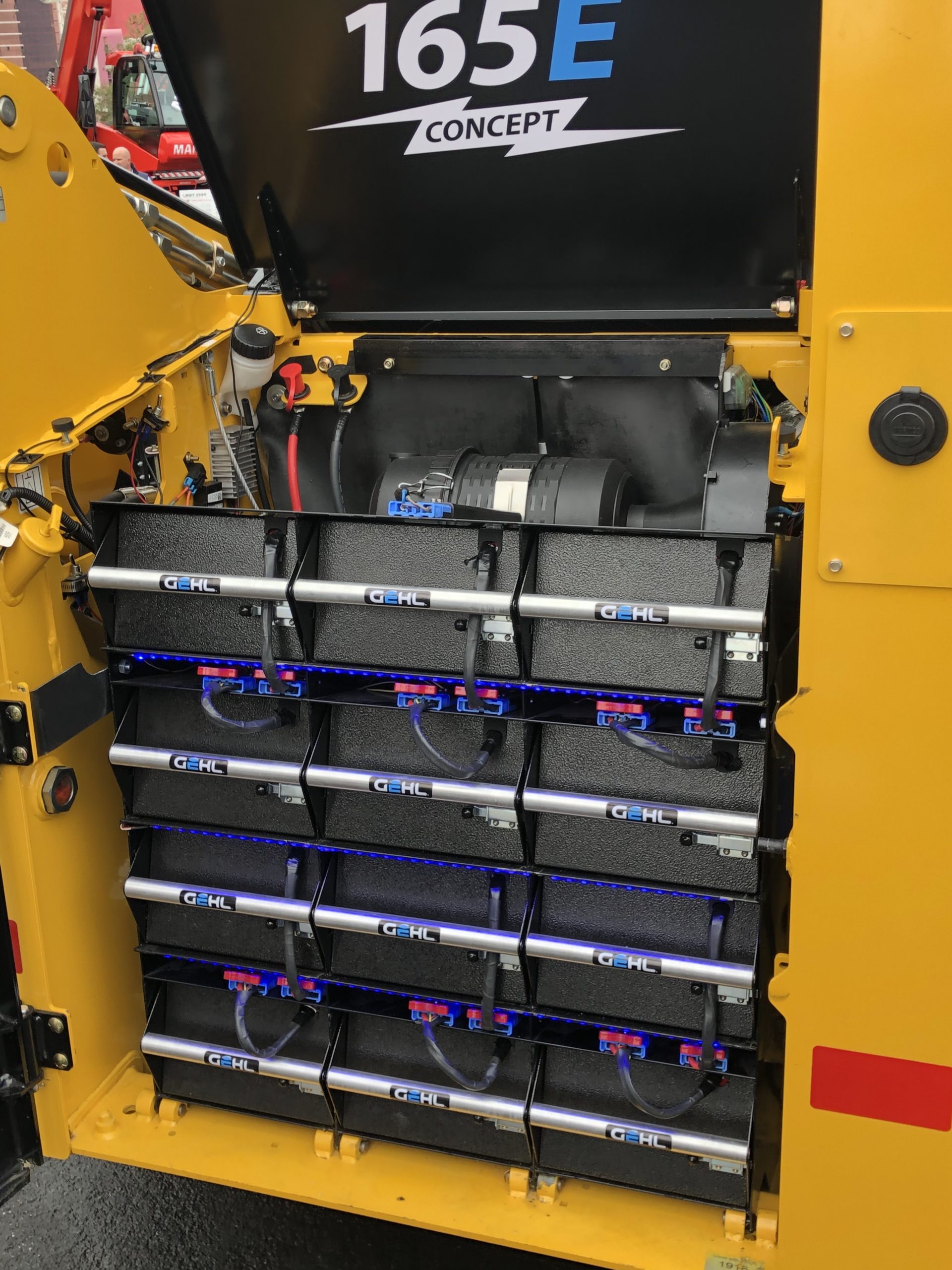
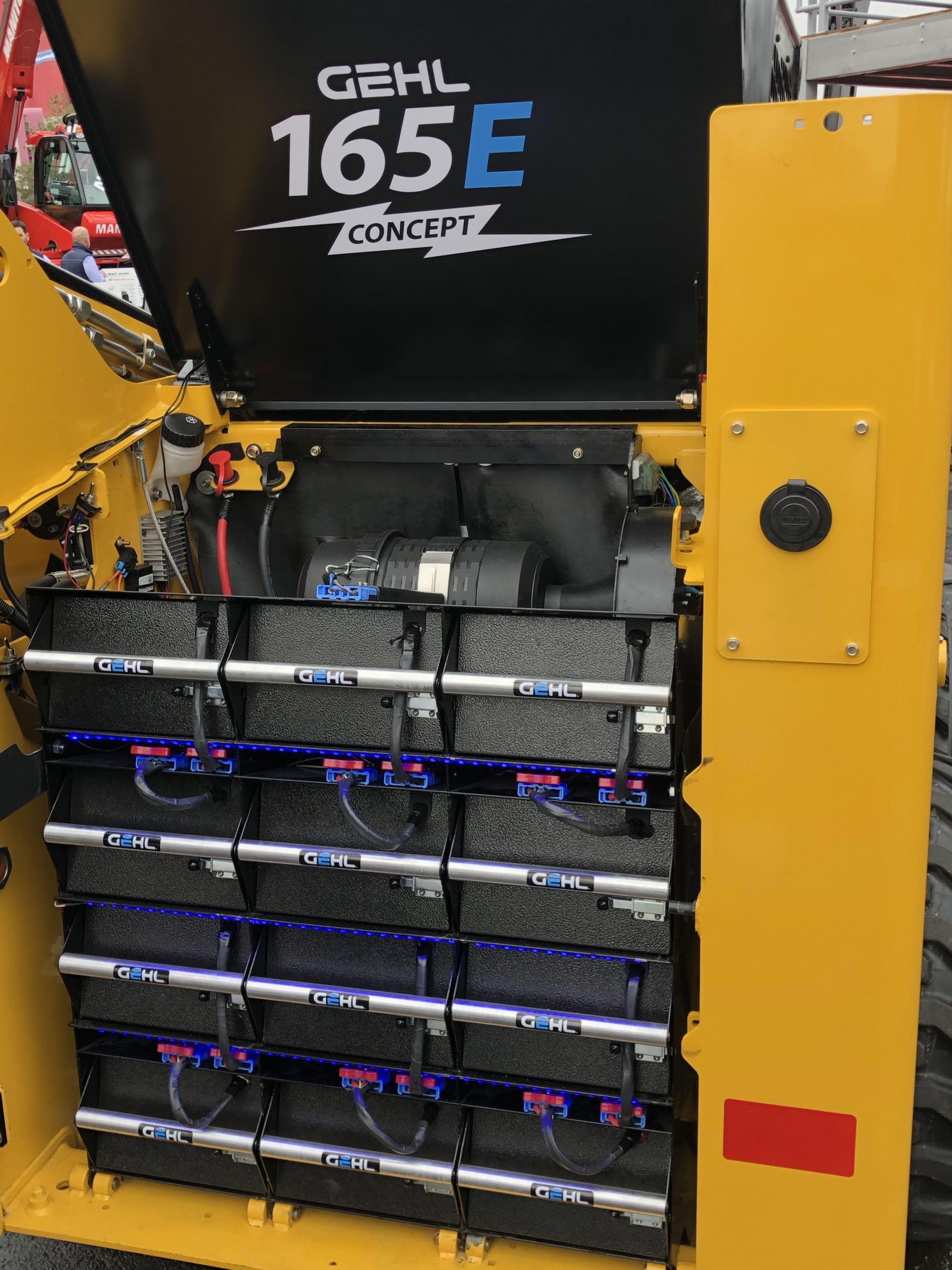
Interestingly, the PSR team didn’t see big movement to battery power. They saw more hybrids and hydrogen power moving forward. Battery seemed to be relegated to smaller machines.
LAS VEGAS—Many visitors to the CONEXPO-CON/AGG 2026 show here March 3-7 arrived from the cold and snowy Midwest and East Coast. The show exhibit areas covered 2.9 million square feet; with some of the exhibit areas being outdoors attendees felt the warmer than normal temps this time of year where Las Vegas had a record temperature of 86F on March 1. Those warmer temperatures lingered throughout the week.
This year’s show at the Las Vegas Convention Center drew an estimated 2,000 exhibitors and while attendance figures were not available as we prepared this report, observers said traffic was very heavy and attendance was expected to surpass the record 139,100 figure set at the last show in 2023.
We talked with many industry representatives at CONEXPO, and we generally heard that the North American construction equipment market is performing relatively well and that it is expected to experience low single-digit growth in the near term, with demand remaining stable. Demand continues to be supported by infrastructure investment and ongoing construction activity.
OEM representatives said their cautious forecasts were affected by factors such as interest rates, inflation, tariffs and global supply chain disruptions.
Tariffs were repeatedly mentioned as one of the main uncertainties affecting the industry. Frequent policy changes are impacting equipment pricing, sourcing strategies, and global supply chains. Manufacturers are adjusting sourcing strategies and regional production to mitigate tariff exposure.
The industry is moving toward a dual technology pathway. Electrification continues emerging in compact equipment and adoption is increasing slowly as customers become more familiar with EV solutions. Advanced diesel engines remain dominant in medium and large machines, and according to experts, diesel will remain the dominant technology for a long time.
OEMs said they are investing heavily in new engine platforms, efficiency improvements, telematics and connectivity.
We were able to identify a number of trends, based on field interviews and observations conducted during OEM and engine manufacturer booth visits.
Powertrain, Engine Technology Trends
Diesel engines remain the dominant power solution for medium and large construction equipment. Large equipment used in remote areas still requires internal combustion engines due to power needs and operational constraints. According to interviews made by PSR, diesel will continue to be the preferred power solution.
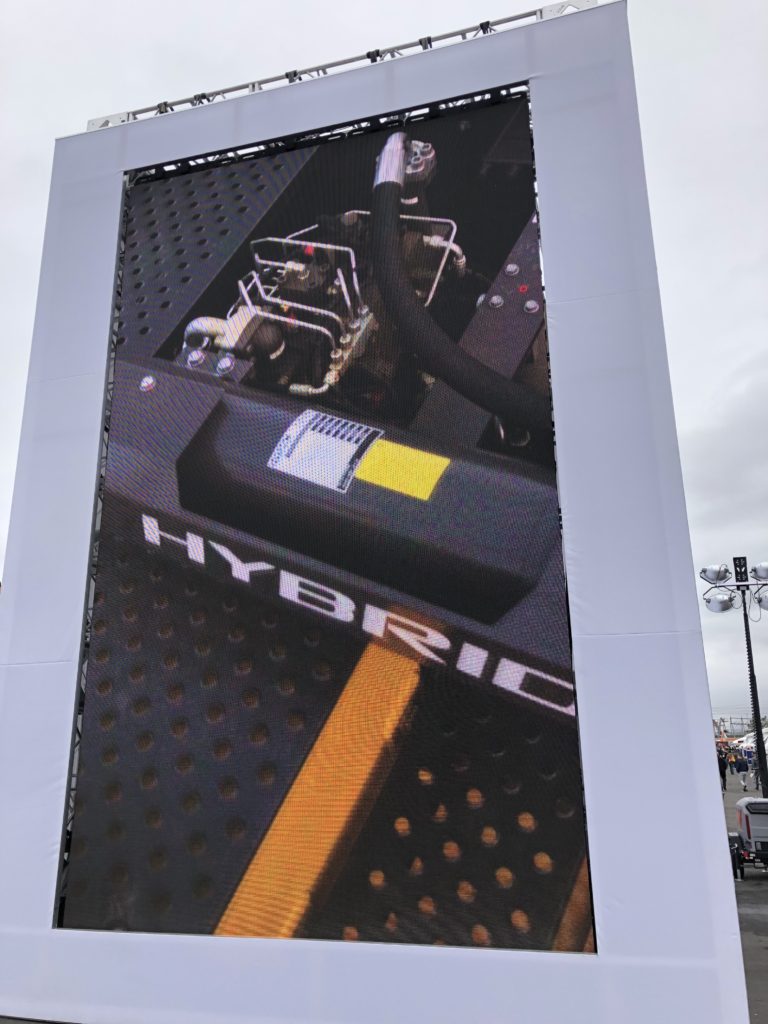
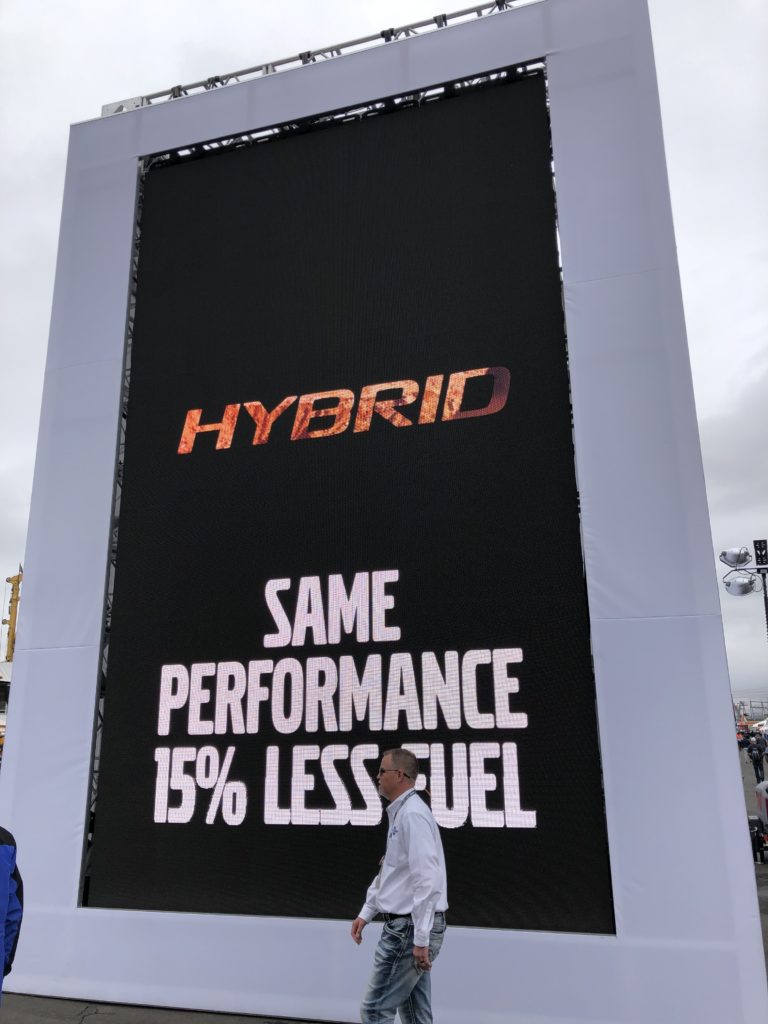
Manufacturers continue to improve fuel efficiency, simplify engine architecture, and enhance durability. Manufacturers showcased different alternative power solutions and are still exploring and testing hydrogen combustion engines, hybrid systems, and introducing multi-fuel platforms (hydrogenated vegetable oil, hydrogen, biodiesel, and natural gas) to the market.
Several companies presented prototype hydrogen engine concepts, although these technologies remain in testing phases or with some few customers. One of the key operational challenges for hydrogen equipment is the lack of fueling infrastructure. As an example, Power Systems Research analysts interviewed executives of JCB, and the company explained that its hydrogen combustion engine technology is already on the field with a limited number of customers, although the market is still at an early stage of deployment.
JCB has developed a mobile hydrogen refueling unit in conjunction with a supplier company that delivers hydrogen directly to job sites, so the fuel logistics is handled as part of a service package supporting early adopters. The main takeaway from the interview is that hydrogen combustion technology is technically viable but still constrained by fueling infrastructure.
Regarding multi-fuel platforms, major manufacturers like Perkins and Cummins showcased engines designed to run on low-carbon fuels, including hydrogen, HVO, and natural gas, aiming to provide flexible, lower-emission solutions without sacrificing performance. Cummins next generation X15, and Perkins 2600 Series were showcased at the venue. FPT showcased it´s multi-fuel XCursor 13. Isuzu also presented it´s multi-fuel engine concepts based on its established engine architecture.
Electrification Trends
Compact equipment segments show the highest experimentation with electrification and alternative power solutions, while large machines such as dozers and large excavators continue to rely primarily on diesel power due to high energy requirements.
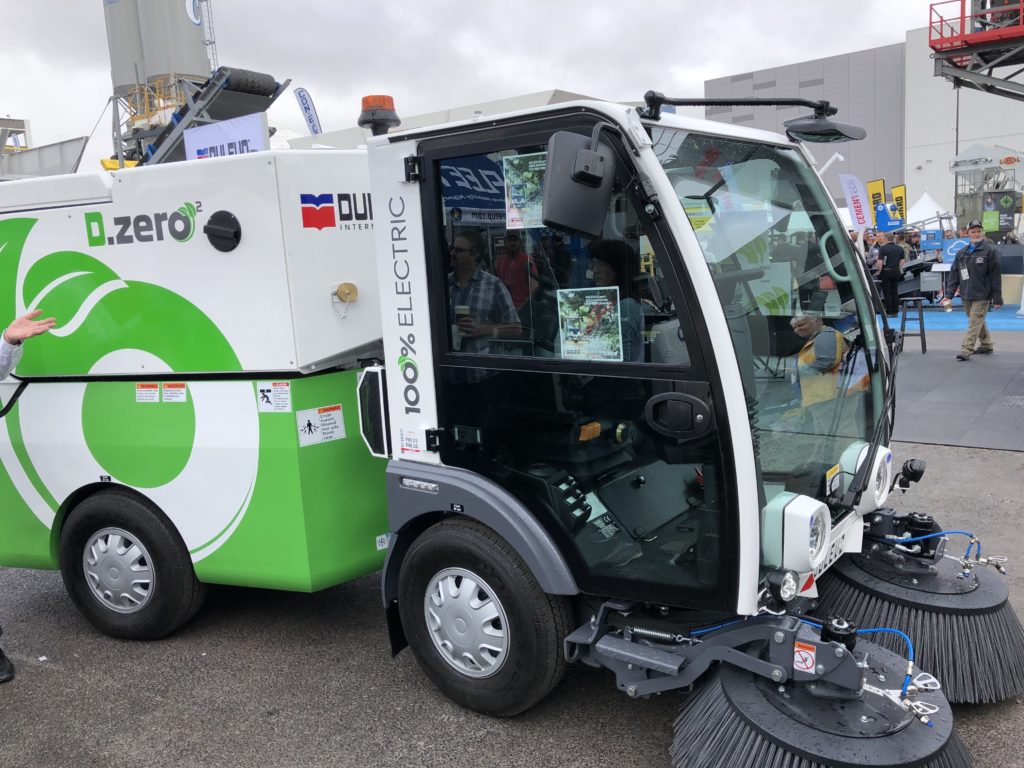
Electrification is primarily being applied to compact equipment used in urban environments, as well as in some remote applications supported by portable power stations or battery storage units.
Battery-electric prototypes and electric power units were showcased, with some already available in the market and others currently being tested as potential replacements for diesel engines in smaller and medium-sized equipment.
There is a growing trend toward presenting these technologies, and several new models were introduced during the show by different OEMs and engine manufacturers. Examples include the Perkins battery-electric power unit, the Komatsu electric micro excavator PC01E-2 made in Japan, the JLG scissor lift ES1930M Micro-Sized, the mini track loader TL100EV from Case, and the Dynapac CC1000e electric vibratory roller.
Charging infrastructure and operational limitations continue to restrict wider adoption of electric equipment across the broader construction equipment market.
Additional technologies presented included autonomous and robotic equipment, such as the RogueX3, Bobcats third-generation autonomous compact loader concept. This machine was introduced to explore the future of compact construction equipment through electrification, autonomy, and modular machine architecture.
OEM & Engine Manufacturer Highlights
While walking the CONEXPO, we saw several interesting engine platforms and alternative power technologies at engine manufacturer booths. Interestingly, a number of the innovative products were diesel powered.
Diesel Engines
Manufacturer
Engine Model
Displacement
Power
Notes
Cummins
F3.8 Power Unit
3.8 L
74–173 hp
Modular power unit for off‑highway equipment
Cummins
X15 Next Generation
~15 L
Up to ~700 hp
Heavy‑duty multi-fuel engine platform
Perkins
904J‑E36TA
3.6 L
~134 hp
High power density compact diesel engine
Perkins
2606J‑E13TA
~13 L
~690 hp
Large industrial diesel engine platform and multi-fuel
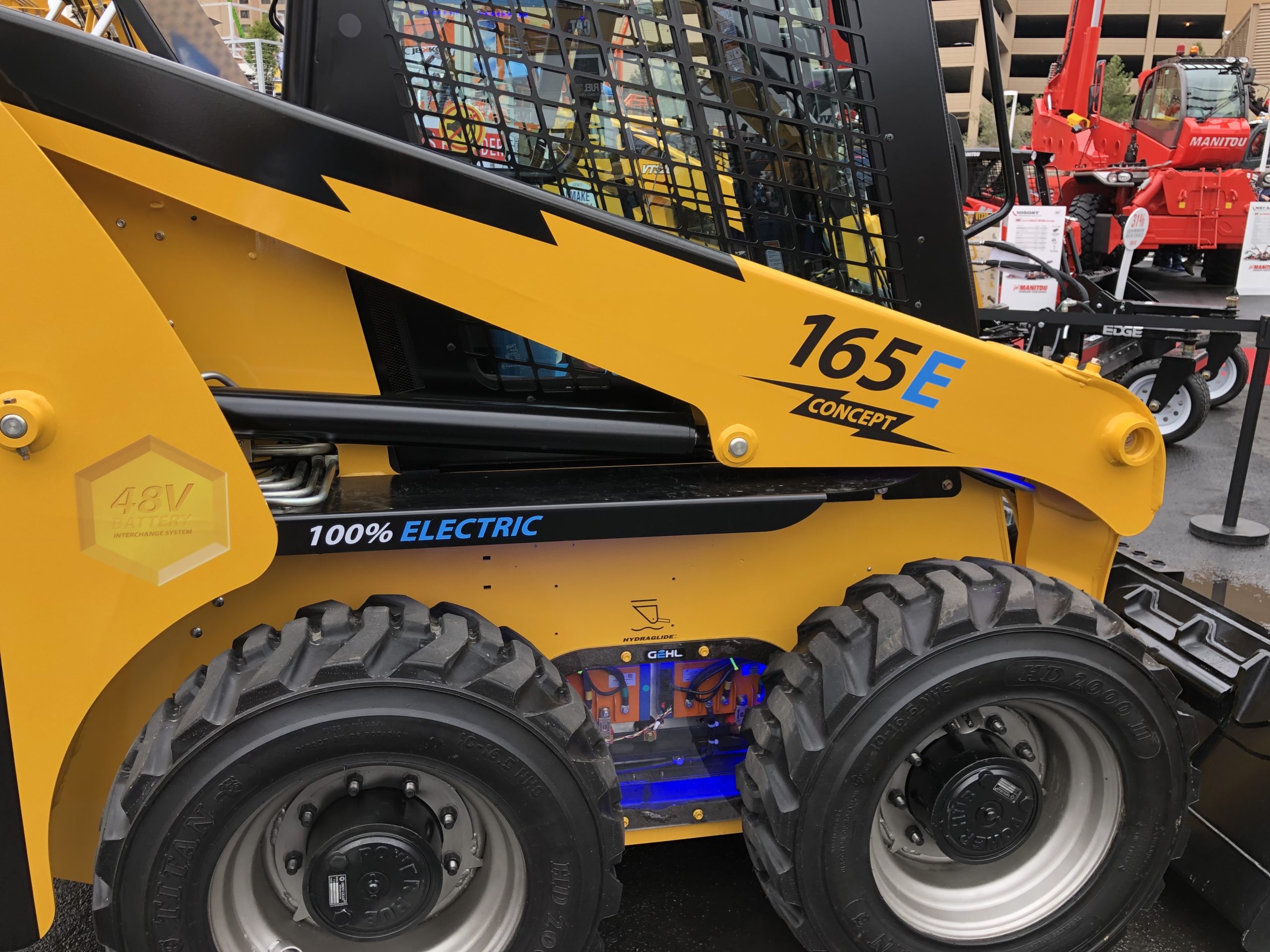
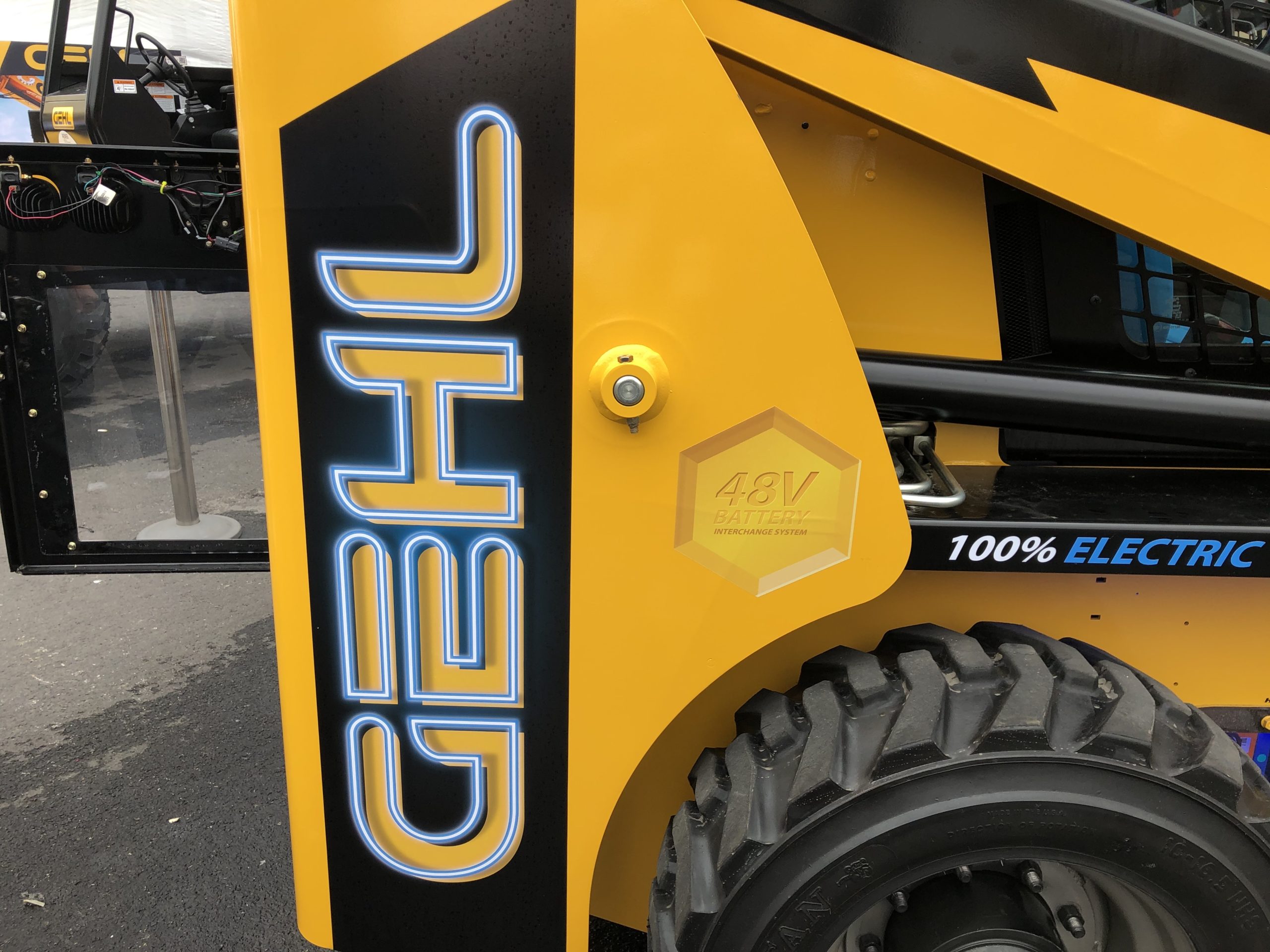
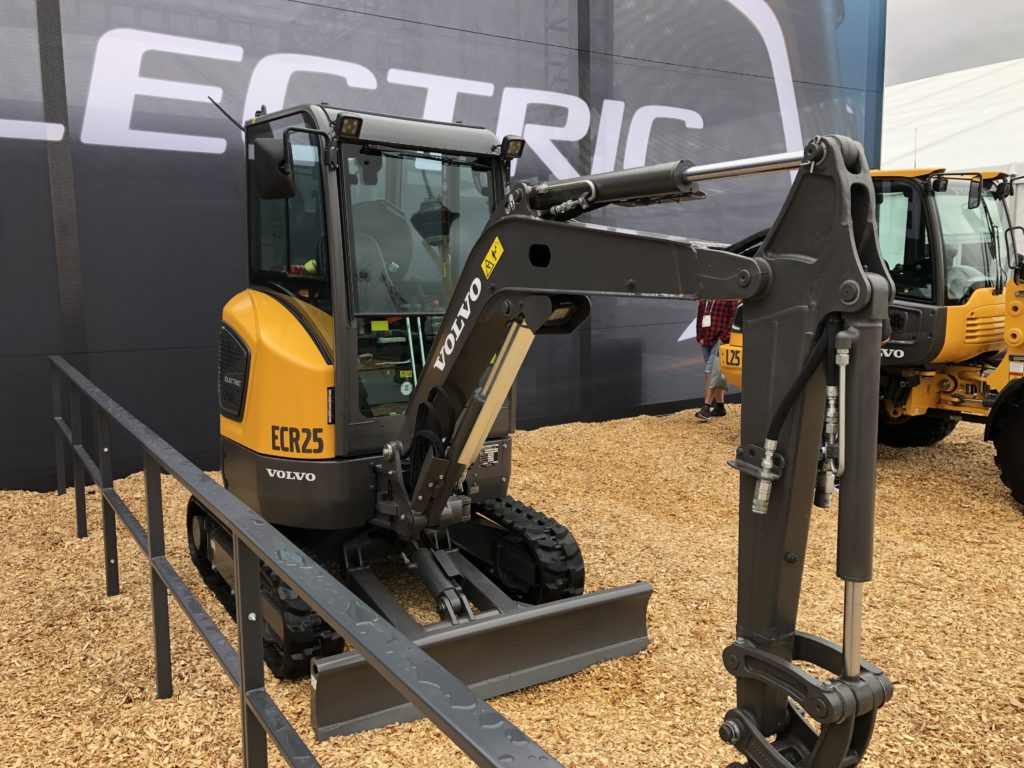
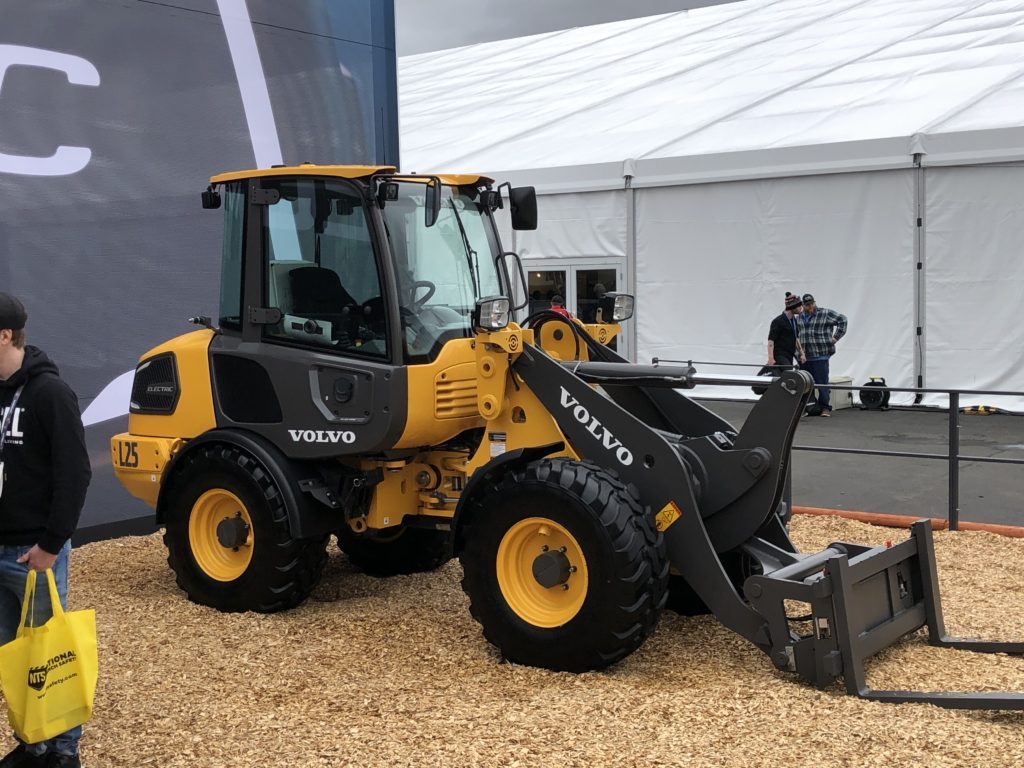
Walking CONEXPO 2023, the giant international construction show in Las Vegas this month, it was obvious that OEMs are devoting huge amounts of resources to developing alternative power sources for their compact equipment.
Hydrogen powered units and battery packs were common and new products powered by alternative energy sources were popular with attendees. New technology was the name of the game at this year’s show.
However, there were several prototypes that were built only for the show, according to some exhibitors, and were not likely to be put into mass production anytime soon. In fact, one manufacturer told us, “This was manufactured for the purpose of the exhibition and is not intended for mass production.”
More than 2,000 exhibitors displayed new products to nearly 140,000 attendees at the CONEXPO 2023 event in Las Vegas March 14-18. Analysts from Power Systems Research walked the grounds looking at new equipment and talking with exhibitors and attendees. Read their report here. PSR
Recently I was at a dinner with visiting members of my family discussing the noble transition that many manufacturers are making from producing their typical goods to producing essential goods and equipment for the coronavirus fight.
Tyler Wiegert
One that came up was Tesla’s transition to making ventilators, and one member of my family began to say that they wouldn’t want a Tesla ventilator if they were hospitalized, because it would probably catch fire and explode.
My fiance is in medicine rather than in our industry, so she took that to be a serious comment about the risk of ventilators sparking in an oxygen-rich environment. But it quickly became clear that this critic just has a deep and abiding skepticism of battery technology, because they repeatedly brought the conversation back to battery fires and cars exploding, despite there having been only 14 reported cases of Tesla vehicles catching fire between 2013 and 2019, with most of those happening after accidents.
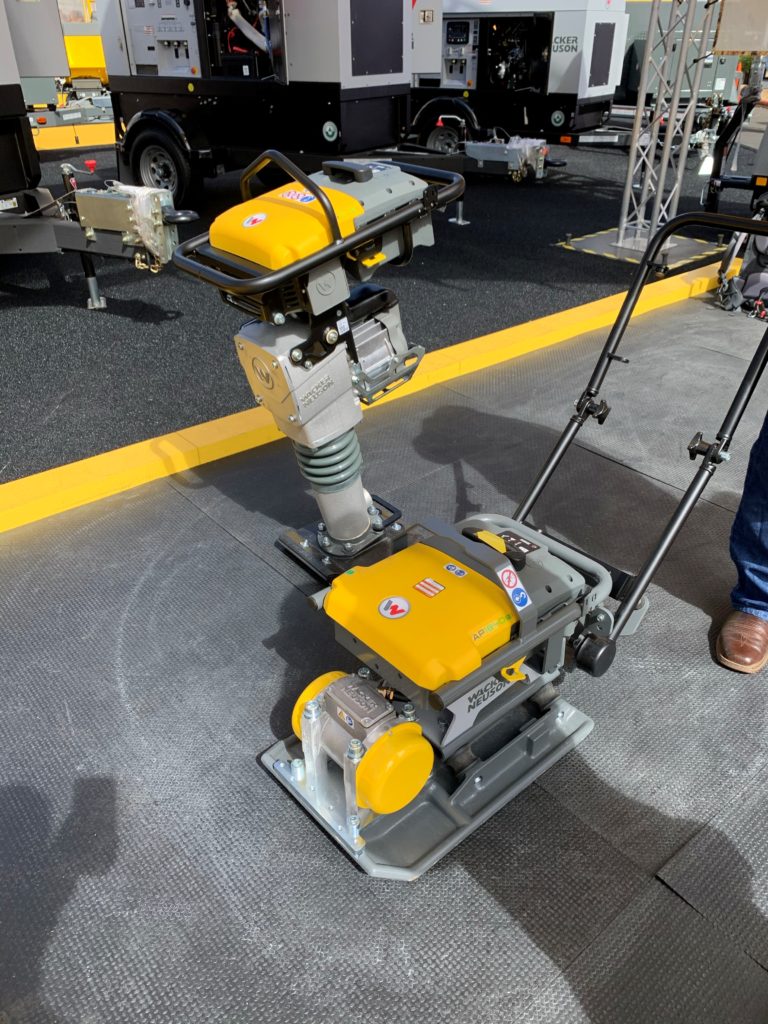
The batteries on these machines run 60 minutes and charge in 80 minutes, which Wacker believes is enough for a typical work day. The machines are surprisingly quiet, given the type of work they do, and they have the added benefit of not emitting fumes into deep excavations with no air flow. The shock system is sufficient that the vibrations barely reach the battery, and they’ve had no issues with vibrations affecting the batteries so far. Unlike with other larger construction applications, and more like in the lawn and garden segment, Wacker believes the demand is already there for battery-powered equipment, and customers will be the ones driving a complete transition to battery rather than OEMs.
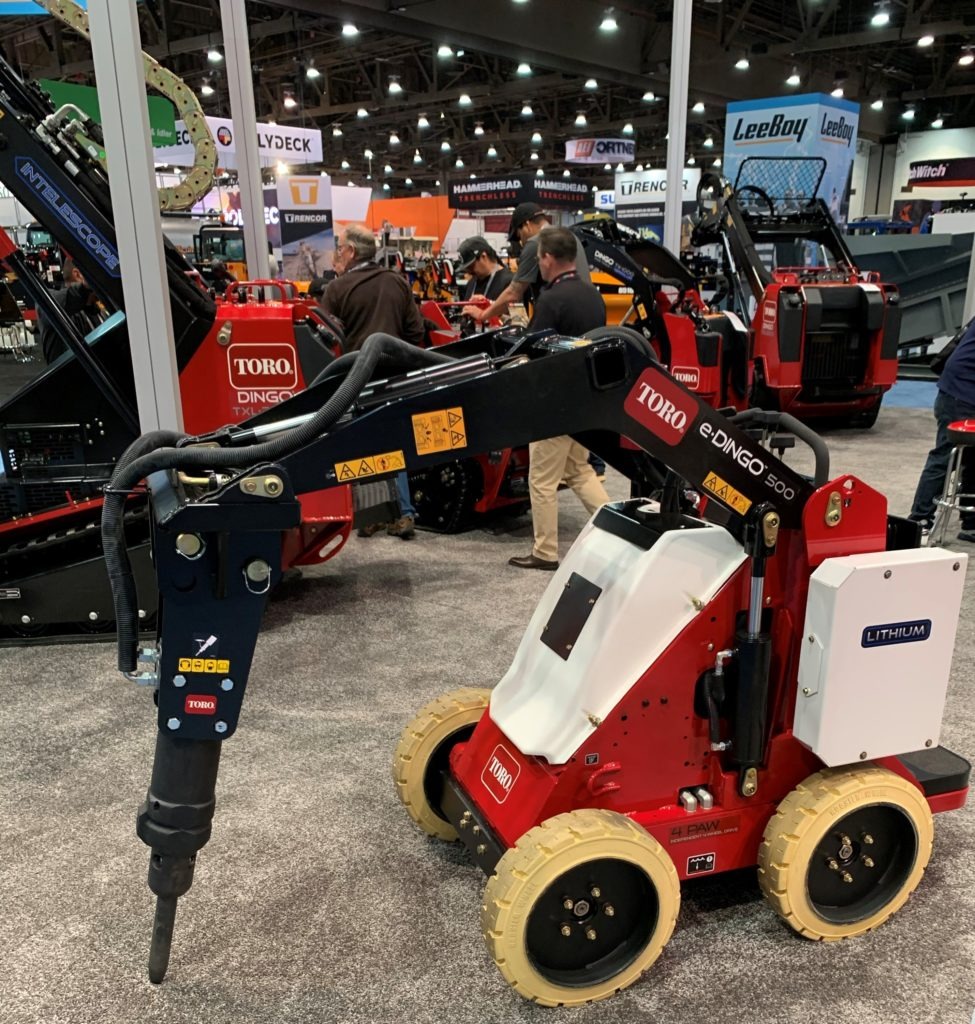
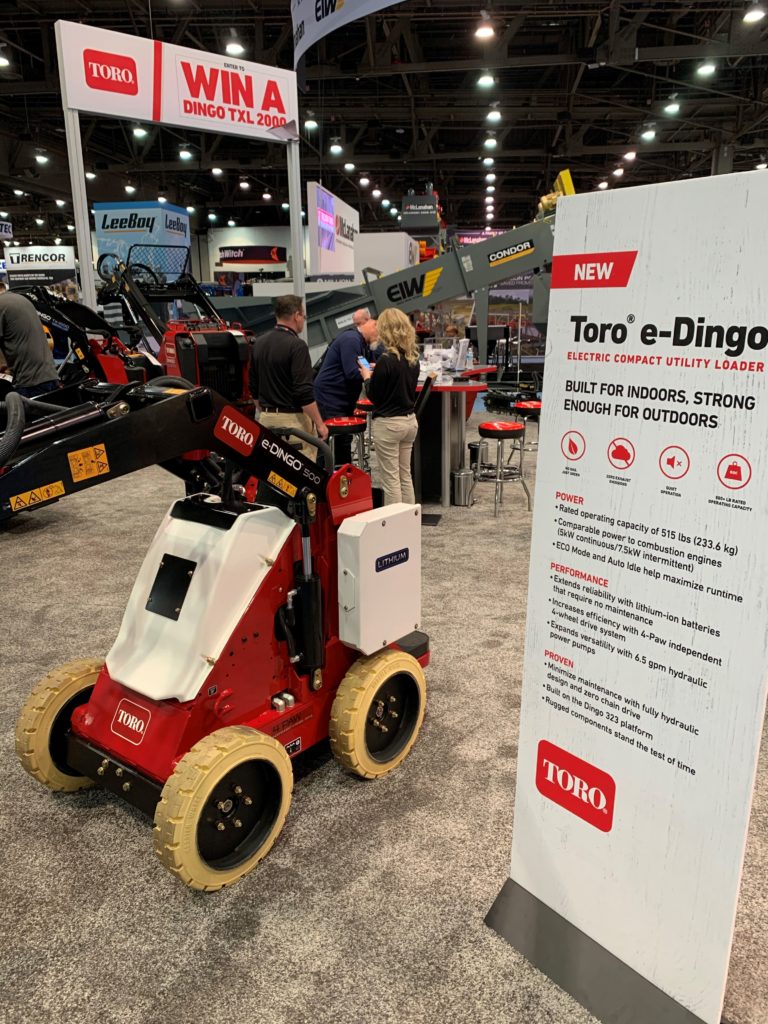
Toro e-Dingo is a battery utility loader released two weeks ago and scheduled to ship in late April. Toro plans to develop remote controlled and/or programmable machines in the future.
 CONEXPO – Summary Report