Hitachi Construction Machinery announced that a joint demonstration test will begin with Fukudome Kaihatsu in Tosa, Kochi Prefecture, using a ZX200A-7 20-ton class hydraulic excavator and a real-time digital twin platform. The test will be conducted in June 2026 at a river dredging project site in the Niyodo River Mochiishi District.
The platform integrates 3D terrain data, camera images, construction machinery, vehicles, and worker location information in real time, and reproduces the worksite in a virtual 3D space. The demonstration will compare remote operation under direct visual observation, remote operation using camera images, and remote operation using the real-time digital twin platform, in order to verify its effect on safety and productivity.
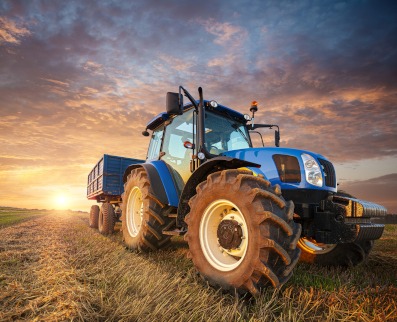
A related example can be seen in agricultural machinery, where NTT, Kubota, and NTT DOCOMO demonstrated communication technologies for the remote operation and monitoring of robotic agricultural machinery in mountainous areas. The demonstration combined mobile and satellite communications with video control technology to support stable remote operation under fluctuating communication conditions.
Source: Hitachi Construction Machinery / NTT, Kubota and NTT DOCOMO
PSR Analysis: The significance of this announcement is not simply that Japanese construction machinery is becoming more digital. The more important point is that Japan’s off-highway sector is beginning to show a practical path for dealing with one of its most serious structural constraints: the shrinking supply of skilled operators.
In Japan, the discussion around construction machinery and agricultural machinery often turns quickly to electrification or autonomy. Both are important long-term themes, but they are not necessarily the first areas where the market will see broad practical adoption. On many construction sites, especially in civil engineering, disaster recovery, and regional public works, the immediate problem is not how to replace the diesel engine. It is how to keep work moving when experienced operators are becoming harder to secure, and when safety requirements are rising.
That is why remote construction using digital twin technology deserves attention. Full autonomy remains difficult in construction because the work environment is highly variable. Ground conditions change, surrounding objects move, work procedures differ by site, and judgment often depends on the operator’s understanding of the whole worksite. A digital twin platform does not remove the operator from the process. Instead, it gives the operator and site manager a better view of the jobsite and supports better decision-making from a remote location.
This distinction matters. Remote operation and worksite visualization can be introduced as an extension of existing hydraulic excavators and construction workflows. They do not require an immediate shift to a completely new machine architecture. For users, that makes adoption more realistic. For OEMs and suppliers, it means that competitiveness will increasingly depend on how well machines can be integrated into connected worksite systems, not only on conventional measures such as power, durability, fuel efficiency, or hydraulic performance.
The agricultural machinery case points to the same issue from another direction. Robot tractors and other automated machines cannot operate safely at scale without stable communications, reliable video transmission, and remote monitoring. In mountainous areas, where communication quality can fluctuate sharply, the machine itself is only one part of the solution. The broader system — communications, software, sensors, video control, and supervision — becomes just as important as the vehicle.
For the Japanese off-highway market, this suggests that “labor-saving” may become a more immediate commercial driver than electrification. Diesel-powered machines are likely to remain in use for many applications, but they will be expected to operate within increasingly digital and remotely managed environments. The future competitive question may therefore shift from “who builds the best machine?” to “whose machine fits best into a safer, more productive, and more remotely managed worksite?”
This is a meaningful direction for Japan. It plays to the country’s strengths in machinery, field engineering, telecommunications, and incremental system integration. It also addresses a problem that is already visible in the market: not a shortage of machines, but a shortage of people who can operate them efficiently and safely. PSR
Akihiro Komuro is Research Analyst, Far East and Southeast Asia, for Power Systems Research