The E-bike market size was estimated at USD 38.3 billion in 2023 and is forecast by Power Systems Research to increase to $97.3 B in 2033 with a CAGR of 9.77% between 2024 and 2033. Cities globally are investing in dedicated bike lanes, charging stations, and bike-sharing initiatives for facilitating easier e-bike usage. Moreover, consumers are drawn to the substantial cost savings offered by electric solutions compared to conventional vehicles.
E-Bike Market Trends. Several important technological trends have boosted the production and sales of e-bikes.
- Battery Technology. Improved batteries provide lighter weight, lower cost, longer range and quicker charging times.
- Smart features, such as GPS navigation, app connectivity, and digital displays enhance the user experience, making e-bikes more appealing and user-friendly.
- Shared micro-mobility is part of the public transportation ecosystem. As a flexible transportation option with comparatively low overhead and operation costs, shared micro-mobility can complement higher-volume fixed-route transit services by offering mobility services for many trips at a lower per-traveler cost.
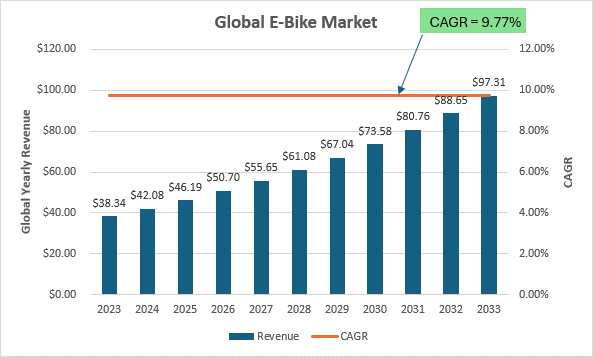
Source: Power Systems Research
RESTRAINING FACTORS. While the outlook for e-bikes is fairly positive, there are some negative factors to be considered.
- High Cost of E-bikes may hamper market growth. The high cost associated with the purchase of e-bikes is restraining the growth of the market. The additional cost of battery and electric motor makes it less accessible for some consumers.
- Lack of charging infrastructure. The lack of adequate charging infrastructure is one of the biggest challenges in the market. E-bikes rely on rechargeable batteries for power.
Demand Drivers. Demand for e-bikes is driven by several factors.
- Rising Cost of fuel. Increasing prices of fuels are shifting the demand toward the electric bike.
- Infrastructure Support to promote growth. Germany, France, and Spain have made the construction of e-bike infrastructure a priority and are trying to boost expenditures to quicken the creation of a connected and secure bike network.
- Environmental Awareness. E-bikes are eco-friendly, and convenient. They are quiet, produce no carbon emissions, provide a cheap form of transportation, conserve space, and promote excellent health. Rising awareness of health hazards associated with the usage of traditional fuel-based vehicles is increasing the growth of the market.
- Traffic Congestion. As traffic congestion increases, E-bikes offer a practical solution for daily commuting.
PSR Analysis: The global e-bike market is a highly opportunistic and competitive market owing to the shifting consumer trend towards eco-friendly vehicles. In addition, manufacturers find the e-bike an economical alternate for electric vehicles. E-bike sharing services along with support from government organizations to promote the application and adoption of e-bike are expected to promote market growth in upcoming years. PSR
Michael Aistrup is Senior Analyst at Power Systems Research