

-
Hyundai Plans $14.7 Billion for Software Development
FAR EAST: SOUTH KOREA REPORT

Akihiro Komuro Hyundai Motor Company is getting serious about developing the software needed for automated driving, etc. It has decided to invest $14.7 billion by 2030 and has begun building a development structure and embarking on M&A.
Hyundai Motor Company has achieved record profits through a shift in strategy in conjunction with a generational change. The company plans to further improve profitability in the software field, where customers can add functions to their cars after purchase. But acquiring human resources will be an immediate challenge for Hyundai.
The “Over the Air (OTA)” function, which updates the latest software via the Internet, will be standard on all new models released in 2023 and after. The plan is to establish a system that allows users to be charged according to function updates. The company will first introduce content such as car navigation systems, audio, lighting, and remote-control functions, and then expand into peripheral areas such as auto insurance policies, to diversify and upgrade services in response to customer needs.
-
South Korea Sees First Trade Deficit with China in 28 Years
FAR EAST: SOUTH KOREA REPORT
Akihiro Komuro The economic relationship between China and the ROK has reached a turning point. According to statistics from the ROK, for the first time in 28 years, the ROK has a trade deficit with China. China has been the best customer of the export driven ROK economy, and this is causing concern in the ROK. At the same time, Chinese companies are intensifying their takeover of Korean companies, and in response to the escalation of the U.S.-China conflict, they have begun to pursue a strategy of using Korea as a foothold to capture the U.S. market.
A management official at South Korea’s Hyundai Motor’s joint venture plant in Chongqing, China, said that the passenger car assembly plant is idle and that negotiations are underway to sell it to a Chinese company. Hyundai Motor started operations in Chongqing in 2017, including an assembly plant with an annual production capacity of 300,000 units, but sales slumped due to the rise of Chinese automakers. At one point, the company occupied second place with a market share of nearly 10%, but recently it has fallen below 2% and slumped to 10th place.
-
Hyundai Doosan Infracore Plans Hydrogen Engine
FAR EAST: SOUTH KOREA REPORT
Hyundai Doosan Infracore announced that it has been selected as the lead company for the national project “Development of Hydrogen Engine System and Storage and Supply System for Construction Machinery and Commercial Vehicles” by the Industrial Technology Evaluation and Management Agency.
Through this project, the company plans to develop a 300kW, 11-liter class hydrogen engine and hydrogen tank system with zero carbon emissions, which will be installed in commercial vehicles…
-
Hyundai Launches Flagship EV, the IONIQ6
SOUTH KOREA REPORT
Akihiro Komuro Hyundai Motor Company unveiled in July its flagship EV model, the IONIQ 6, that has a driving range of 6.2 kilometers per kilowatt-hour, a 20% increase over the current 5 model. The cruising range was also increased by 22% to 524 kilometers or 326 miles, (based on Korean government certification standards). Hyundai Motor claims that its EVs have the world’s highest level of electricity consumption efficiency.
The company called the IONIQ 6 “a ‘mobile personal studio,’ a space where you can rest and relax on your own. It offers a new experience that is different from existing EVs.”
In Korea, pre-orders will begin in late July, with shipments starting in September. Pricing will start at 55 million won (approximately 5.8 million yen), and sales are expected to reach 12,000 units by the end of the year. It will be released in Europe by the end of the year and in the US in the first half of 2023. Sales in Japan have not yet been decided. The newly announced “6” has a lighter body, and the cruising range has been extended by improving the energy-saving performance of the drive components and semiconductors.
-
Hyundai Sells More Than 800 EVs at Indonesia Auto Show
FAR EAST: SOUTH KOREA REPORT
Hyundai Motor Indonesia (HMID) said it has signed contracts for more than 800 units of the Ioniq 5 EV announced at the Indonesia International Motor Show (IIMS) Hybrid 2022 in Jakarta.
The company announced that it has started mass production of the Ioniq 5 and that it will begin shipping to dealers in April. The Creta SUV was the second most sold model after the Ioniq 5, with approximately 600 units sold, bringing the total number of vehicles sold to over 1,500, including EVs and gasoline-powered vehicles.
-
Korea To Increase EV Battery Material Production
FAR EAST: SOUTH KOREA REPORT
Akihiro Komuro Korean materials giants are rushing to increase production of battery materials for EVs. Lotte Chemical plans to invest 160 billion yen to build plants for electrolytes and other materials in Korea and the U.S. LG Chem and POSCO have also announced plans to increase production. The three major Korean battery manufacturers, including LG, have active investment plans, but they are lagging their Chinese counterparts in the upstream area of battery materials. Materials companies are also increasing their supply capacity to compete with the Chinese.
Lotte Chemical, a major petrochemical company, will build a new plant for organic solvents for electrolytes in its own plant. The company will build a new factory with a total investment of 602 billion won, aiming for production by the end of 2023. The company is also considering building a plant related to electrolyte and cathode materials in Louisiana, U.S. It has begun coordination with local governments and other related parties in anticipation of starting production in 2025. The investment is expected to be in the order of 100 billion yen.
-
Ford Automotive Plant Sold To Korean Sungwoo Hitech
RUSSIA REPORT
The South Korean company Sungwoo Hitech, a manufacturer of auto components that is part of the Hyundai group, has purchased an abandoned Ford plant in Vsevolzhsk.
Details of the deal have not disclosed. However, the plant, which is partly stripped and which has been idle for two years, is being sold for US$ 20 million, a total considered to be far below market value.
For now, the new owner said it is not planning to resume car production there, but the company said it is going to rehab the plant and start production in 2023. Sungwoo Hitech said at this time it plans to invest about US$ 70 million and employ 520 people. Production capacity will be about 265,000 units per year.
-
Japan Could Miss Out on Southeast Asia’s Shift To EVs
INDONESIA AND THAILAND REPORT
Akihiro Komuro Competition in the development of EVs is fierce, and the momentum for their introduction is growing in Southeast Asia. While Chinese and Korean manufacturers are aggressively entering the market, Japanese manufacturers, which hold an 80% share of the new car market, have not made any significant moves.
Although the COVID-19 disaster has brought the market to a standstill, Southeast Asia, with a population of 660 million and a rising middle class, will continue to be a promising growth market.
A proactive EV strategy is required to protect the current market dominance. In Indonesia and Thailand, the two largest markets in the region, Japanese cars have a 90% share of the market. However, it is only the Chinese and South Koreans who are providing the buzz about EVs.
In Indonesia, South Korea’s Hyundai Motor Co. will begin producing EVs in March at its completed vehicle plant that recently went into operation. For the time being, it will rely on imports for key components, but it is building a plant for mass production of onboard batteries in collaboration with LG Group, another Korean electronics giant.
In Thailand, China’s SAIC Motor Group and Great Wall Motor have already started selling EVs. The latter plans to start mass production of EVs in 2023 at a plant it acquired from GM in the US. Compared to China and South Korea, which are trying to secure a scale of production with an eye to exports, Japan is generally cautious, with Toyota and Mitsubishi considering local production of EVs in Thailand starting in 2023.
-
LG Chem To Build Plant for Auto Battery Materials in Korea
FAR EAST: SOUTH KOREA REPORT
LG Chem says it will build a cathode material plant for automotive battery materials in Gumi, central South Korea. LG Chem has the second largest automotive battery business in the world. They will continue to invest in increasing production in the materials field to meet the increasing demand and plans to start mass production by 2025 and will build a dedicated line for cathode materials with high nickel content, called NCMA, which can increase the output of batteries.
LG Chem’s new plant will be its fourth; it has two cathode material plants in operation in Korea and one in China. The current production capacity is 80,000 tons. LG Chemical produces its own cathode materials, separation membranes, and adhesives, and supplies them to LG Energy Solution, its battery subsidiary. LG Chem is working with Toray Industries, Inc. to secure the amount of separation membrane to be procured.
-
Hyundai Motor Launches ‘Wage Half Price Plant’
For the first time in 23 years, a finished car plant has started operations in South Korea. The operator is Gwangju Global Motors (GGM). This unfamiliar company was established under the leadership of the city of Gwangju in southwestern South Korea, with Hyundai Motor taking a stake, to specialize in contract manufacturing of small cars. The city of Gwangju, which aims to attract industry and create jobs, and Hyundai Motor, which wanted a plant where production can be outsourced at a low cost, coincided in their intentions.
The site area of 455,000 square meters is lined with three buildings: a pressed car body factory, a painting factory, and an assembly factory. Inside the assembly plant, which measures 340 meters by 140 meters, eight colorful car bodies flow smoothly down a three-dimensional production line.

TPI
PSR Truck Production Index
Free quarterly global commercial vehicle production report.

Alternative Power Report
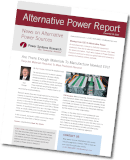
The latest EV and power source news including batteries and fuel cells with analysis by PSR experts.

PowerTALK News
Stay informed each month with insights from Power Systems Research’s analysts working around the world as they identify and comment on important news items in the company’s monthly newsletter.
Subscribe View Archive

OE Link™ Offers
Global Coverage
OE Link™ database provides OEM products, both On-Road and Off-Road, in 12 regions.
Current Reports
Download complimentary reports that show the type of information available from Power Systems Research.
PowerTALK News
Stay informed each month with insights from Power Systems Research analysts working around the world as they identify and comment on important news items in the company’s monthly newsletter.
Subscribe