The PowerLink 3.0 application has been updated for Q4 2025 and you can now access the system.
Contact support@powersys.com if you have any questions or concerns. PowerLink™ 3.0 Login
The Power Systems Research Truck Production Index (PSR-TPI) increased from 107 to 111, or 3.7%, for the three-month period ended Dec. 31, 2025, from Q3 2025. The year over-year (Q4 2024 to Q4 2025) loss for the PSR-TPI was, 113 to 111, or -1.8%.
The PSR-TPI measures truck production globally and across six regions: North America, China, Europe, South America, Japan & Korea and Emerging Markets. This data comes from OE Link,™, the proprietary database maintained by Power Systems Research.
In the February 2026 issue of the Alternative Power Report produced by Power Systems Research and authored by Guy Youngs, you’ll find articles on Tesla committing suicide by shifting away from auto productions, Germany’s new stance on hydrogen, new 4X power sodium-ion batteries, Europe’s hydrogen bus experiment, and Mercedes introducing a new solution to cut pollution. Read these articles and more in the February Alternative Power Report today. PSR
Guy Youngs is Forecast and Technology Adoption Lead at Power Systems Research
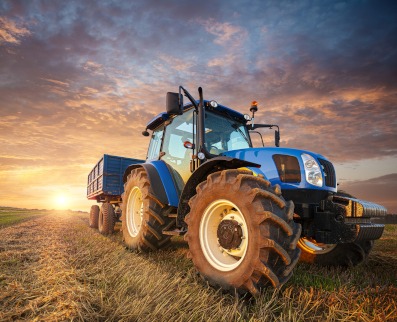
80,800 units is the estimate by Power Systems Research of the number of Ag Tractors expected to be produced in North America (United States, Canada, and Mexico) during 2026.
This product information comes from industry interviews and from two proprietary databases maintained by Power Systems Research: EnginLink™ , which provides information on engines, and OE Link™, a database of equipment manufacturers.
2-Wheel Drive Tractors are farm tractors that have a drive train that allows two wheels to receive power from the engine simultaneously. Normally, the rear axle is powered by the engine.
4WD Articulated Ag Tractors are farm tractors built with an articulated chassis very similar to the design used for articulated wheel loaders. Each element of the articulated chassis has a rigid drive axle, and the front and rear elements are connected by a pivoting/ articulating joint. This design uses rigid (i.e. non-steering) drive axles and is typically used for large, high-HP tractors.
MFWD Tractors (Mechanical Front Wheel Drive) are farm tractors which feature a rigid chassis with steerable front-drive axles. This designation applies to both full-time 4WD and front-assist-drive configuration tractors across a broad HP range. Both configurations are produced in significantly greater volume than the 4WD Articulated type tractors.
Tracked Ag Tractors are steerable multitrack tractors with powered rubber tracks instead of wheels to move the vehicle. The crawler-type tracks are flexible and reinforced with steel. They are usually powered by hydrostatic or completely hydraulic driving mechanisms. They can be articulated or nonarticulated.
Trends. In 2025, production of Ag Tractors in North America decreased 6.2%. Production is expected to drop by nearly 6% in 2026.
Prior declines in 2020 were attributed to COVID-19 related issues which included unusually high orders for materials and parts. Inventory levels are at the lowest level in decades and have left the supply chain a mess, according to leading tractor manufacturers and AEM.
Production of machinery and components needed to build equipment has been halted. This negatively affected demand for farm machinery and contributed to overall lower sales and profits for agricultural equipment operations.
New tractors have become very expensive and have weakened demand. Reduced demand also has been linked to lower commodity prices.
The peak of Ag Tractor production was in 2013. Expect production to remain flat with a potential 10% decline by 2035. PSR
Carol Turner is Senior Analyst, Global Operations, for Power Systems Research
Following its Q4 2025 financial update, Tesla appears to be pivotally shifting away from its identity as a traditional automaker. By phasing out the Model S and X to focus on ‘Transportation as a Service,’ leadership is betting heavily on an autonomous-first business model.
And instead of building on that success, expanding into new segments, addressing affordability, and competing with the flood of new EVs from legacy automakers and Chinese competitors, the company that revolutionized the auto industry is walking away from it.
“The October 2025 special report from Germany’s Federal Audit Court, Implementation of the Federal Government’s Hydrogen Strategy, lands with unusual weight because it is not a policy critique or an academic intervention, but a statutory budgetary assessment delivered to Parliament,” reports Clean Technica.
It evaluates the hydrogen strategy against the legal requirements of the Energy Industry Act, namely security of supply, affordability, environmental sustainability, climate neutrality, and fiscal prudence, according to the article.
“Its conclusion,” notes the Clean Technica article, “is that the hydrogen strategy is not meeting these tests, despite US$ 5.1 billion (€4.3 billion) allocated in 2024, more than US$ 3.56 billion (€3 billion) in 2025, and multi-billion-euro commitments extending through the end of the decade.”
PSR Analysis: The audit report also refers to the current plan as implausible rather than ambitious and this makes one question how countries can invest tens of billions into infrastructure of an effectively unproven technology ecosystem, at least at this scale. One might think funding a decent but “very small scale trial” might be more prudent. PSR
Guy Youngs is Forecast & Adoption Leadat Power Systems Research
The sodium-ion battery formula has some advantages over conventional lithium-ion batteries, including the use of non-flammable, abundant materials and the potential for cutting costs.
One of the areas for improvement is the anode materials. The graphite used in lithium-ion batteries is not a candidate because it can’t store sodium. The consensus alternative has been hard carbon, a form of carbon that doesn’t devolve into graphite under high heat. However, hard carbon can inhibit capacity during the anode formation stage, when the battery is being manufactured
A team of researchers at BAM (the Federal Institute for Materials Research and Testing) in Germany, noted that the loss of capacity during the manufacturing process is the result of a chemical reaction between the electrolyte and the anode. The BAM solution involves a customized form of activated carbon, applied over a core of sponge-like hard carbon in a thin layer. “Activated carbon is commonly used as a filter, and that’s what it does here, allowing sodium ions to reach the hard carbon core while keeping the electrolyte out,” reports Clean Technica.
PSR Analysis: Sodium-ion batteries have been lingering around the fringes of the vehicle electrification movement for years. A breakthrough moment may have finally arrived as the hurdles to commercial application have fallen. If indeed this activated-carbon trick holds up in large-scale production, it might become the biggest news in battery tech in recent years. PSR
Guy Youngs is Forecast & Adoption Leadat Power Systems Research
This Clean Technica article notes, “Arthur Bus’s collapse in Poland marks the end of a story that had been quietly unraveling for some time. A hydrogen bus startup backed by public funding, municipal orders, and a planned manufacturing footprint failed before delivering a single customer vehicle.
Tesla reportedly is positioned to receive roughly $165 million in California clean-truck incentives for its Semi.
As per the Times, the Tesla Semi’s funding will come from California’s Hybrid and Zero-Emission Truck and Bus Incentive Project (HVIP), which was designed to accelerate the adoption of cleaner medium- and heavy-duty vehicles. Since its launch in 2009, the HVIP has distributed more than $1.6 billion to support zero-emission trucks and buses across the state.
Boot Düsseldorf 2026 welcomed more than 200,000 visitors over nine days (Jan. 17-25) and hosted about 1,500 exhibitors from 120 countries. The show was about the same size as that of the 2025 event, but last year’s show drew exhibitors from only about 67 countries.
Boot once again confirmed its position as the world’s leading indoor boat show. The event covered the entire spectrum of the marine industry, including motorboats, yachts and superyachts, catamarans, sailing boats, outboard and electric boats, engines, power generation systems, equipment and components, as well as touristic services, charter companies, and boating clubs.
The superyacht industry enters 2026 in a phase of measured growth, supported by strong fundamentals. After several years of rapid expansion, the market is stabilizing and becoming more strategic, rather than slowing down. The global superyacht market reached approximately USD 21.6 billion in 2025 and is projected to grow to USD 45.16 billion by 2032, reflecting sustained long-term confidence in the sector. Today, more than 5,000 superyachts over 24 meters are in operation worldwide.
In 2025, 470 superyachts were sold globally, marking a 19.8% increase compared to 2024. Around 250–300 newly built yachts were delivered, including 10 yachts over 100 meters, a record year. Approximately 45% of market demand comes from charter activity, highlighting the importance of commercial readiness and high-quality guest experiences.